


War and neural networks: how AI is used on the battlefield
Imagine a retreating army fleeing as dozens of small drones close in, at first glance indistinguishable from amateur devices.
The devices are equipped with cameras for scanning terrain and processors responsible for autonomous decision-making about what looks like a target.
Unmanned aircraft begin destroying trucks and individual soldiers, exploding on contact with a target.
This is not science fiction about wars of the future, but a real event that occurred in the spring of 2020. Back then, loyal to Khalifa Haftar, troops were retreating from the Turkish-backed forces of the Libyan Government of National Accord.
According to United Nations representatives, drones capable of operating without human involvement “tracked” fleeing militiamen.
It was the UN’s first recorded case in history of a drone killing a person without a direct order from an operator.
This is just one example of autonomous systems on the battlefield, and there are many other applications for a range of tasks.
ForkLog has investigated what artificial intelligence is capable of in warfare and how armed forces in different countries deploy the technology in practice.
- Ministries of Defence use algorithms for recruiting soldiers, making strategic decisions, threat identification and other tasks.
- The Ukrainian Armed Forces deploy biometric identification technologies, bomb-disposal robots, tools for identifying suspicious individuals and tools for analysing satellite imagery.
- The Israeli Defence Forces use AI turrets, drone swarms and target-neutralisation systems.
- The United States is testing military AR glasses, unmanned helicopters and “killer robots”; the Netherlands — autonomous armoured personnel carriers; and China — algorithms for predicting missile trajectories.
- Lack of training data and soldiers’ distrust of the technology slow the militarisation of AI.
AI algorithms in warfare
Artificial intelligence and machine learning algorithms play a key role in military operations.
Armed forces began applying the technology even before it became commonplace in civilian life. All this time, engineers actively tested a multitude of algorithms, developed them, refined them and trained them to perform increasingly complex tasks.
Today the military can use AI for:
- recruiting soldiers;
- preparing troops for tasks;
- making strategic decisions;
- processing data and research;
- forecasting the future;
- identification and recognition of objects;
- neutralising targets;
- threat monitoring;
- transporting personnel and equipment;
- assistance to medics;
- cybersecurity.
For many years defence officials employed a variety of methods to recruit soldiers: from job fair booths to posters and television advertising.
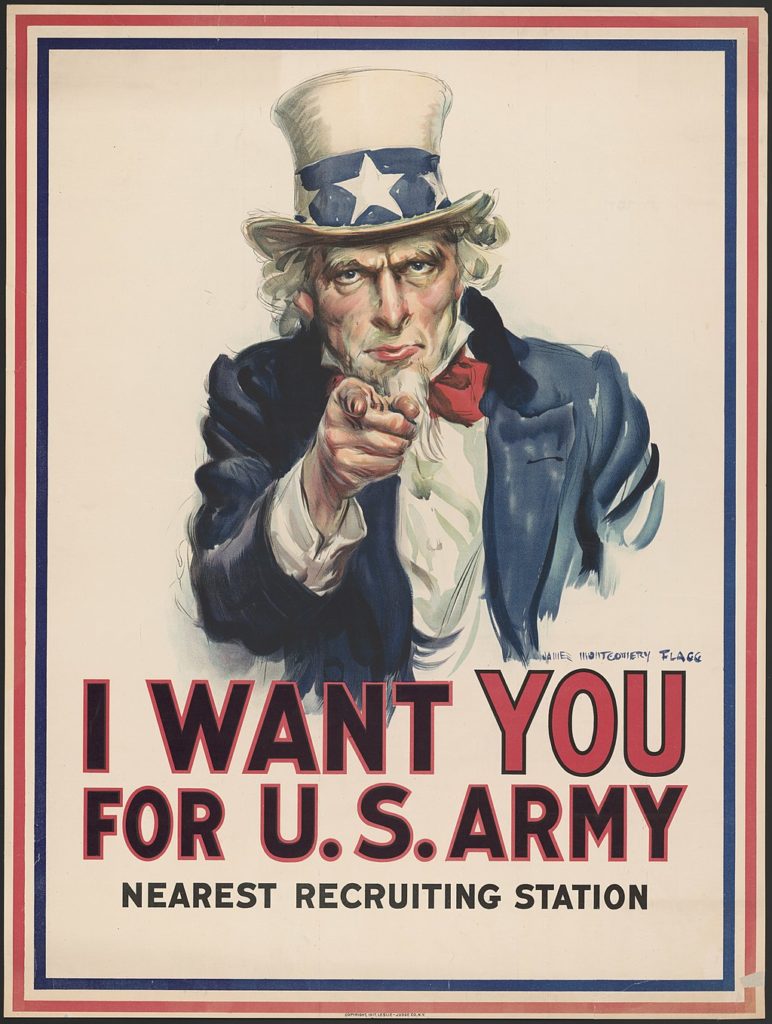
AI has simplified the search for qualified candidates willing to serve in the army, thanks to rapid processing of vast data sets, and automation and optimization of various aspects of the recruitment process.
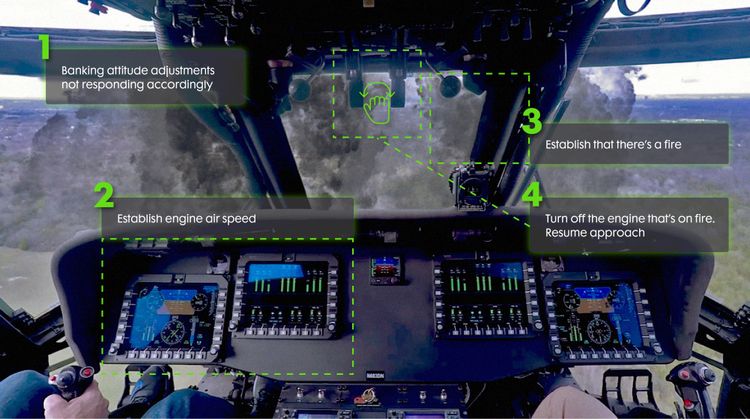
AI can help in training soldiers in various skills. For example, in February, the tech company Northrop Grumman signed a contract with DARPA to develop an AI assistant for training Black Hawk helicopter pilots.
It is expected that the AR headset’s system, using speech and graphical pointers, will help pilots learn new tasks, reduce errors and speed up mission execution.
The U.S. Army also uses software to simulate combat training. The software allows soldiers to complete tasks in VR and acquire skills that can be applied in real life.
AI systems capable of collecting and processing data from multiple sources help the military make strategic decisions. Algorithms can quickly and effectively study a range of possible scenarios and recommend optimal actions even in critical situations.
Military analysts use neural networks to search for information in news articles and social media, filtering, sorting and surfacing only reliable information. This helps streamline and accelerate the research process.
In combat, soldiers deploy computer vision systems to detect and recognise objects. Algorithms can identify adversaries, locate their vulnerabilities, and anticipate behaviour. Some AI-powered devices can also be directed by operators to neutralise a target after detection.
The battlefield is an extremely dangerous place. Drones, robots and other threat-monitoring systems allow militaries to quickly assess risks and receive guidance on minimising them.
Logistics and transport of ammunition, weaponry and supplies are critical to the success of military operations. Armoured robotic vehicles, operating without human involvement, can carry objects, determine optimal routes in current conditions, and collect pertinent information in transit.
If a soldier is injured, specialised AI systems can recommend treatment methods. These algorithms have access to hospital databases and help medics make decisions in stressful situations.
Information systems storing details about soldiers, senior officials, missions and technologies are often vulnerable to cyberattacks. Algorithmic programs can identify threats in advance and formulate strategies to protect crucial data.
How is Ukraine using AI in the war?
In recent years, more and more countries have been developing various combat devices and AI systems. Among them: “killer robots”, AI turrets, unmanned helicopters, AR headsets for soldiers, “smart” rifles and tools for identifying war criminals.
Some AI-enabled solutions have already undergone successful testing by armed forces of various states. One of the most notable examples is Ukraine.
On 24 February 2022, Russian troops invaded Ukraine, beginning a full-scale war that is still ongoing. It was the largest land conflict in Europe in nearly 80 years.
Despite Russia’s numerical and firepower superiority, Ukrainian forces are driving back the enemy. And technology has played a significant role in this.
On 25 February, the AI startup Reface announced the development of an algorithm to recognise Russian troops from satellite imagery. To collect training data, developers asked Ukrainian citizens to submit up-to-date information.
Additionally, via its app, the company sent 13 million anti-war messages to Russian users, alongside calls to support sanctions against the aggressor country, circumventing Kremlin censorship.
In March, Ukraine’s Ministry of Defence began using Clearview AI’s facial recognition system.
The company allowed its technology to identify Russian military personnel, combat misinformation, identify the deceased, and verify people at checkpoints.
Ukraine’s Minister of Digital Transformation, Mykhailo Fedorov, noted that the government is also using other facial-recognition systems. He said the algorithms helped identify Russian soldiers involved in attacks on civilians in the Kyiv region.
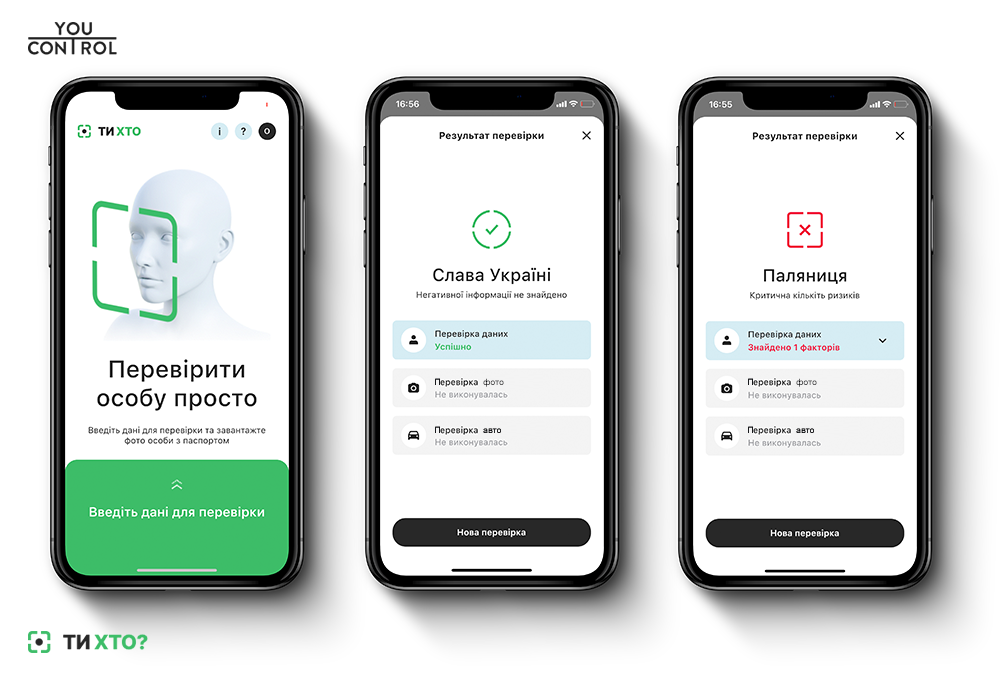
In April, the open-data services developer YouControl, in collaboration with AI company Artellence and with the support of the SBU, launched the TiKhto app, which allows rapid identification of suspicious individuals.
The system can determine whether the passport photo is real, whether the document is invalid or considered lost. It will also identify if the checked person is wanted by the state, under sanctions by NSDC, listed in the Myrotvorets database or in the Миротворец database.
In the same month, the deputy interior minister said that AI technologies helped police detain around 200 participants of illegal armed formations.
In June, the U.S. Army agreed to transfer to Ukraine a Boston Dynamics Spot robot to assist in defusing mortars and cluster munitions in areas previously under Russian control. The device, via its manipulator, can drag unexploded mines into pits for neutralisation.
In August, Nova Poshta and the State Emergency Service announced the development of bomb-disposal robots. The company plans to produce at least 40 devices to locate and neutralise mines in water and on land.
In October, the developer of an interactive online map of the war in Ukraine, Deep State UA, announced a collaboration with the creators of the automated neural data processing system Griselda.
Israel and its combat AI
In spring 2021, the IDF were the first in the world to use a guided AI drone group in real combat conditions. They employed a squadron of drones to locate, identify and attack Hamas militants in the Gaza Strip.
At that time, Israeli forces also used AI and supercomputers. The algorithm provided recommendations that soldiers used to determine targets and strike them.
Another machine-learning model warned the troops of possible enemy attacks.
In the autumn of the same year, it emerged that Israeli security services killed Iranian nuclear scientist Mohsen Fakhrizadeh with a remotely operated machine gun.
In 2020, operatives mounted an autonomous machine gun on a pickup by the roadside along Fakhrizadeh’s route near Tehran. When the scientist’s car approached, a remote operator fired the weapon, giving the command via satellite. AI helped compensate for signal delay and recoil.
Iranian researchers said the operatives could have used facial recognition technology to identify the target.
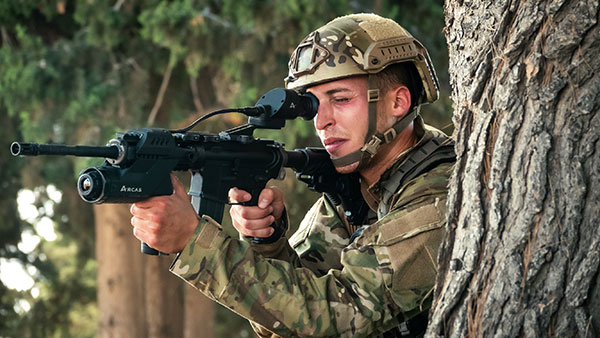
In September 2022, the Israeli company Elbit Systems unveiled an AI-based ARCAS system that facilitates rifle-fire by soldiers.
The system includes a sighting attachment and a helmet-mounted display, enabling a soldier to track combat information in real time.
In the same month, above the checkpoint in Hebron, Israeli authorities installed a remotely controlled weapon that fires flash-bang grenades, tear gas and rubber bullets. The turret uses AI systems to track targets and lock onto them.
According to army officials, the system does not include remotely controlled live-fire capability.
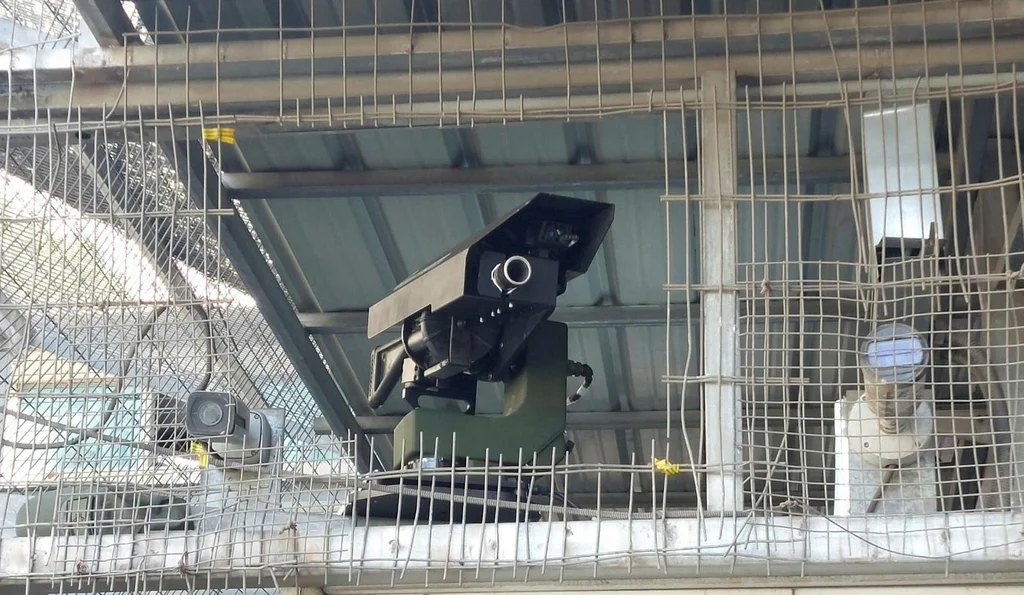
In October, the military deployed an autonomous turret with target-following capability on a guard tower aimed at the Al-Arub refugee camp on the West Bank.
According to the system’s developers, the device’s purpose is to protect soldiers and civilians by improving targeting accuracy.
In November, Elbit Systems unveiled the deadly autonomous kamikaze drone Lanius, controlled by AI.
The agile drone is equipped with numerous sensors, cameras and a Nvidia Jetson-based system for reconnaissance, mapping and object classification.
The company stressed that the quadcopter cannot autonomously decide to neutralise targets; a human always participates in the process.
In 2023, the Israeli Ministry of Defence plans to begin testing the unmanned tank M-RCV, equipped with an autonomous 30mm artillery system and a reconnaissance drone.
US and other countries’ military AI developments
Apart from Ukraine and Israel, the United States and other states are actively pursuing military AI projects.
One notable American project is an augmented-reality headset for soldiers. Its history has seen both breakthroughs and setbacks.
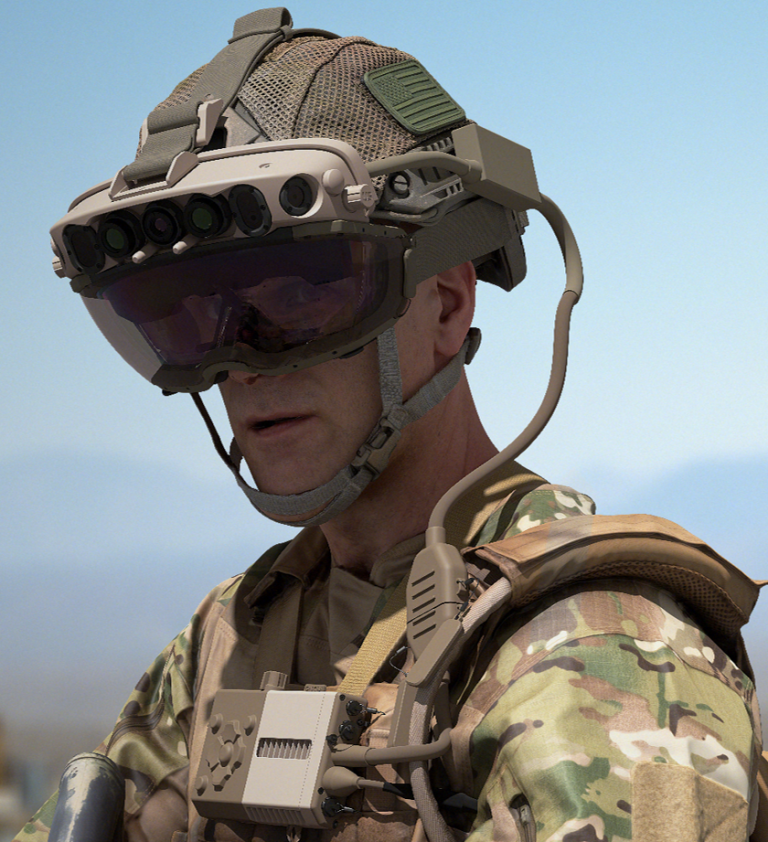
In spring 2021, Microsoft won a contract to supply the U.S. Army with prototypes of an integrated visual augmentation system (IVAS) based on the HoloLens AR headset. The contract, worth nearly $22 billion over 10 years, envisages the delivery of 120,000 devices.
The headset unites night-vision, thermal and wearable sensors for soldiers, with information displayed on a helmet visor.
The system uses AR technologies and AI powered by Microsoft Azure to create a realistic learning environment in mixed reality.
In October 2021, the U.S. military decided to delay the deployment of IVAS to May the following year. Officials said the delay would allow for intensive testing needed for full-scale production.
In January 2022, the Pentagon said the HoloLens-based headset was a “promising project,” but not yet ready for real-combat testing. In May, the U.S. Department of Defense announced a reduction in IVAS procurement costs.
Only in September did the U.S. military receive the first 5,000 prototypes of the IVAS. But a month later, media reported cases of soldiers reporting illnesses while using the IVAS.
The armed forces acknowledged problems with the headset and said they were addressing them.
As for other U.S. military projects, in February 2022 DARPA tested an autonomous Black Hawk UH-60A. The aircraft, developed by Sikorsky, was equipped with an experimental AI system called ALIAS, described by its creators as a “turn-key, removable flight-automation kit” that combines hardware and software to reduce crew workload.
In November, the agency retested the helicopter, training it to transport people and cargo.
In the same month, Lockheed Martin and Microsoft struck a strategic partnership to develop next-generation technologies for the U.S. Department of Defence. The agreement covers four critical areas, including AI, modelling and simulations.
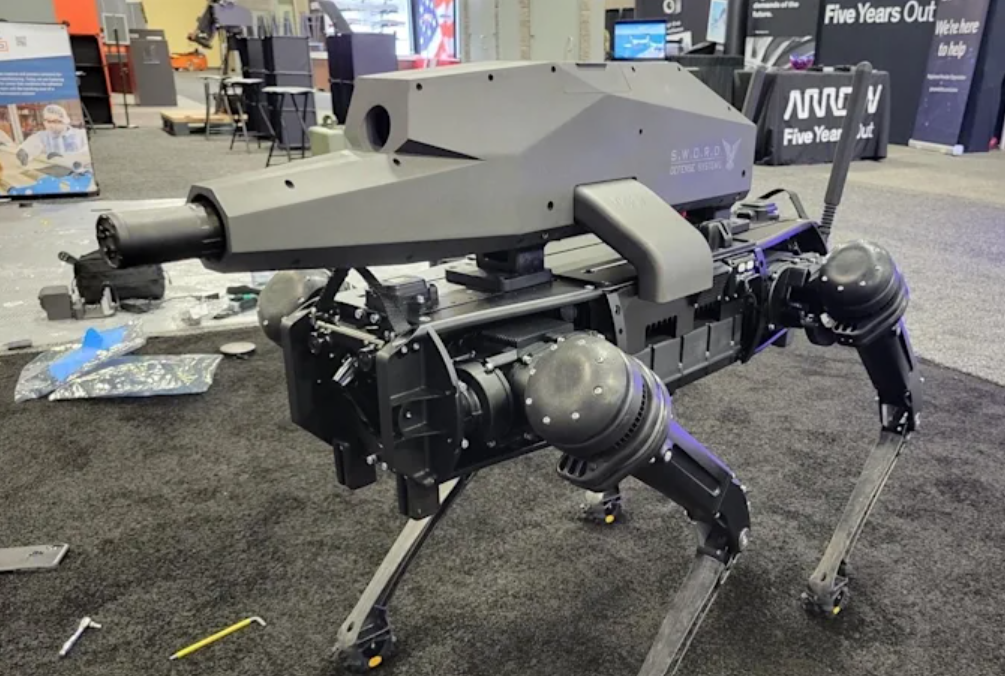
Various American firms, such as Ghost Robotics, are actively building robots capable of carrying rifles and other weapons.
Other countries also feature interesting examples of military AI developments.
The Netherlands was the first NATO member to launch testing of armed unmanned ground vehicles (AUGV) in Lithuania.
The devices were developed by Estonian defence company Milrem Robotics. The AUGVs are the tracked, modular infantry systems known as the THeMIS, capable of employing various weapons, including machine guns.
In the UAE, the defence industry is developing a compact launcher system for smart self-destructing drones.
The system is a base that launches AI-enabled drones Hunter 2-S. The devices can fly in formation and “communicate” with one another to carry out complex joint attacks.
British researchers will create a system consisting of a VR headset and a medical robot to provide first aid to wounded soldiers on the battlefield.
According to scientists, doctors outside the front lines will wear VR headsets and operate autonomous devices to collect swabs and blood samples, measure body temperature and blood pressure.
In China, researchers have developed an AI algorithm to predict the course of hypersonic missiles. The system does not require massive computing power and delivers a result within 15 seconds.
The technology can determine the trajectory of a missile travelling five times the speed of sound, calculate a potential interception path and initiate a counterstrike with a three-minute lead time.
Why the militarisation of AI is progressing slowly?
Combat zones are perhaps among the most technically challenging areas for deploying AI systems. This is due to a lack of sufficient training data and soldiers’ distrust of the technology.
Although many countries actively promote the idea of using AI, they struggle to move from concept to implementation. Partly, because the defence industry in most states remains dominated by large contractors who lack experience in building sophisticated software.
Another reason is that rigid government-checking and approval processes move too slowly compared with the dizzying pace of technological development. Military contracts can last for decades, but most startups have only about a year or so to start work.
Additionally, not all states have yet solved the ethical issues surrounding AI use. Only a few countries and alliances have issued corresponding guidelines.
All these rules urge the armed forces to deploy technologies in a lawful, responsible, reliable and auditable manner. They are also aimed at removing biases embedded in algorithms.
Nevertheless, much of the defence-related sector has progressed precisely because of the emergence of corresponding AI systems.
Countries now continuously vie for leadership in combat AI. And perhaps in the near future, a state’s military edge will be judged not by the size of its army but by the performance of the AI algorithms its soldiers use.
Sign up for ForkLog news on Telegram: ForkLog AI — all the AI news!
Рассылки ForkLog: держите руку на пульсе биткоин-индустрии!