


What is a scam?
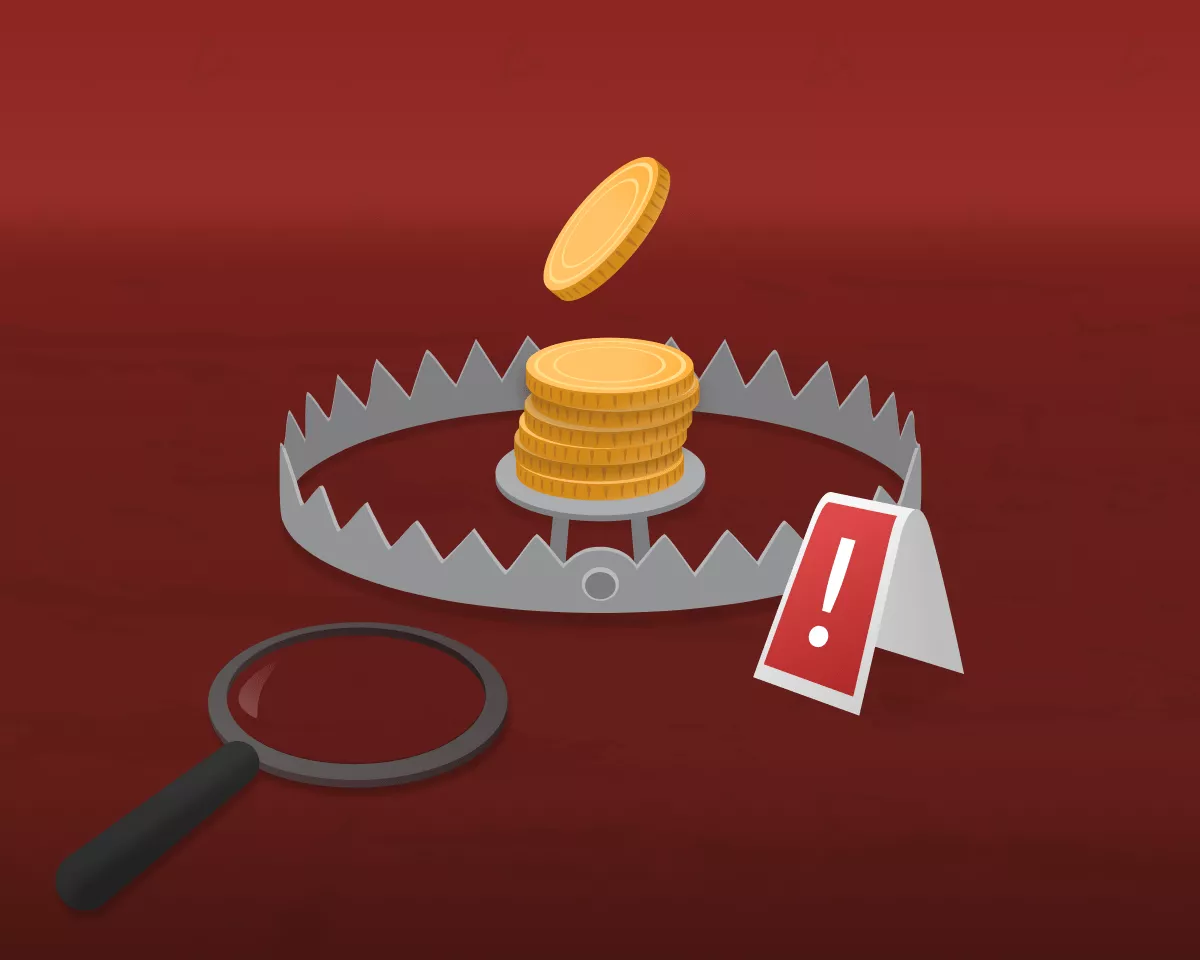
What is a scam?
The term “scam” means fraud.
Originally, scammers were those who extorted money via phone calls and emails. In cryptocurrencies, a scam is any fraudulent scheme in which digital assets or fiat money are stolen by abusing the owner’s trust.
Do not confuse scammers with hackers who break into crypto wallets and steal users’ funds. Unlike them, scammers persuade victims to transfer funds of their own accord.
What types of scams are there?
Fraudsters constantly invent new tricks, but several basic schemes recur.
Impersonating well-known projects and people
A classic ruse is to pose as a famous person or company on social networks or YouTube. Typically, scammers set up an account in the name of a well-known figure associated with a prominent crypto project.
They then announce a “promotional campaign” or “free” giveaway of cryptocurrency. To take part, users are asked to send a small amount of crypto to a specified address, in return for a promise that a larger sum will be “returned”. Once the assets are sent, the fraudsters vanish.
They also often upload to YouTube fake “live streams” of pre-recorded interviews, overlaid with their wallet address for receiving crypto. Such videos are pushed through ad networks on sites with pirated content.
Pyramid scheme
The best-known form of fraud, transplanted from traditional finance to crypto. Any pyramid (often called a Ponzi scheme in the crypto community) relies on promises of quick, outsized returns on participants’ deposits.
In reality, the founders do no meaningful work. If any returns are paid, they go to a few depositors and only from new participants’ money. In the end the organisers pocket the takings and the structure collapses.
Many modern pyramids mimic crypto investment products, since some popular coins have risen faster than traditional financial instruments.
Exit scam
An exit scam is a more sophisticated fraud. Unlike fake token sales, the project does not raise money through fundraising but via a plausible imitation of real activity. For example, scammers may launch an app with a minimal feature set that requires users to transfer crypto to their account in exchange for supposed services.
Some pseudo-projects merely promise results and create the appearance of work. Their representatives attend conferences and give interviews, yet the planned product launch is constantly postponed. Sooner or later the organisers disappear. Ordinary users may struggle to spot an exit scam, but experts and technical specialists can investigate and expose the fraud publicly.
Sometimes an exit scam occurs in functioning applications whose founders abruptly and without cause shut down and flee with user funds. In rare cases, crypto exchanges may do the same, with executives stealing users’ assets while disguising it as a platform hack.
Pump-and-dump scheme
This type of fraud centres on issuing a token. To run a pump-and-dump, a cryptoasset is launched without a working product, funding or team. It is tied to a hyped event—say, a film or TV show—and marketed as its “official” coin. That is what the creators of the Squid Game token did, pitching it as an asset supposedly from the makers of the series “Squid Game”.
If the scammers manage to whip up a frenzy, they wait for the price to surge on demand and then abruptly sell into the market. The issuer cashes out, abandons the project and holders are left with worthless tokens.
Scams in DeFi
Decentralised finance has created new ways to trade and use cryptocurrencies—and new forms of fraud.
Rug pull. Attackers create an asset (often disguised as a popular token), then launch a trading pair and liquidity pool on a decentralised exchange. Other users add their funds. The organisers then suddenly withdraw the liquidity, leaving others with devalued tokens.
Another variant: fraudsters build a decentralised trading protocol with an exploit in its code. They lure users and deposits with high yields, then eventually exploit the vulnerability and drain all user funds.
Honeypot. Scammers create a token, list it on a decentralised exchange and promote it aggressively. The token’s smart contract forbids anyone but the organisers from selling. Buyers pile in; once the price reaches a notable level, the scammers sell as many tokens as they can while they still have value.
Fake token sale
Another type of scam mimics fundraising.
Fraudsters build a website for a supposedly new startup and fill it with content to look plausible—complete with a description of a “blockchain project”, team bios and social-media pages.
They then announce a primary token sale and collect real money from participants. Soon after, they go dark and keep the lot. This was especially popular during the ICO boom of 2017–2018.
Notable crypto scams
OneCoin
Europe’s most notorious pyramid scheme, whose “brand” spread to other countries. Founded in 2014 by Bulgarian resident Ruja Ignatova, OneCoin sold “educational packages” that came with a certain number of “coins”. In reality the company had neither a cryptocurrency nor a blockchain. After being exposed, Ignatova disappeared. Estimates of total losses range from $4bn to $15bn. Forklog published a detailed investigation into OneCoin.
PlusToken
The largest crypto pyramid, founded in China. It operated under the guise of a digital-asset wallet. About a year after launch, in June 2019, users began complaining they could not withdraw funds. In 2019–2020 Chinese police arrested dozens of members of the fraudulent group. Authorities in China estimate total losses at $5.8bn.
Finiko
A Russian financial pyramid that promised earnings from investments in cryptocurrencies and stock markets. It stopped operating in July 2021. Aggregate losses come to about $4bn, and the number of victims reaches 850,000. Only one of the founders is under investigation in Russia.
BTC-e and Wex
One of Russia’s oldest crypto exchanges, BTC-e operated until the summer of 2017, when it abruptly halted trading and froze users’ funds. A purported new owner then rebranded the platform as Wex and promised to return users’ cryptocurrencies. Soon after, Wex also shut down. Losses from this exit scam are estimated at roughly $400m, though figures several times higher are also cited. Investigations into Wex’s management continue in several countries.
Africrypt
A pyramid posing as a “platform for investing in cryptocurrencies”, founded in South Africa. After roughly a year, it ceased operations in April 2021. Investors accused Africrypt’s founders of fraud, and police are now searching for them. Estimated losses range from $200m to $4.5bn.
The cost of scams
In Russia alone, hundreds of fraudulent groups appear and disappear every year, advertising fake cryptocurrencies or investment products based on them. Globally, scammers inflict tens of billions of dollars in losses annually.
In 2021 the Bank of Russia identified almost 2,700 illegal firms and pyramid schemes. Nearly half raised funds in digital currency or offered investments in various non-existent crypto-assets.
According to Chainalysis, in 2021 scammers stole $7.7bn from cryptocurrency holders, 37% of which came from rug pulls.
Analysts at Elliptic estimate that, in DeFi alone, total losses to fraud in 2021 amounted to $10.5bn.
How not to fall victim to crypto scams

To avoid falling for scammers, follow these simple but effective rules:
- Do not invest in projects that promise high returns rather than a quality product. An honest entrepreneur never guarantees profit.
- Before investing in a new project, study the team, read media coverage of the startup and reviews by recognised experts.
- Do not hand over your money or cryptocurrencies to little-known traders or companies.
- Check online for the history of any project or service you plan to send money to. If it is not mentioned in authoritative sources, it is better not to take the risk.
- When trading on decentralised exchanges, beware of “clones” of well-known coins. Watch ticker names and the amount of liquidity in the pool.
- If you decide to use a new decentralised protocol, make sure independent professionals have audited its code. Well-known auditors of DeFi applications include Certik, Hacken, Consensys.
Рассылки ForkLog: держите руку на пульсе биткоин-индустрии!