


What is Algorand (ALGO)?
Key points
- Algorand is a high-throughput blockchain with fast, low-cost transactions that runs its own Pure Proof-of-Stake (PPoS) consensus. It supports smart contracts, decentralised applications and the issuance of digital assets.
- An ecosystem of DeFi, NFT and Web3 services is growing on Algorand, alongside hundreds of solutions for the traditional economy.
- Algorand positions itself as a “carbon-negative” blockchain—a portion of transaction fees funds reforestation and other CO2-offset programmes.
Who created Algorand, and when?
Algorand was founded in 2017 in Boston by Silvio Micali, an MIT professor and Turing Award laureate. The start-up raised $4m in seed funding from venture firms Pillar Ventures and Union Square Ventures.
Serial entrepreneur Steve Kokinos, who founded Fuz, BladeLogic and WebYes, was brought in as chief executive. Sean Ford—uPromise co-founder and former chief marketing officer at LogMeIn—became chief operating officer.
In the summer of 2018 the team launched a closed Algorand test network to showcase the new blockchain’s advantages to potential investors.
In the autumn of 2018 the start-up ran another funding round, raising $62m from a group of venture funds.
In April 2019 the testnet went public, and in June the mainnet launched. At the same time a public Dutch auction sold 25m native Algorand (ALGO) tokens, raising more than $60m.
In November 2019 the first major upgrade to Algorand 2.0 added support for smart contracts, digital-asset issuance and atomic transfers.
How does Algorand work?
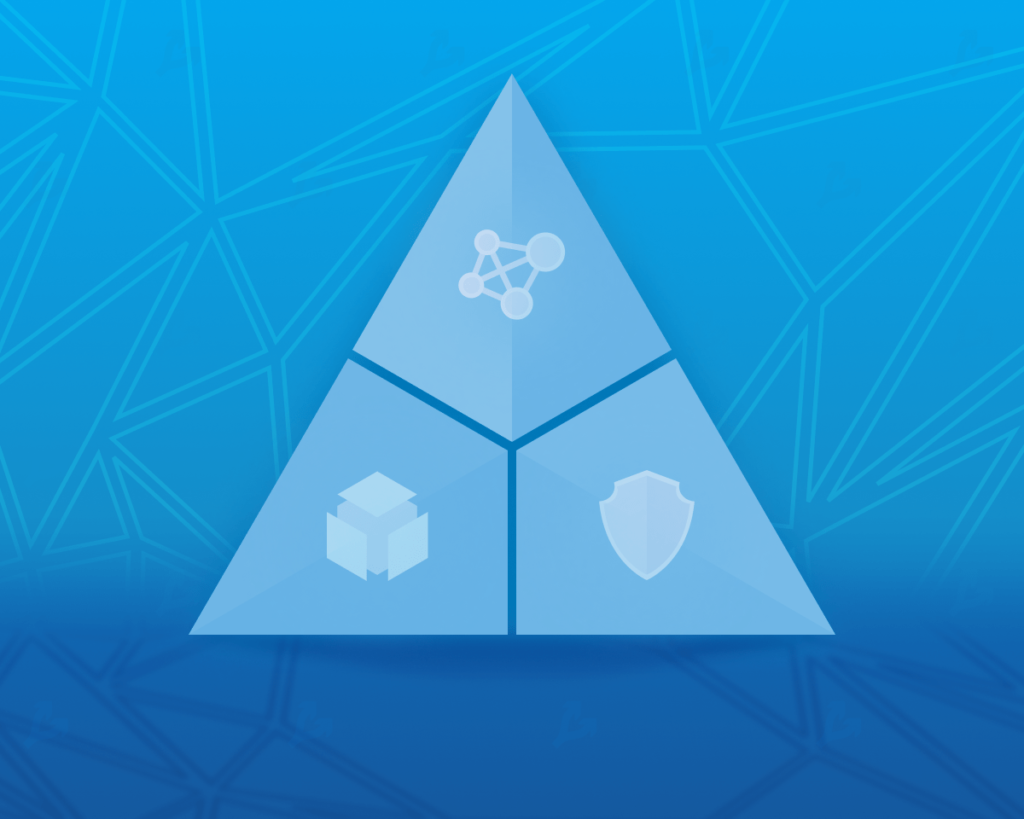
The creators say they have solved the “the blockchain trilemma”, achieving performance, scalability and security at once via the Pure Proof-of-Stake consensus and other innovations.
Blockchains that use Delegated Proof-of-Stake (DPoS) and its variants often cap the number of validators at a few hundred—or even dozens—to maximise throughput, reducing decentralisation and increasing the risk of abuse.
Algorand maintains high decentralisation and security by secretly and randomly selecting validators of the next block from all wallets holding at least one ALGO.
Each block is approved via a Byzantine agreement protocol in three steps:
- Proposal. A randomly selected leader wallet proposes a block for approval;
- Soft vote. A committee of randomly selected wallets chooses a single proposed block to move to certification;
- Certification vote. Another randomly selected committee checks the new block for overspending, double-spending and other issues, and certifies it for inclusion in the blockchain.
At each step a verifiable random function (VRF) acts as a weighted lottery: the more ALGO a wallet holds, the greater its odds of being chosen.
The Algorand network also runs more than 120 relay nodes, which are full nodes holding up-to-date copies of the blockchain.
This architecture yields throughput of up to 1,000 transactions per second with a 4.5-second block time. A transaction costs 0.001 ALGO (about $0.0003 as of July 2022).
Another result is high energy efficiency and low per-transaction cost compared not only with PoW cryptocurrencies, but also with most DPoS coins.
The blockchain uses the Algorand Virtual Machine (AVM), which is not compatible with the Ethereum Virtual Machine or Solidity-based smart contracts.
AVM’s native language is TEAL. However, smart contracts and decentralised applications can also be written in Python, which is widely used beyond the crypto industry.
How does Algorand’s tokenomics work?
ALGO is the native cryptocurrency of the Algorand blockchain. It is used for staking, paying transaction fees, running relay nodes and governance. The coin trades on major exchanges (Binance, Coinbase, Huobi, Kraken, FTX, etc.) and ranks in the top 50 by market capitalisation (as of July 2022).
The entire 10bn ALGO supply was created via a premine. Most was allocated to the team, early investors and the non-profit Algorand Foundation.
The ALGO release schedule has been revised significantly since launch. Under the Algorand Accelerated Vesting programme, 3.1bn ALGO was distributed in 2020–21 to early users, relay-node operators and developers. In 2021 the circulating supply rose from 3.11bn to 6.97bn.
According to current plans, the remaining locked coins will be distributed by 2030 as grants, staking rewards, governance incentives and relay-node funding.
Staking rewards are sent to ALGO holders’ wallets after each new block. The staking yield is around 6% per year.
Who governs Algorand?
At launch, governance and technical development were handled by the private company Algorand Inc. In 2019 the Algorand Foundation was set up in Singapore to fund and grow the network, and to educate and support developers.
The Algorand Foundation is a major ALGO holder. It uses the cryptocurrency to finance its operations and blockchain projects via accelerator programmes.
In September 2021 the Algorand Foundation created the $300m Viridis DeFi Fund from its own resources. It provides grants to teams building wallets, cross-chain bridges and other ecosystem services.
In the fourth quarter of 2021 the Algorand blockchain began moving to a decentralised governance model, allowing all ALGO holders to help decide key matters.
To participate, a holder must register as a governor and lock a chosen number of tokens for the three-month voting period. Voters earn ALGO for governance in addition to regular staking rewards.
What does the Algorand ecosystem look like?
Algorand’s developers initially targeted decentralised solutions for multiple sectors of the real economy. The network found uses in real estate, public administration, copyright, finance, tokenised equities and more.
The largest partnership in that period was the development of the Marshall Islands’ national digital currency on Algorand. In March 2020 SFB Technologies, the project developer, announced the collaboration.
In August 2021 Koibanx, an asset-tokenisation firm, signed an agreement with El Salvador’s government to develop information infrastructure using Algorand.
As DeFi, NFT and Web3 took off in 2020–21, the Algorand Foundation began funding consumer-focused efforts. DeFi projects such as Algofi, Yieldly and Folks Finance launched; NFT marketplaces included Abris.io, AB2 Gallery and ZestBloom.
More than a dozen NFT and P2E games also went live on Algorand: Algorealm, Aegir Tactics, SK8, Alchemon, Cosmis Champs and others. The Algo Gaming Guild emerged.
Growth of the DeFi ecosystem was supported by major Algorand funds launched in 2021: the $500m Borderless ALGO Fund II from venture firm Borderless Capital, and $100m from Arrington Capital.
How is Algorand developing?
At the time of writing, more than 700 organisations worldwide use decentralised solutions on Algorand.
In May 2022 FIFA granted Algorand regional-sponsor status and named it the official blockchain platform of the Qatar men’s World Cup and the 2023 Women’s World Cup in Australia and New Zealand. The network will host the tournaments’ official crypto wallet and NFTs.
In the same month Algorand and Hivemind acquired the digital-music service Napster. In June the parties announced plans to use the blockchain to launch the NAPSTER token and build a music-streaming ecosystem.
The Algorand Foundation places great emphasis on a “green” profile: Algorand presents itself as the world’s first “carbon-negative” blockchain.
A special smart contract automatically allocates part of transaction fees to reforestation and renewable-energy programmes, offsetting carbon emissions.
Algorand also collaborates with ClimateTrade, which uses blockchain to build a global market for carbon credits.
Further reading
Рассылки ForkLog: держите руку на пульсе биткоин-индустрии!