



What is Symbiosis Finance?
Symbiosis Finance is a multichain liquidity protocol that allows the exchange of synthetic tokens (Synthetic Token, sToken) across the Ethereum, BNB Chain, Polygon and Avalanche networks. In April 2022 the developers will add support for Solana and Terra.
The protocol locks cryptocurrency on the original blockchain and issues an sToken on another network at a 1:1 ratio. When the asset returns to its original blockchain, Symbiosis Finance burns the synthetic tokens.
Developers can integrate Symbiosis into applications via the Symbiosis JS SDK and the Symbiosis Mobile SDK.
Who created Symbiosis Finance, and when?
According to Nick Avramov, co-founder and chief marketing officer of Symbiosis Finance, the team numbers 30 people, 22 of whom are developers.
“The core protocol developers have known each other for almost five years. Among them are alumni of Zerion and a number of other projects. Security is overseen by a former team lead at Yandex and the Japanese conglomerate Rakuten. The head of the relay-network development team previously led open-source projects at IBM’s Russian division,” he notes.
In January 2021 the team began working on the Symbiosis Finance codebase, and in June started seeking investors. In October the project raised $2 million from Blockchain.com Ventures, Primitive Ventures, Avalanche and others. In February the venture arm of the Binance exchange invested in the protocol.
On March 9 the beta version of the Symbiosis mainnet launched. The team is currently undergoing additional security audits by SlowMist, Omniscia and Zokyo.
How does the cross-chain liquidity mechanism work?
The cross-chain liquidity mechanism is a set of smart contracts for swaps between networks. The Symbiosis Finance team deploys them when adding a blockchain to the protocol.
It includes four groups of smart contracts:
- AMMs swap tokens;
- Mint/Burn create and burn tokens;
- Bridge handle interactions between Synthesis smart contracts and the relay network;
- Metarouter invoke contracts on behalf of the user during cross-chain swaps.
Symbiosis Finance uses stablecoin pools.
“The protocol searches for the most advantageous exchange route on decentralised exchanges — using the 1inch liquidity aggregator in EVM networks and our own solution in blockchains without EVM support,” comments Nick Avramov.
With this approach there is no need to install special software. A swap can be executed in one click via a MetaMask wallet.
How does the relay network work?
The relay network is a P2P network of relay nodes that track events across blockchains and then sign and submit transactions to the relevant networks.
To secure the relay network, Symbiosis Finance uses:
- Multi-party Computation (MPC), a cryptographic protocol that allows several network participants to carry out joint computations without revealing input data;
- Threshold Signature Scheme (TSS), a cryptographic method for distributed key generation and transaction signing;
- a Proof-of-Bond algorithm, a mechanism under which only nodes that have staked SIS tokens are allowed to sign transactions.
The team plans to launch the relay network in several stages. The early version will comprise 15 nodes that synchronise via a smart contract on Ethereum.
To run a node, you must stake SIS tokens. The amount of collateral depends on the stakes of other participants, but it cannot be lower than 50,000 SIS.
What role does the SIS token play in the Symbiosis Finance ecosystem?
SIS is the native ERC-20 token of Symbiosis Finance with a total supply of 100 million. Holders can earn through staking and submit proposals on protocol changes to the decentralised autonomous organisation (Symbiosis DAO).
In October 2021 Symbiosis Finance sold 10 million SIS for $2 million in a seed funding round.


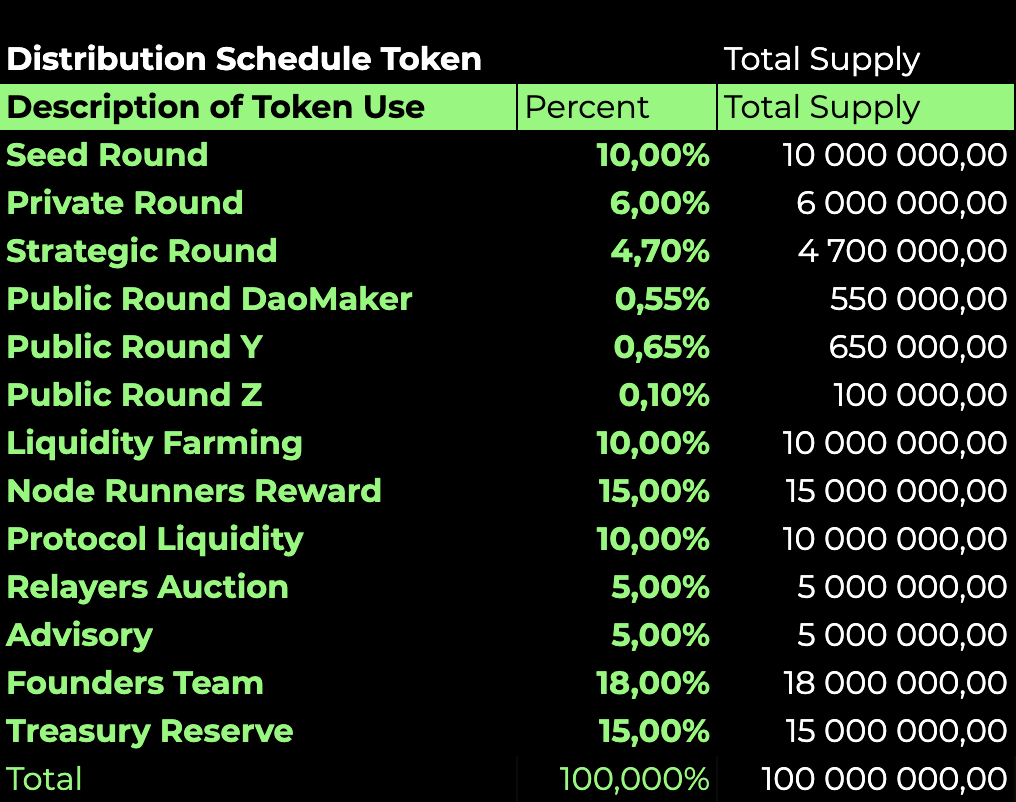
The developers reserved 40 million SIS for farming, protocol liquidity, slot auctions in the relay network and staking.
The remaining tokens will be split among participants in one private and several public token sales, as well as the project’s advisers and Symbiosis Finance developers.
How do the first and second versions of Symbiosis Finance differ?
In the current version of the protocol, all supported networks have paired pools — Ethereum/BNB, Avalanche/Polygon and others.


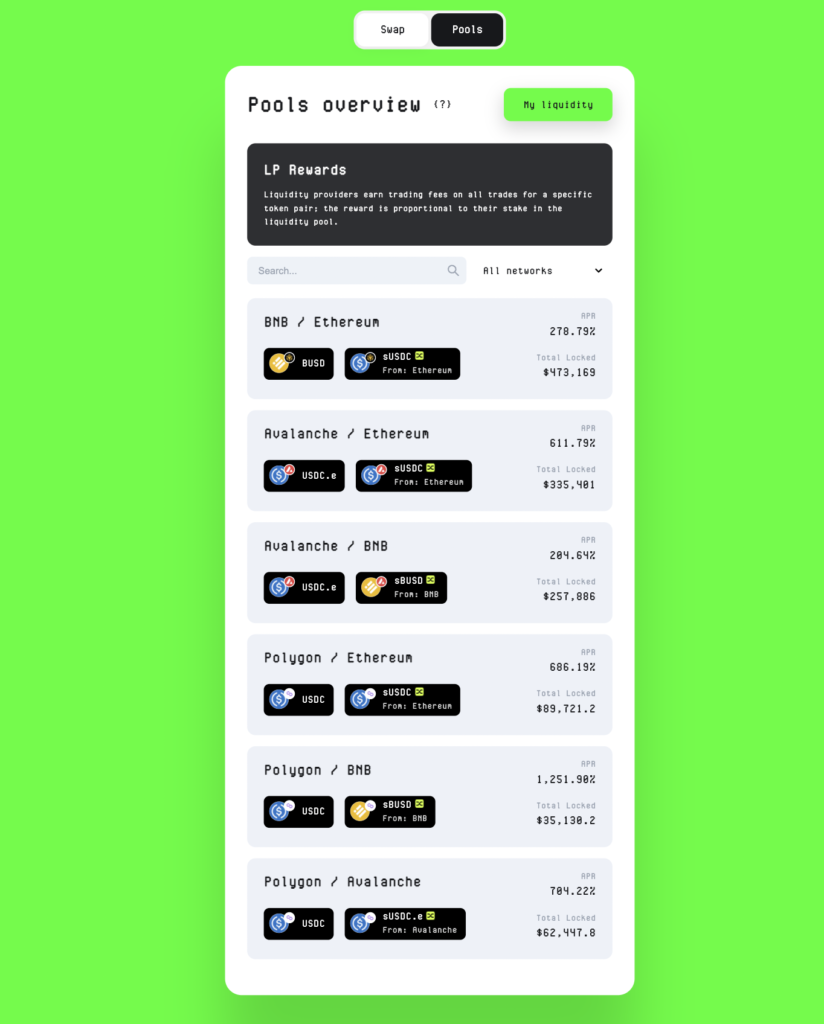
In the current version the protocol asks liquidity providers to fill separate pools by incentivising certain swap directions.
“We rebalance pools and incentivise arbitrageurs to align prices when there is high demand for a particular exchange direction. For example, if users often swap Tether from Ethereum to Binance Smart Chain, arbitrageurs perform the opposite actions with a premium,” notes Nick Avramov.
In the second version of the protocol, the developers plan to use a sidechain to manage liquidity pools.


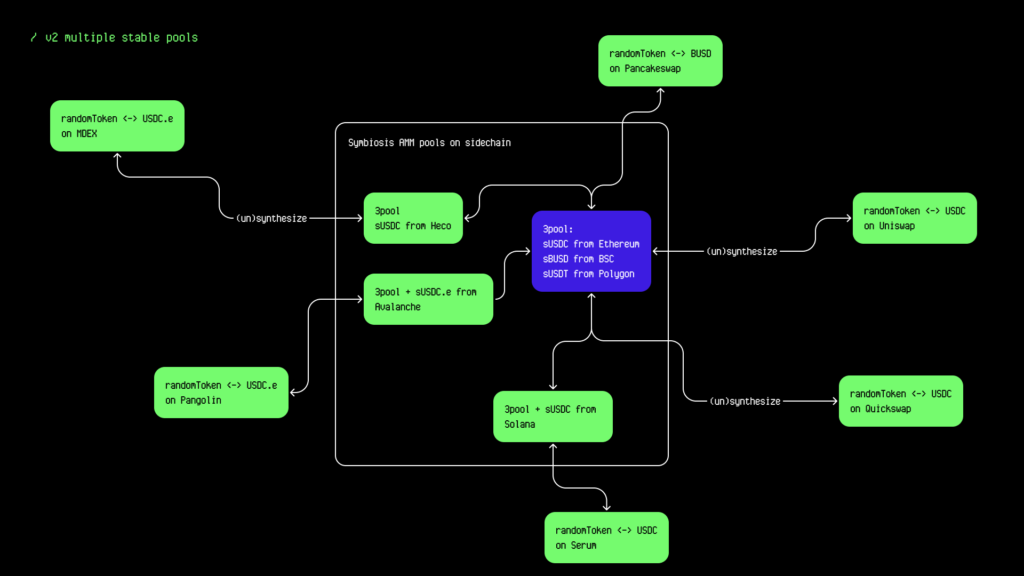
According to Avramov, this approach will reduce the cost of maintaining the protocol and lower swap fees.
The team is currently considering several options for implementing the sidechain. The launch of the second version of Symbiosis is planned for the third quarter of this year.