




Key points
- Worldcoin is a protocol for identity and financial transactions made up of three components: the World ID identifier, the World App and the Worldcoin (WLD) token.
- The protocol verifies users by scanning the iris with a biometric device called the “orb”. After verification with an orb, the protocol credits the user with 25 WLD.
- The protocol and the orbs are developed by Tools for Humanity. Its creators are OpenAI’s CEO Sam Altman and TFH’s head Alex Blania.
What is Worldcoin?
Worldcoin is a protocol for identity and financial transactions composed of three parts:
- World ID — a digital identifier for tasks that require proof of a person’s realness and uniqueness;
- World App — an application for purchases and money transfers worldwide using digital assets and fiat currencies;
- Worldcoin (WLD) — a token that confers voting rights over the project’s development. The protocol issues WLD after verification.
Worldcoin identifies users by scanning the iris with a biometric device called an “orb”. Biometric-data privacy is ensured by zero-knowledge cryptography.
As of May 2023, the project is in beta testing.
Who created Worldcoin?
The protocol, orbs and World App are developed by Tools for Humanity (TFH). Its creators are OpenAI’s CEO Sam Altman and Alex Blania, TFH’s chief executive.
In future, the company will transfer rights to the Worldcoin brand and protocol-related technologies to the non-profit Worldcoin Foundation, registered in the Cayman Islands with a branch in the British Virgin Islands.
The foundation will support the ecosystem and work with TFH and other developers directly or via grants.
The Worldcoin protocol and hardware code are open source and available on GitHub.
What is World ID?
World ID is an identifier that lets its holder prove personhood and uniqueness (Proof-of-Personhood, PoP) while remaining anonymous.
To obtain a World ID, install the World App on a smartphone and scan your iris with an orb. The orb generates an iris identifier (IrisCode) as a random number sequence not linked to the user’s personal information.
World ID can be used:
- to protect against bots and confirm identity on social networks;
- for voting in DAOs or online polls;
- to protect against fraudsters and fake reviews on marketplaces;
- for distributing benefits, scholarships, government aid or airdrops.
At the time of publication, orbs are available in Argentina, Chile, India, Kenya, Portugal and Spain. In these countries, Worldcoin operators — local companies that own orbs, answer questions about Worldcoin and help people obtain a World ID — work for rewards in stablecoins or fiat currencies.
Worldcoin plans to register operators in other countries by the end of 2023. The team is currently on a tour of cities worldwide.
Through the end of July 2023, orbs will be available in Berlin, Dubai, London, Mexico City, Miami, New York, San Francisco, Seoul and Tokyo. Exact dates and venues are posted on Twitter and Discord.
Why does Worldcoin scan irises?
The human iris has hundreds of unique crypts, furrows, rings and other features. These yield very high entropy.
“At the scale of billions of people, fingerprints and facial recognition are not suitable as a biometric solution for proving personhood,” says the Worldcoin team.
According to a Cambridge University study, iris codes can have more than 200 bits of entropy — significantly more than fingerprints.
Iris recognition is roughly four orders of magnitude (10,000 times) more accurate than facial recognition because of the higher entropy in iris structure. The iris texture also remains almost unchanged over a person’s lifetime.
How is the orb built?
The orb is a biometric device from Tools for Humanity that provides access to the Worldcoin protocol.


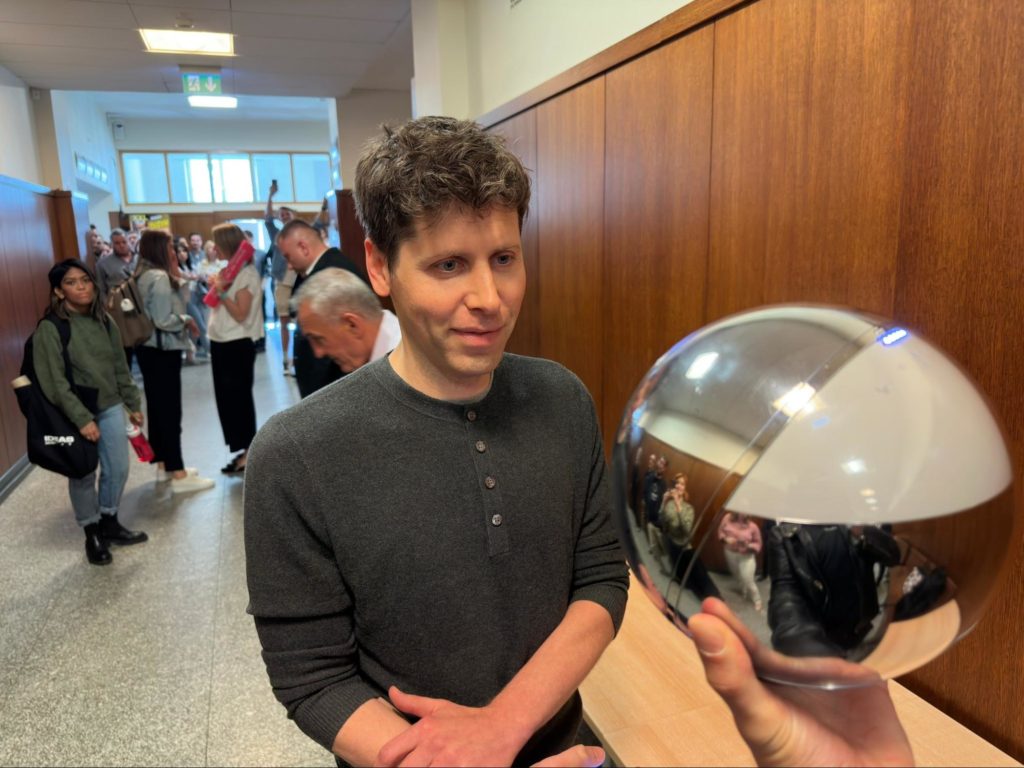
The device’s design was created by Thomas Meyerhoffer, who previously worked at Apple at the invitation of Jony Ive.
“Worldcoin is built on inclusivity. We wanted orbs to be accessible even in the most remote places on Earth. So we made them mobile — about the size of a basketball and weighing 2.8 kg.
From a design perspective, we separated the cutting-edge technology inside the orb from the experience of the person using it. The orb should feel simultaneously natural and otherworldly, personal and universal,” says Meyerhoffer.
The device comprises four parts:
- front: the optical system;
- middle: the mainboard dividing the device into two hemispheres. It is tilted at 23.5°, equivalent to Earth’s axial tilt;
- back: the main compute unit and an active cooling system;
- bottom: a replaceable battery.


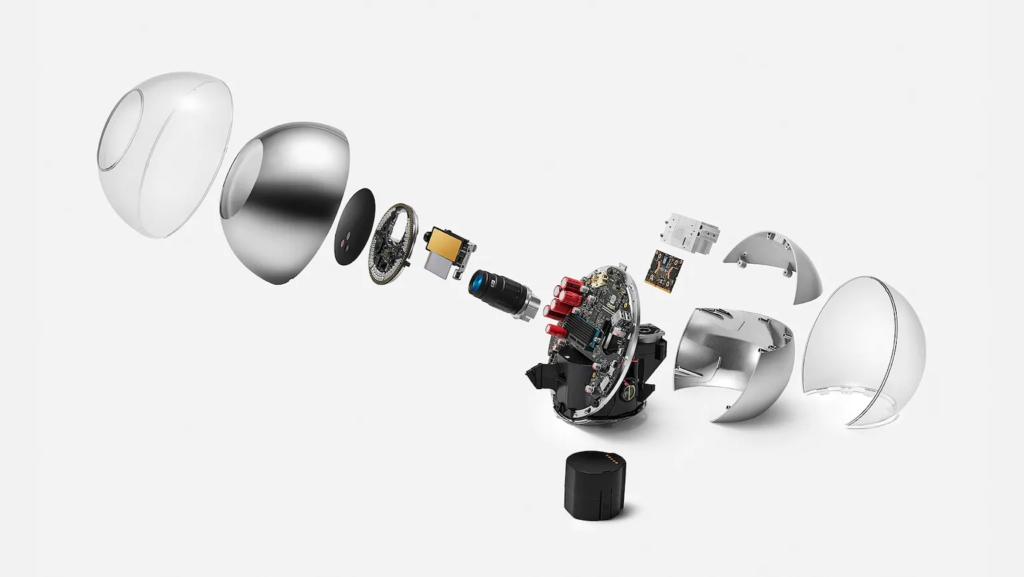
The optical system includes a wide-angle camera and a telephoto lens with an adjustable field of view of ~5°. The camera captures the scene and a neural network predicts eye location. This yields a high-resolution iris image, which the orb encrypts into an IrisCode.
According to the project’s website, the orb minimises sunlight interference and motion blur, creating laboratory-like scanning conditions regardless of where the device is located.
The mainboard houses Nvidia’s Jetson Xavier NX “AI supercomputer” and a 250 GB SSD.
The orb has Wi-Fi plus auxiliary LTE for stable connectivity, and a GPS module to determine the device’s location.
n
How do you get the WLD token?
At the time of publication, Worldcoin awards 25 Worldcoin for verification with an orb. Users will receive tokens after the project’s mainnet launch, planned for the first half of 2023.
What is WLD for?
Token holders will be able to pay for services in the World App, make payments, and take part in votes on the protocol’s development.
“According to the World Bank, 1.7 billion people have no access to any financial tools, including bank accounts. Worldcoin provides not only identity solutions, but also a token as a means of payment and democratic protocol governance,” a Worldcoin developer said in an exclusive comment for ForkLog.
WLD can also serve as a store of value.
How does Worldcoin collect and store information?
To obtain a World ID, there is no need to disclose a name, phone number, email or home address. It is enough to consent to an eye scan and install the World App on a smartphone.
The protocol creates a unique code based on iris images. The orb uses biometrics to ensure a person has not been verified before.
Users can choose between two types of verification:
- without storing biometrics. The orb processes biometric data and deletes it after the check. Worldcoin’s servers store only the IrisCode, which prevents registering again.
- with storing biometrics. The orb encrypts biometric data, sends it to Worldcoin’s servers together with the IrisCode, and then deletes the biometrics from its SSD. This removes the need for re-verification with an orb if access to the World App is lost.
Worldcoin Foundation and Tools for Humanity undertake not to share user data with third parties.
What other projects work on digital identity?
Beyond Worldcoin, several projects tackle digital identity:
- Ontology — a blockchain for decentralised identity and data storage in Web3;
- Civic — developer of Civic Pass, which enables user identification when interacting with DeFi protocols, DAOs and NFT projects on Ethereum, Polygon and Solana;
- Idena — a solution for proving users’ realness and uniqueness through flip tests;
- KILT — a protocol for creating decentralised identifiers in the Polkadot ecosystem.