



The Elon Effect: How DOGE Became a Crypto Phenomenon and What Lies Ahead
DOGE lost central authority early; we examine its legacy and crypto’s cameo.
The US Department of Government Efficiency (DOGE) lost its authority as a centralized entity eight months before its planned dissolution.
The agency created by billionaire Elon Musk focused on cutting the government’s administrative costs and fighting bureaucracy. Yet it is best remembered for a string of scandals.
ForkLog examines the imprint the once-ambitious project left on US governance—and where crypto fits in.
How did it begin?
The idea of DOGE first surfaced in August 2024 during an interview between Musk and Donald Trump. The entrepreneur volunteered to lead a special unit to streamline government, and the then presidential candidate backed the initiative.
Soon after, Musk posted an image of himself at a podium labeled Department of Government Efficiency with the acronym D.O.G.E. In his caption, the billionaire wrote: “I am willing to serve.”
I am willing to serve pic.twitter.com/BJhGbcA2e0
— Elon Musk (@elonmusk) August 20, 2024
In November 2024, by then president-elect, Trump introduced Musk and entrepreneur Vivek Ramaswamy as heads of a new federal body. An order on January 20, 2025 created a temporary agency within the United States Digital Service (USDS). Its operations were slated to end on July 4, 2026—America’s 250th Independence anniversary.
DOGE was not a Cabinet-level department but part of the Executive Office of the President.
DOGE staff were embedded across government agencies. They were tasked with terminating contracts, grants and leases signed by previous administrations, combating fraud and shrinking the civil service. By Musk’s optimistic estimate, the drive could save up to $2 trillion.
Ramaswamy, for his part, said he was prepared to eliminate entire federal agencies and cut the workforce by 75%. He almost immediately left the team of his own accord over “differences in management approaches” with Musk.
Inside DOGE
The department set up shop in the Eisenhower Executive Office Building next to the White House. It was led by Amy Gleason, who served in the US Digital Service during Trump’s first term.
Musk was designated a “special government employee” for 130 days, effectively an adviser to the federal government. He was granted expanded access to government resources without certain disclosure requirements.
DOGE’s headcount was about 50, many of them former employees of Musk’s firms (Tesla, SpaceX and others). According to Wired, the team included several young engineers aged 19–24 with little or no government experience. The media dubbed them DOGE Kids. Despite some names being disclosed, the agency prioritized secrecy.

The team reported to Steve Davis, a longtime Musk adviser and the CEO of The Boring Company, who played a key role in cutting costs at X and SpaceX.
As of February 4, 2025, DOGE had secured $6.75 million in funding—nearly twice the White House’s annual salaries-and-expenses budget. By February 12, the sum had risen to $14.4 million.
Media outlets reported that department employees were literally living in government offices amid an extreme workload—up to 120 hours a week.
DOGE is working 120 hour a week. Our bureaucratic opponents optimistically work 40 hours a week. That is why they are losing so fast. https://t.co/dXtrL5rj1K
— Elon Musk (@elonmusk) February 2, 2025
Meme boost
By common account, the acronym DOGE nods to the cryptocurrency Dogecoin, which Elon Musk has actively supported for years. The coin’s logo even briefly appeared on the agency’s website, after which its price rose 14%.
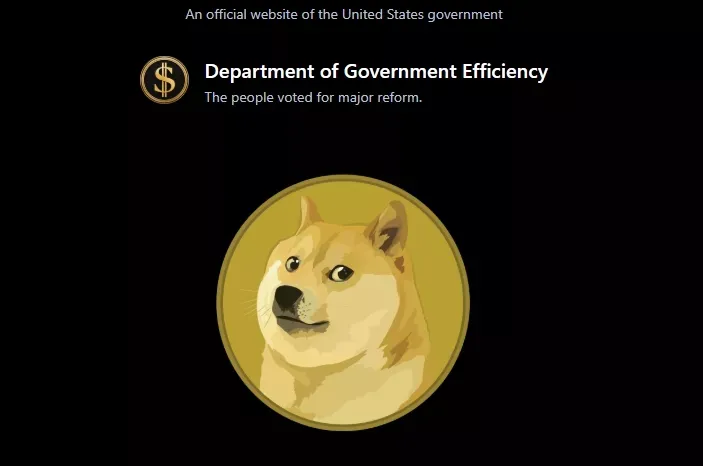
Nevertheless, in public remarks the billionaire explained the name’s similarity as pure coincidence: he chose it on the advice of online users for its appeal.
Department leaders ruled out integrating cryptocurrencies, but they embraced blockchain technology in their work.
According to Bloomberg, a digital ledger was proposed as a cost-effective way to track federal spending, protect data, process payments and manage buildings. To that end, DOGE representatives held talks with leaders of several public blockchains.
Musk also called decentralized technologies “a useful tool to minimize corruption”.
Critics, however, argue that conflating the agency’s acronym with a crypto brand amounted to “viral PR”.
Backlash and scandals
Control over financial data
As part of its activities, DOGE gained access to US Treasury systems, including critical infrastructure that processes tax refunds, Social Security benefits, pensions and other government payments.
In February, 19 states filed suit, alarmed by the legality of transferring such volumes of personal data and the potential use of an open-source AI model to process them.
A judge issued a temporary restraining order blocking DOGE’s access to Treasury records and requiring destruction of any materials downloaded after January 20, 2025.
In a separate Senate letter to the Treasury Secretary, it was noted that some department staff could read and modify system code.
In May, several DOGE agents were nevertheless granted “full-spectrum access” to Treasury systems after completing cybersecurity and sensitive-data handling training.
Interference with the grants system
DOGE took control of federal grant postings and temporarily restricted external access, delaying key competitions for funding health and social programmes.
After complaints from scientific communities and various social groups, the department’s powers were significantly curtailed.
Mass layoffs
DOGE launched one of the largest layoff programmes in the history of the federal government. The first target was the international aid agency USAID. Of 10,000 employees, fewer than 300 remained. By the end of February, at least 83% of the agency’s programmes had been shut. The de facto dismantling of USAID was challenged in several courts.
The wave of layoffs also swept through other federal agencies and departments, beginning with staff on probation. The process was chaotic: instructions changed several times a week, notifications arrived at night and decisions were taken without proper HR procedures. Some erroneous dismissal orders were overturned on appeal.
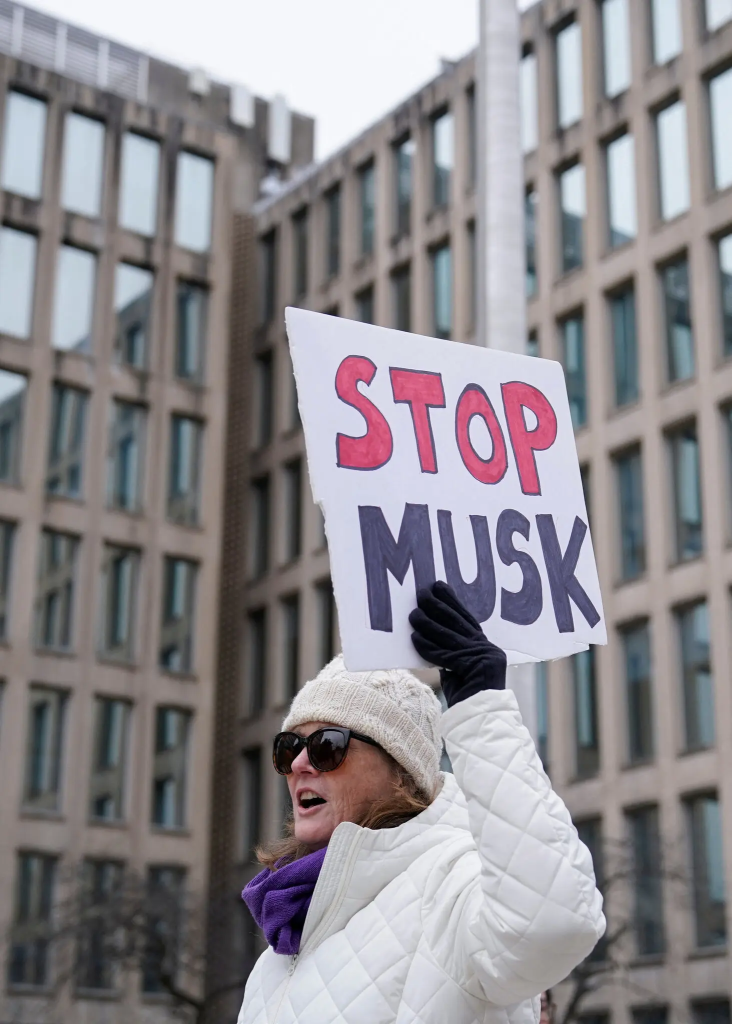
According to the latest data from OPM, roughly 317,000 employees left federal service in 2025, while about 68,000 were hired.
Thus, since the start of Trump’s second term, cuts have affected at least 12% of the 2.4 million civilian federal workforce.
Counting errors
Media flagged mistakes DOGE made tallying savings. One canceled contract listed at $8 billion actually cost $8 million. In another case, DOGE counted a $655 million contract three times, claiming more than $1.8 billion in nonexistent savings. Reporters also found canceled contracts whose terms had long expired.
According to the DOGE website, at the time of writing the department had terminated 13,440 contracts, 15,887 grants and 264 leases.
Analysts reckon the current headline “savings”—$214 billion—are greatly overstated, or reflect theoretical contract maximums rather than actual budget cash saved. And once litigation costs, reinstatements and efficiency losses are included, the net gain may be a fraction of the claim.
Damage assessed
By July 2025 the Senate’s Permanent Subcommittee on Investigations estimated losses from DOGE’s activities at no less than $21.7 billion. It concluded the department not only failed to meet its stated aim, but also “undermined organizational productivity, reducing the efficiency and quality of core public services.”
The beginning of the end
In April, Elon Musk sharply scaled back his government work to focus on his businesses. In May, he left the White House after his term expired.
“The situation with the federal bureaucracy is much worse than I thought. To put it mildly, trying to improve things in Washington is no easy task,” Musk said in a comment to the Washington Post.
Many DOGE staffers left with the Tesla chief executive.
In November, Reuters, citing OPM director Scott Cooper, reported that DOGE “does not exist” and would not function as a “centralized structure.”
“The goal of [staff] cuts no longer exists,” he added.
Many DOGE functions moved to OPM, and some department staff took new roles in the administration. For example, Airbnb cofounder Joe Gebbia is now working on visual improvements to government websites. Jeremy Levin, who helped dismantle USAID, now oversees foreign assistance at the State Department.
Zachary Terrell became chief technology officer at the Department of Health and Human Services. Rachel Riley now heads the Office of Naval Research.
Acting DOGE administrator Amy Gleason, who has experience in health-tech, officially became an adviser to Health and Human Services Secretary Robert Kennedy in March, alongside her role at the department.
US authorities have not officially announced the dissolution of the unit.
The DOGE team denied rumors of a shutdown.
As usual, this is fake news from @Reuters. President Trump was given a mandate by the American people to modernize the federal government and reduce waste, fraud and abuse. Just last week, DOGE terminated 78 wasteful contracts and saved taxpayers $335M. We’ll be back in a few… https://t.co/S1pSmx26s0
— Department of Government Efficiency (@DOGE) November 24, 2025
The statement claimed the agency is actively cutting expenses and that just last week it “terminated 78 wasteful contracts, saving taxpayers $335 million.”
Aftermath
DOGE became a new initiative within USDS. The latter was created in 2014 by then-President Barack Obama to provide technological support to the government and improve its efficiency. Certified paralegal Dmitry Levkin-Odrovazh told ForkLog that the executive order establishing DOGE merely adapted the original initiative to the government’s current needs.
“Elon Musk’s actions sparked heated debate, but that did not change the effect of USDS/DOGE’s activities, and the team’s staff remained within government agencies. Even if the methods the department used to obtain evidence are deemed illegal, the collected information can still be admitted in court, especially in civil cases. If DOGE’s findings about fraud and double spending are true, reforms at the offending government agencies are inevitable, and their employees will not be reinstated,” he noted.
In the lawyer’s view, the department had a real impact on the efficiency of the US government.
“An initiative that looks like a ‘PR stunt’ completed its core task in record time—just six months after launch—by uncovering instances of double spending. What evidence has been presented, and whether the courts will accept it, depends on the quality of DOGE’s evidence-gathering work, which is yet to be assessed,” the expert concluded.
DOGE proved an important but controversial experiment. Transplanting start-up logic into critical state functions bred managerial chaos, and meme culture whipped up hype without making the structure more resilient.
The department pointed to the potential of technology to accelerate bureaucratic processes. But incomplete mandate checks, a thin legal basis and a high appetite for PR stunts generated institutional strain.
Similar government-level tech experiments are possible in future—provided there are transparent legal frameworks, rigorous audit and phased testing. Otherwise the risks outweigh the rewards.
Рассылки ForkLog: держите руку на пульсе биткоин-индустрии!