



ForkLog publishes a series of articles by Dmitry Bondar on non-fungible tokens (NFTs) as a new class of virtual assets. The first article introduces the NFT market, the second examines the deep kinship between cryptocurrencies and collectibles, and the third — NFT prospects.
Virtual goods follow virtual currencies
Do you know which digital asset the ECB’s first report ‘Virtual currency schemes’ mentions as belonging to the same category as Bitcoin? Linden Dollars – the virtual-world currency of Second Life. Bitcoin and Linden Dollars were classified by the ECB as the third type of virtual currencies, which are distinguished by their ability to be freely exchanged for national currencies.


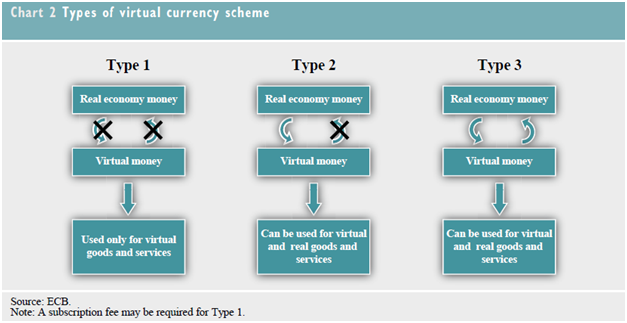
Eight years have passed since then. While authorities debated how to regulate virtual currencies, which could be exchanged not only for virtual goods but also for real currencies, the market moved ahead. We are witnessing the emergence of a new asset class — virtual goods that can be exchanged for both virtual currencies and real national currencies.
Why does this matter?
Previously it was not possible to speak of ownership of digital objects like game items and characters in the full sense. Control remained in the hands of developers; they could alter properties of these objects, print and confiscate them at will, censor and discriminate against users, and ban them from freely transferring or trading these objects. Production and circulation of digital objects were opaque; such data were not openly accessible. Public blockchains changed that and made it possible to transfer control over digital objects from developers to owners of private keys. That is how NFTs emerged.
What is NFT?
NFT stands for the English phrase non-fungible token. If, for example, native Ethereum tokens or ERC-20 tokens are interchangeable, NFT is non-fungible; each token is unique. On the Ethereum network there are three NFT standards: ERC-721, ERC-1155 and ERC-998.
| Standard | Characteristics | Examples |
| ERC-721 | Non-fungible (single-copy token) |
Unique game items or characters. Unique digital artworks. |
| ERC-1155 | Semi-fungible (token in multiple copies) |
Identical game items or characters. Copies of digital artworks. |
| ERC-998 | Composite (token owns other tokens) |
A unique game character owning unique and identical items as well as digital artworks. A unique game character owning a deposit in a DeFi application. |
Beyond the technical details, an NFT is a title of ownership for a digital object. This object can be text, an image, audio, any digital artwork, a game item or character, land and real estate in a virtual world, a domain name, a financial instrument, fan memorabilia, a club card, or a regular event ticket. In addition, the ERC-998 standard enables tokens that own various combinations of the listed objects and ERC-20 tokens. The history of NFT is only just beginning.
A Brief History of NFTs
Pepe the Frog
Experiments with NFTs began with solutions such as Colored Coins and Counterparty, which made tokenising assets on the Bitcoin blockchain possible. The star of that era and one of the oldest NFT projects is Rare Pepe Directory, memes featuring Pepe the Frog.


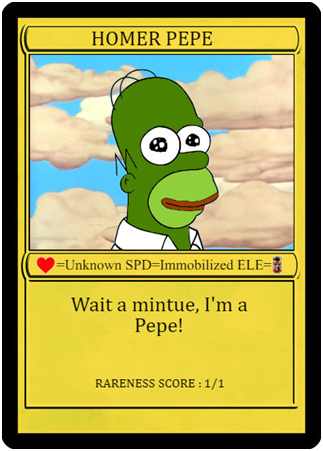
In January 2017 the HOMERPEPE meme, tokenised on Counterparty, was bought for 500 USD in XCP. In January 2018, at the first live Rare Pepes auction, this meme was bought for 38,500 USD in PepeCash tokens.
CryptoPunks


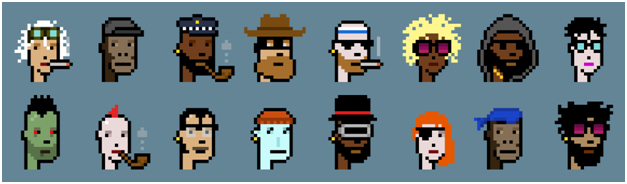
NFTs on the Ethereum blockchain trace their lineage to the CryptoPunks pixel portraits, a project by Larva Labs. There are 10,000 CryptoPunks; initially they were distributed for free, but today they are valuable blockchain antiques. In May 2020, CryptoPunk #6487 was purchased for 100 ETH, and the average daily sale price of CryptoPunks on OpenSea rose to 7 ETH by mid-October 2020.
The CryptoKitties Boom
The first NFT hype was CryptoKitties. The breakthrough feature was breeding cats: take two NFT cats and produce NFT offspring of varying rarity, which you keep or sell. In early September 2018 a two-week-old kitten named Dragon was bought for 600 ETH.


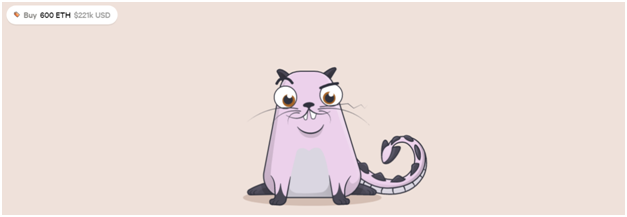
Many projects began experimenting with breeding mechanics, adding other gameplay elements. Today the leader in this category is Axie Infinity.
Another novelty were L2-games built by third parties on top of CryptoKitties. The idea is that games are built around existing NFTs, not the other way around. This idea is being developed by the Enjin project, which raised 75,000 ETH in an ICO at the end of 2017, and Eminence by Andre Cronje.
One of the L2 apps for CryptoKitties, Wrapped Kitties, allows wrapping NFT kitties into ERC-20 tokens. You did not misread; this is tokenising tokens. If you cannot afford a pricey NFT, you can buy a fraction, say one-thousandth. In early October 2020, the wrapped NFT market capitalisation reached 500000 USD.
Toy Speculative Bubbles
The bubble games, or more simply, hot-potato style games, gained notoriety. Their rules are simple: each next buyer pays more than the previous one. After someone bought an NFT from the developers, at each subsequent resale, the price of that NFT automatically rises according to a fixed algorithm.


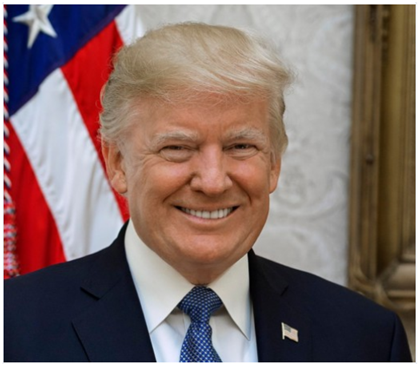
In January 2018 the CryptoCelebrities bubble appeared, and at its peak an NFT featuring a photo of Donald Trump sold for a record $137 000 in ETH. Someone had to pay for the burst. We will return to crypto-market bubbles when discussing NFT prospects.
A New Wave of Tokenisation
Subsequently tokenisation of non-fungible digital objects quickly spread to trading cards (Gods Unchained), RPGs (MyCryptoHeroes, Neon District), sports games (F1 Delta Time, Sorare), virtual worlds (Decentraland, Cryptovoxels), Ethereum domain names (ENS), and traditional financial instruments (yinsure). Tokenisation of digital art got a new boost: creating NFTs, trading them, and earning royalties from them became even easier.
All of these classes of digital objects already trade on NFT marketplaces, and the NFT production and distribution ecosystem includes dozens of projects. Market volumes remain modest, but the brief history suggests growing interest in NFTs. In the second part of this article we will discuss the NFT market, the most successful NFT marketplaces and NFT traders, and the whale category of NFTs based on 2018–2020 results.
(to be continued)
Subscribe to ForkLog news on Telegram: ForkLog Feed — full news feed, ForkLog — the most important news and polls.