



In late August, the cryptocurrency exchange Binance removed from its P2P platform banks under U.S. sanctions — Sber, Tinkoff, and Alfa —, and a few days later, followed suit by OKX and Bybit.
In this article, we discuss alternative platforms where you can exchange crypto assets for fiat without restrictions.
The current state of P2P trading on centralized exchanges
At present, four major centralized crypto exchanges (CEX) have restricted P2P trading for Russians: Binance, OKX, Bybit and KuCoin. The latter banned operations with banks Sber, Tinkoff, and Alfa, about which notified in a letter.
Meanwhile, on HTX’s P2P platform (formerly Huobi), Sber, Tinkoff, Alfa and other Russian banks remain available.


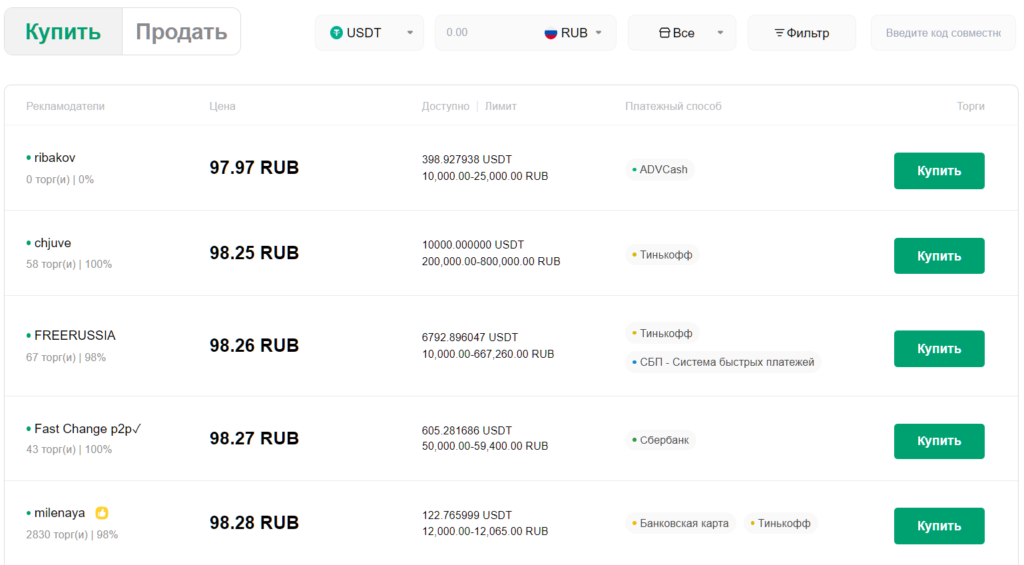
In addition, sanctioned banks still support Bitget and Phemex, which are among the top-50 platforms by CoinMarketCap’s spot volume.
CEX still seem the simplest and safest option for trading cryptocurrencies, but amid tighter regulation, users are increasingly turning to alternative services: exchangers, P2P platforms and Telegram bots.
Exchangers
Crypto exchangers are specialized services offering fixed-rate buying and selling of cryptocurrencies. Clients execute trades with the platform, not with each other.
Typically, users search for exchangers via aggregators like BestChange, which check reserves, collect reviews and rank platforms by rate.
Advantages:
- high liquidity. Usually better than P2P platforms, though still behind centralized exchanges;
- fast trades. Most exchanger trades are automated.
Disadvantages:
- high fees. Exchange quotes are almost always inferior to CEXs and often — to P2P platform offers;
- verification may be required. Depending on jurisdiction, exchangers may require documents confirming the customer’s identity.
Telegram Bots
In September, TON Foundation integrated the TON Space cryptocurrency wallet into Telegram. Telegram users gained the ability to buy Bitcoin and USDT with bank cards and via the built-in P2P service.
Russian users have access only to peer-to-peer trades. The P2P platform does not charge buyers fees, while sellers pay 0.9% of the trade amount.
Cryptocurrencies can also be traded in Telegram bots of popular exchangers: Bitpapa, ExaTON Wallet, Any.Cash and others.
Nevertheless, experts warn about risks of this kind of trading: bots often do not undergo security audits. According to Hacken CEO Dmitry Budorin, additional risk comes from the messenger’s technical features — closed code and lack of independent checks.
Advantages:
- convenience. Users trade directly in the messenger: no need to log in to external sites or install additional apps;
- flexibility. Developers can add new features that simplify crypto exchange and expand client capabilities.
Disadvantages:
- risk of hacking. Compared with CEX, Telegram bots have more potential vulnerabilities due to lower security standards. Also scammers create fake bots; before executing trades, verify their nicknames;
- fewer payment methods. Typically, bots offer a limited set of payment gateways.
P2P Platforms
On these platforms, users trade directly with each other. P2P platforms act as guarantors for trades and combat scammers with a rating system.
For a long time, LocalBitcoins led this segment, but in February 2023 the service announced its closure after 10 years of operation.
An alternative to LocalBitcoins is the non-custodial P2P platform Hodl Hodl: it has been operating since 2016 and does not require KYC. The platform team runs the Baltic Honeybadger bitcoin conference and is developing the Debifi landing platform.


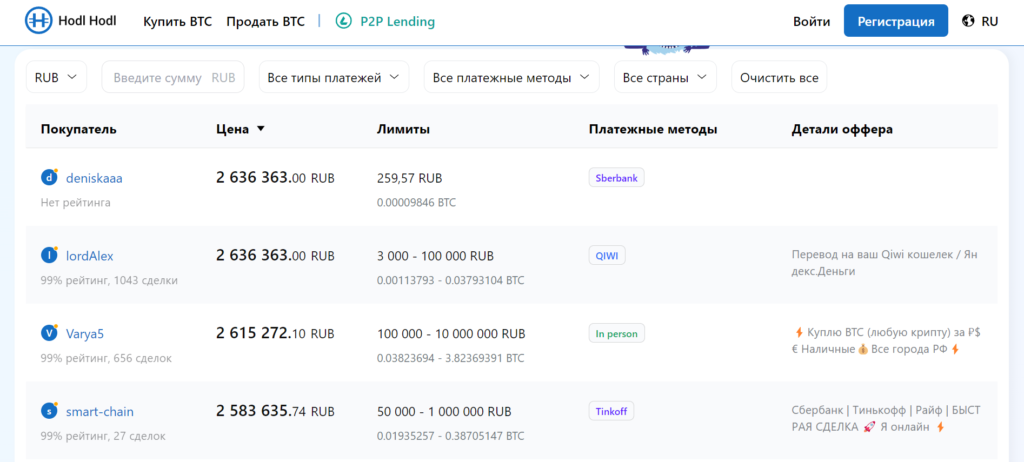
Direct competitor to Hodl Hodl is the MySecure platform, which also allows exchanging Bitcoin without KYC. All trades on the platform are conducted using multi-signature contracts.
In 2023, emcd — the software developer for storage, exchange, and mining of digital assets — launched its own P2P platform. The company ranks among the top-10 mining pools for Bitcoin.
emcd. supports Bitcoin, USDT, Ethereum, Litecoin and other cryptocurrencies. Until 2024, users can trade without KYC.
Advantages of P2P platforms:
- non-custodial. Users hold funds themselves and trade directly with each other;
- anonymity. Most such platforms do not require verification;
- variety of payment methods. In addition to bank transfers, users have access to local payment systems, cash, and gift cards.
Disadvantages:
- security risks. Users may lose funds due to carelessness or fraud by counterparties;
- exchange rate. Typically, quotes on P2P platforms are somewhat higher than on centralized exchanges.
How to exchange cryptocurrency for fiat without intermediaries
Let us consider selling USDT for rubles using the emcd P2P platform as an example. We tested the web version of the service, but the platform is also available in a mobile app for Android and iOS.
To conduct a trade, you need to register: provide an email address and password, and then accept the platform’s terms of use.
After email confirmation, a personal account will open. To access the P2P platform, click the button “Buy and sell crypto”.


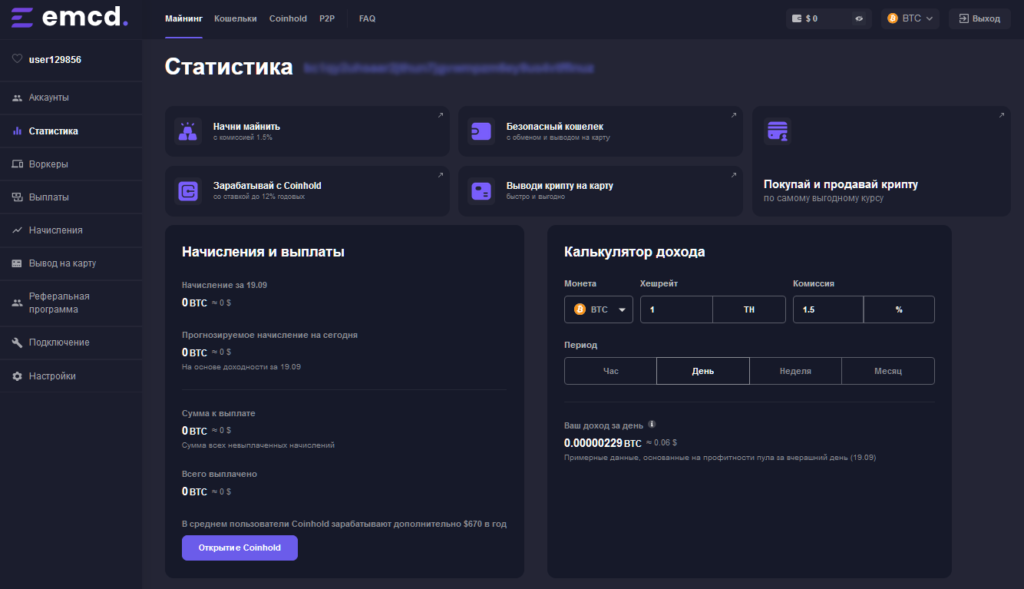
We review listings to sell the stablecoin Tether for rubles: seven offers for Tinkoff, ten for Sber, and the rest for other banks. The US dollar market rate at the time of writing is 96.60 rubles.


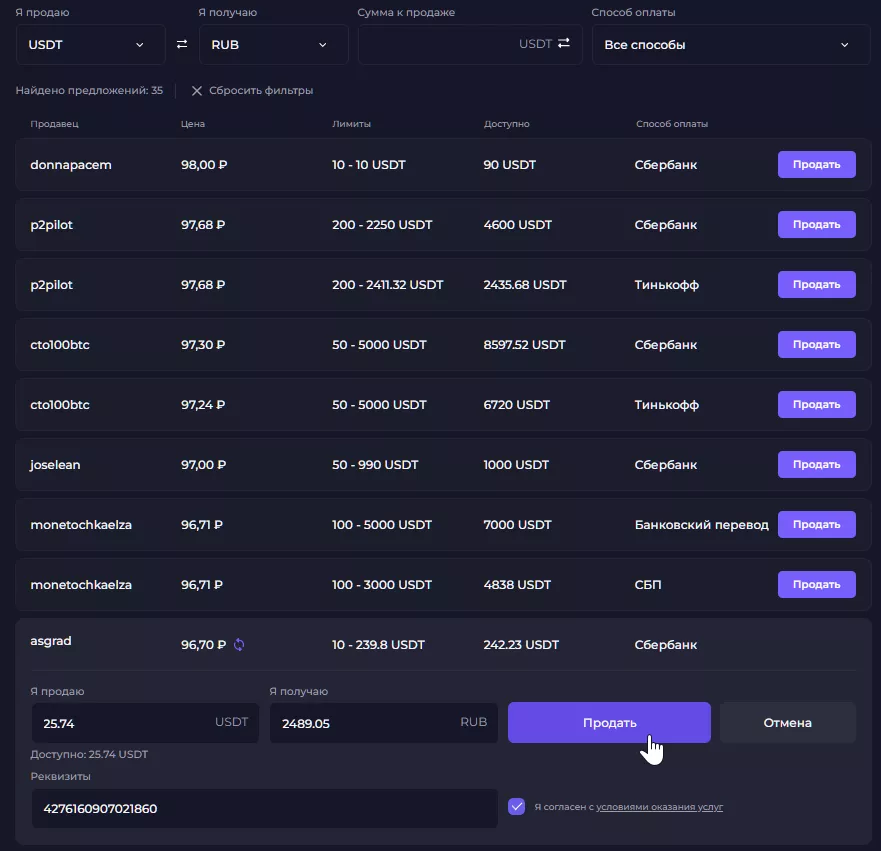
We run a test trade — selling 25.74 USDT. To do this, specify the order amount directly in the list of offers and click the “Sell” button.
We recommend enabling 2FA in your profile settings (the “Statistics” section); otherwise you will have to do it during the trade.
Although the stated execution time for the trade was two hours, the seller transferred the payment within a couple of minutes.

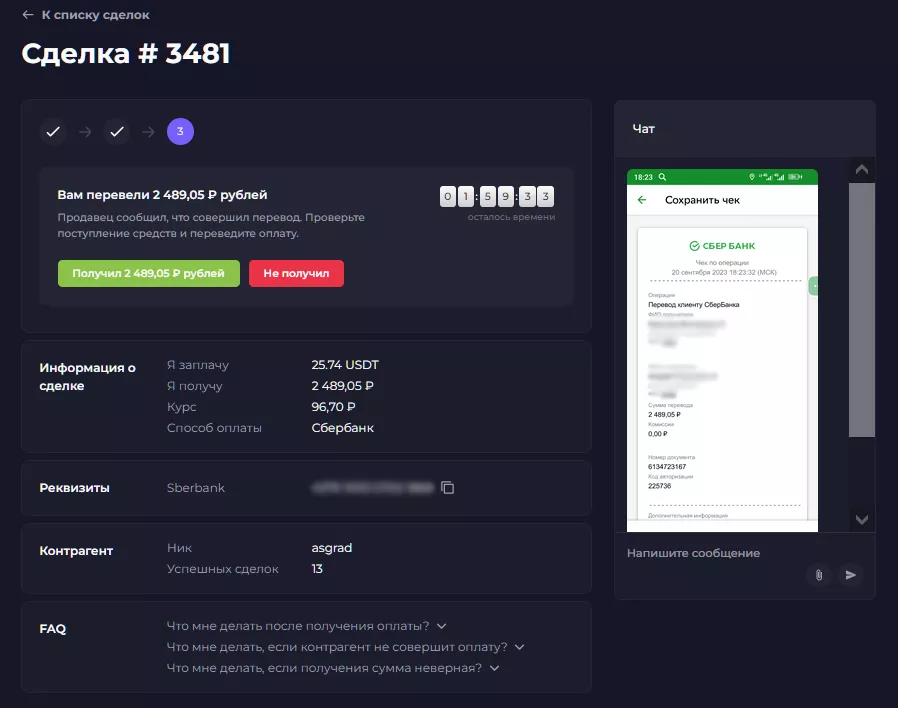
Among emcd’s drawbacks is the lack of a rating system: sellers have no reviews, and you can see the number of completed trades only after opening an order.
Conclusion
Centralized exchanges remain the most popular solution for buying and selling cryptocurrencies for fiat. However, amid tightening regulation, investors are increasingly turning to alternative platforms: Telegram bots, exchangers and P2P platforms.
These platforms have been on the market for quite a while and allow users to trade directly with each other without relinquishing control of their assets. Thanks to decentralization, clients of such services can circumvent regulatory restrictions and also mask the fact of direct interaction with them.