




After the approval of bitcoin ETFs in the US, many in crypto expected a flood of institutional money. Yet nine months on, the numbers suggest their presence has been minimal.
Oleg Cash Coin examined what bitcoin ETFs have really contributed as an investment vehicle.
The ETF myth
The first exchange-traded funds based on bitcoin appeared no later than 2015. For almost a decade, institutional investors could easily buy not only bitcoin but also invest in various exchange-traded products based on it outside the US. The most farsighted organisations did just that.


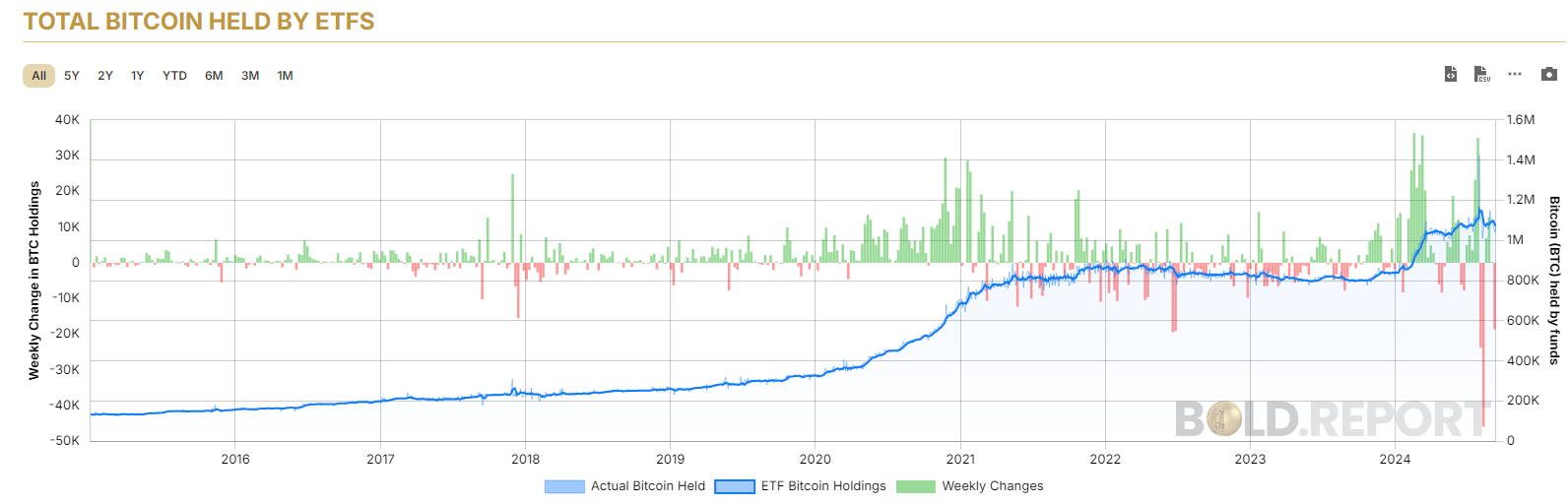
By the time US ETF trading launched, such funds had amassed around 850,000 BTC. As of 13 September 2024, their combined holdings had reached roughly 1,050,000 BTC.
Net inflows thus amounted to 200,000 BTC. Moreover, US ETFs are populated largely by retail investors rather than companies and financial institutions.
This is evidenced by statistics shared by analyst Jim Bianco. According to the data he cited, 85% of investors in the segment are not institutions.
“Who is buying these funds? Answer: small ‘tourist’ online retail,” Bianco concluded.
Even more telling, average trade sizes in spot ETFs sit in a modest range from $11,000 to $16,000, and the participating traders are losing money.

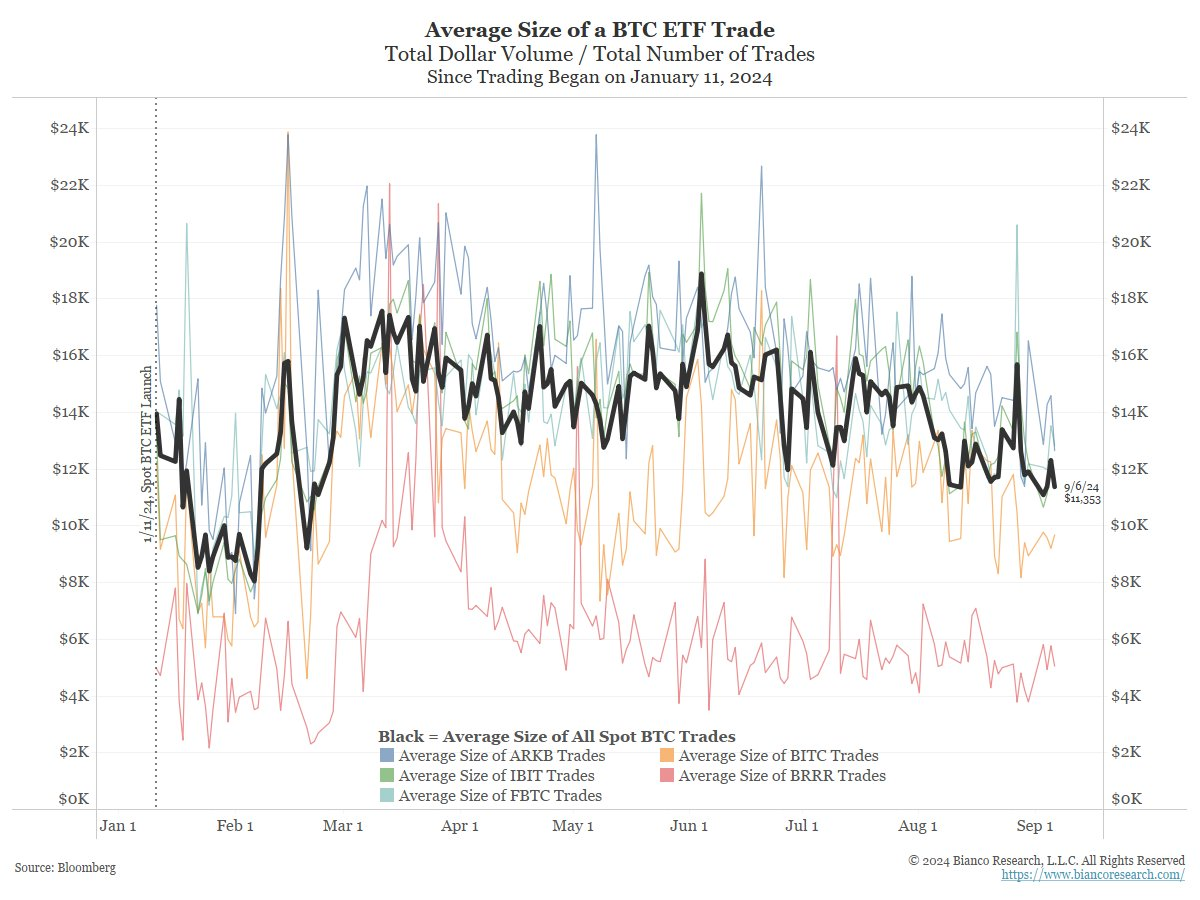
An unflattering conclusion follows: institutions remain largely absent from crypto. The new money has come from retail investors, who could just as well have bought bitcoin on any exchange.
Media coverage of ETFs and, for example, numerous appearances by BlackRock chief Larry Fink may have helped some investors decide.
It is worth noting that the company trades 438 innovative ETFs on US markets. According to ETF.com, it manages about $3.037trn. Yet BlackRock’s bitcoin ETF holds only $21bn, just 0.69% of the firm’s ETF assets.
What matters more than ETFs
Bitcoin does not need ETFs for global adoption simply because it has already happened.
More than a year ago, the bitcoin network saw a sharp jump in daily transactions. Since April 2023 the figure has nearly doubled—to 300,000–600,000 operations per day.

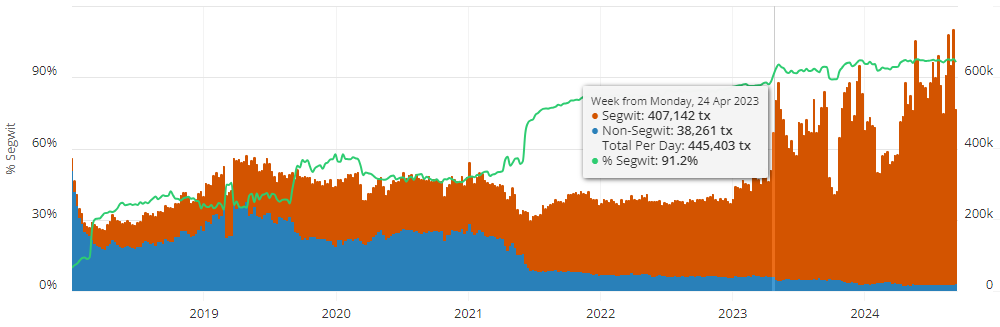
At the same time, average throughput increased from three to five–eight transactions per second. This suggests that, despite bitcoin’s supposed sluggishness, it has been used in earnest for almost two years straight, without regard to market conditions.
The rise in activity coincided with improvements in Ethereum’s scalability and its layer-two solutions, as well as the launch of many more flexible blockchain projects.
Despite bitcoin lacking widely adopted smart contracts, DeFi and other fashionable technological narratives, we are seeing growth in fundamental metrics—uncorrelated with the altcoins market, hype around airdrops, meme coins and traditional financial instruments such as ETFs.
This may point to a very different level of adoption for the first cryptocurrency compared with the rest of the blockchain sector.
HODL
The growth in activity and use of the bitcoin blockchain coincided with another important metric: the share of coins not moving on-chain. According to HODL waves, more than 65.6% of digital gold has remained unmoved for over a year.
At the moment ETFs were approved, the figure was 70.3%, which means about 4.7% of long-term investors have moved their bitcoins since then—that is, more than 928,000 BTC changed hands.


These figures align with the total amount of digital gold held in US funds’ accounts. According to the Bitbo service, they currently hold just over 900,000 BTC.
Conclusions
Most of the bitcoin held by global funds before the US approval of ETFs flowed into American funds from early January 2024, as shown by the HODL waves.
Thus, the approval of ETFs did not materially change HODLers’ behaviour. Funds that had accumulated BTC before 2024 simply moved coins to the addresses of other funds after the SEC approval.