



Not Our Future: Why Science-Fiction Writers Are So Often Wrong
Matrix — a series of ForkLog podcasts in which we examine how the digital environment is transforming with the arrival of VR and augmented reality technologies, and discuss metaverses with pioneers: businessmen, researchers and philosophers. In this episode, philologist Artem Zubov talks about science fiction, the imagination of the future and its limits.
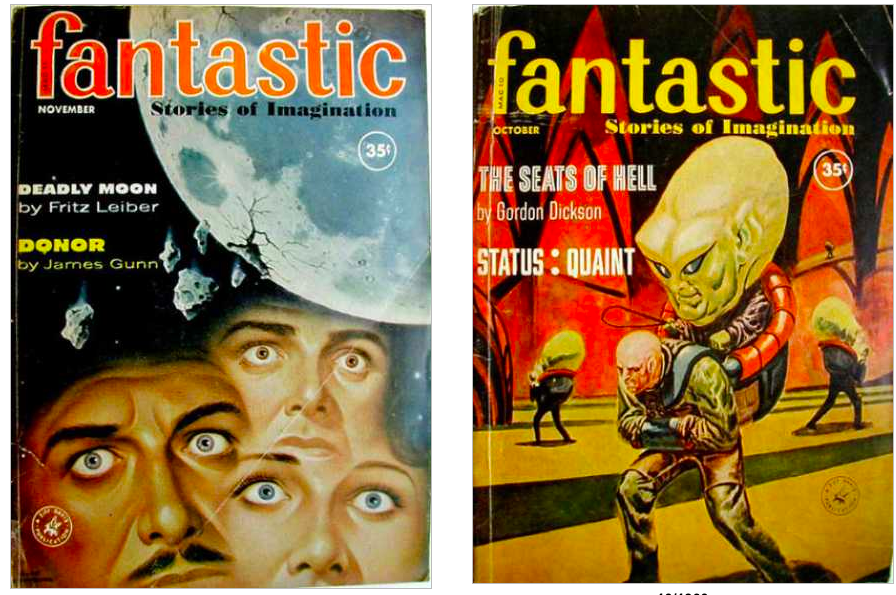
1. It is more interesting to look not at what the fantasists predicted, but at which “elephants” they overlooked. For example, computers, or more precisely the trend toward miniaturisation. If we turn to science fiction from the 1940s–60s, computers become ever larger. Recall the famous Arthur C. Clarke short story ‘The Nine Billion Names of God.’ There, the computer is a gigantic behemoth capable of the most complex calculations, to which fundamental questions of existence are posed. Or the canonical Harlan Ellison story ‘I Have No Mouth, and I Must Scream.’ There the supercomputer is the size of a planet. In reality the opposite happened.
Another “elephant” that the fantasists did not think much about is the Internet. Global communications often took the form of complex technologies using devices resembling a radio; some authors pondered telepathy. But the idea of a universal information network was rarely described for some reason.
Fantasists also tend to depict technologies as if they replace each other in sequence. However we know — more often what cultural theorist Henry Jenkins calls convergence occurs: old and new technologies coexist. In a world where machines fly, there are still horses.
But the most interesting blind spot is that science fiction writers hardly reflect on art and culture, including literature itself. It turns out they do not fantasise about what they do. This is quite paradoxical. Of course, cultural figures become heroes of science fiction. But writers rarely engage with the role of the author who creates fantastic worlds. Perhaps this has historical roots: scientists and inventors were far more often the heroes of science fiction works. It was their activity that was deemed important for global political or social change, not art and cultural practices.
2. The question of how science-fiction writers influence the world around them is very popular, but answering it is almost impossible. Notable inventors often admit in interviews or autobiographies that as children they read Jules Verne or H. G. Wells and, inspired, chose a path that led to discoveries. Elon Musk has said that as a child he loved Isaac Asimov, Robert A. Heinlein and others. They allegedly inspired him to become who he is. Essentially, these are historical anecdotes. But the situation becomes far more interesting when we realise that images, ideas, and concepts from writers can enter various production chains, undergoing a very complex path with many stops and branches.
There are known cases when producers of various technologies attempt to appeal to science fiction, creating in the audience a sense of recognition, of fulfilled expectations. On screen we are told: ‘The future is already here.’ And they offer supposedly new products in the wrapper of science-fiction iconography. There are cases when producers seek to initiate this influence. For example, in 2014 Microsoft invited writers to its secret laboratories to show what it was working on. It was envisaged as a kind of imaginative motivator — each author, reflecting on what they had seen, would write something remarkable, and the developers would read it and become even more inspired. In reality it simply served as advertising, although the project stipulated that the writers would write for free. Apparently the lack of a fee also played a part in the reason nothing interesting resulted.
Similar initiatives had arisen earlier: the renowned writer Neal Stephenson launched the Hieroglyph project in 2011 with a socially activist aim. It was intended to assemble a team that would generate a positive and more human perspective on the development of the world and society than is usually produced by science fiction. A few anthologies were published, in their own way curious.
I offer this to illustrate that the question of influence can be framed in different ways. The word itself can be understood in different senses. Let us say, a dispute, a challenge — these are also forms of influence. Here there is a striking example. In the film The Fifth Element there is a cult scene: the blue alien first performs an aria by Donizetti from the opera Lucia di Lammermoor, and then moves to a piece composed especially for this film by Eric Serra. This aria was written so that a person could not perform it: every note was recorded separately, so the piece is stunning. But what happened over time? People perceived the sci‑fi scene as a challenge, trained, and gradually approached the original. Now there are many live performances of this composition on YouTube.
3. Science fiction is not about the future; it is always about the present. Herbert Wells wrote the unusual, innovative and very short novel The Time Machine. The hero, sitting in a single room, instantly moves between centuries and millennia. I tried to imagine how a reader of the late 19th century, unfamiliar with airplanes or hyperspeeds, would have perceived this text. It was probably a strange experience. The writer in this situation was the one preparing the reader for changes that would come many years later. He, in a sense, helped adapt to the modernity that was just beginning to arrive. Undoubtedly, people in the early 20th century felt that the world was starting to change at a frightening pace, and it was accelerating.
In Ursula Le Guin’s foreword to the edition of The Left Hand of Darkness she argues that science fiction, of course, does not forecast or display the world of the future. It suggests a metaphorical reading of the present; it is a metaphor for the problems, sensations, and feelings of a person living here and now. Several years later, the same idea was echoed by philologist and literary critic Fredric Jameson. He said:
‘The most characteristic works of science fiction do not seriously try to imagine a “real” future. Rather, these diverse “futures” are meant to perform a completely different function: the function of transforming our own present into a past of some forthcoming one’.
The point is the same: science fiction transmits the experience we are currently living through, through the prism of our projection onto the future. Accordingly, reading such literature literally makes little sense — it is the most disappointing experience, because it ages in five to eight years. But if you understand it metaphorically, it becomes far more productive.
The world around us is woven from words. Science fiction offers a new language to describe it. A telling example: the word ‘rocket’ originally denoted a projectile, sometimes a weapon. It took the science-fiction writer Jules Verne to rethink the projectile as a form of transport. In other words, the imagination of a writer, a person who works with words, was needed to create a metaphorical transfer. The same happened with the word ‘ship.’ The phrase ‘spacecraft’ now feels natural to us. Yet it arose only in the early 20th century, when writers faced the need to speak of the unfamiliar — of space. And then the universe was linked with the sea, and what moves through it with a ship. Later, the cultural meanings carried by the notion of a vessel sailing the seas and exploring unknown lands were transferred to the spacecraft. And it turned out that their crews are doing the same as Columbus. They discover new frontiers. Why was this necessary? To domesticise and bring the unknown closer.
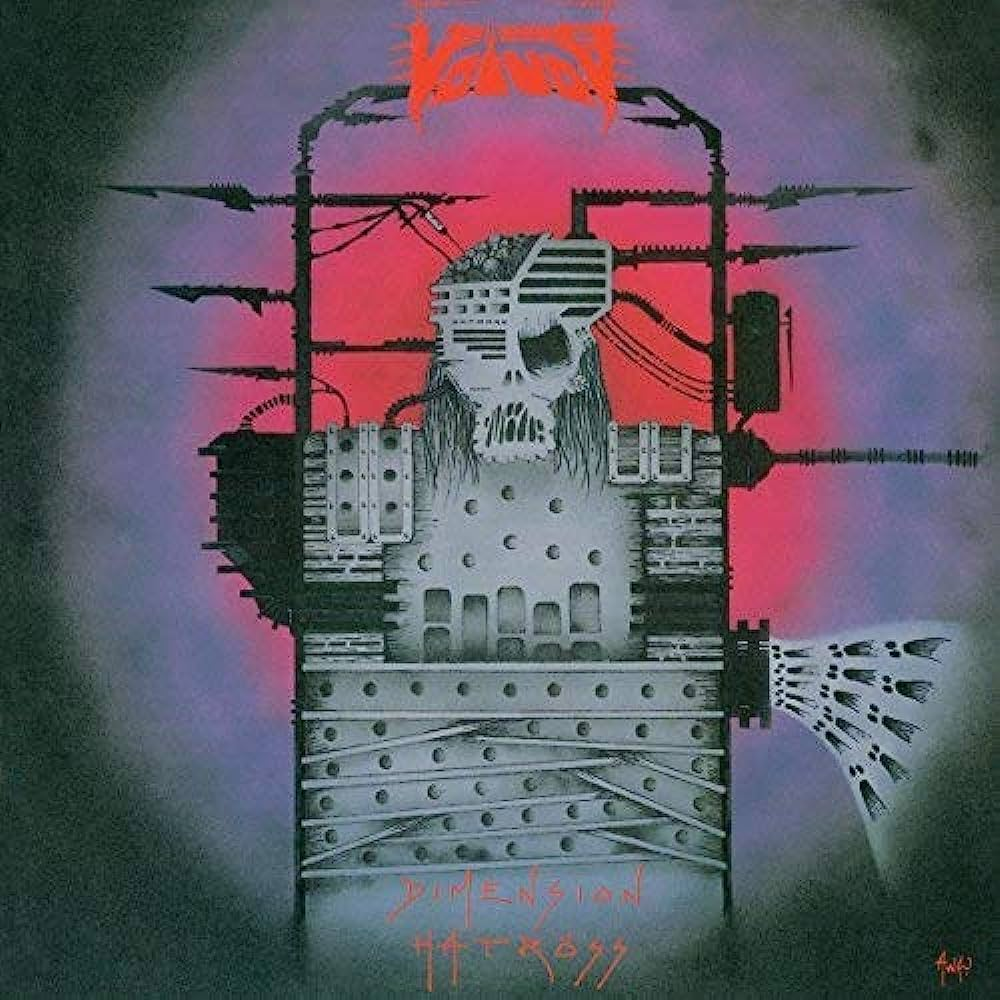
4. Cyberpunk remains relevant, because it helps people process their own experiences. For example, disembodied communication. Cyberpunk emerged as a phenomenon that appeared not only in literature but immediately in film and other art forms. It is a transmedia phenomenon: in talking about it, we mean not only plots and narrative structures, but it also has a distinctive visual aesthetic associated with fogs, backstreets, detectives in trench coats, neon, and Eastern hieroglyphs.
The idea that a text should evoke visual associations probably arose in the late 1970s thanks to Star Wars. The film made science fiction a mass phenomenon, accompanied by a flood of visual associations and narrative tropes. Cyberpunk followed a similar trajectory: it instantly captured a wide range of media spheres.
The principal cyberpunk novel — Neuromancer by William Gibson — appeared in 1984. It defined a new face of science fiction: before it, it was one thing; after it, another. Note that in the first half of the 1980s there was a contest among different groups of writers. One group was led by the cyberpunks Gibson and Bruce Sterling, while the other — the so‑called “humanists” — was led by Kim Stanley Robinson. Dominance was shaped by literary awards — by them one group won a prestigious prize for a short story, another for a novella, then again for a short story, and then finally Gibson won the main prize for a novel. All, victory. And then, in the early 1990s, Bruce Sterling unexpectedly announced that cyberpunk was dead.
What a strange fate — from the vanguard to death in a few years? It is clear that by “death” we do not mean that no one writes that way anymore. On the contrary. But the genre stabilised: the social‑critique rhetoric faded, and a set of stable visual and narrative conventions remained — the fog, the cigarette, the trench coat, the neon, and the hieroglyphs. The fact that we can list them so easily was, for Sterling, a sign that the living phenomenon had ended and a set of clichés remained that could be reproduced ad infinitum. Of course, the writer acts as a “gatekeeper” who wants to dictate the rules of the game. He is the custodian of what things ought to be in reality.
But if the images begin to conventionalise and resonate with audiences, it suggests there is something real in them. They convey a particular experience that matters to a broad audience. It is probably not necessarily tied to critiques of capitalism or resistance to multinational corporations. Perhaps it concerns a more “timeless” experience that cyberpunk imagery helps us to reflect on. For example, the intimate experience. Cyberpunk asks what embodiment without a body is. Or contact without touching, which enables us to access virtual space. Disembodied communication — perhaps this is what we want, and at the same time what we fear.
Рассылки ForkLog: держите руку на пульсе биткоин-индустрии!