



On 9 September Apple held its annual showcase, unveiling new iPhones and AI-enabled AirPods, as well as Apple Watch. The devices go on sale on 19 September.

On-device LLMs
Apple mentioned artificial intelligence only a few times, mostly reiterating updates announced back in June.
The marquee novelty was live translation in AirPods. The feature enables real-time conversations with speakers of other languages.
“They translate not just individual words. The meaning of each phrase is preserved. When you need to speak, just do so naturally,” a company representative said.

Apple said it has upgraded the GPU in its AI chips, enabling them to run large language models locally.
The processor features a second-generation caching architecture, doubling its compute capacity. In addition, the GPUs, typically used for graphics, include dedicated “machine-learning accelerators” for AI tasks.
The updates deliver a threefold increase in GPU compute over last year’s models. Apple also said the phone’s computational power is comparable to MacBook Pro laptops.
There was no word on the long-awaited Siri rebrand—neither the current version nor the upcoming update with AI was mentioned.
Other announcements
Smartphones
The iPhone 17 Pro and Pro Max bring an improved camera system and a redesigned back:
- 18‑megapixel front camera with Center Stage;
- all three rear cameras are 48 megapixels;
- 4x optical zoom at 100mm and a long‑reach 8x zoom at 200mm;
- a tetraprism telephoto lens and an improved image‑stabilisation system.


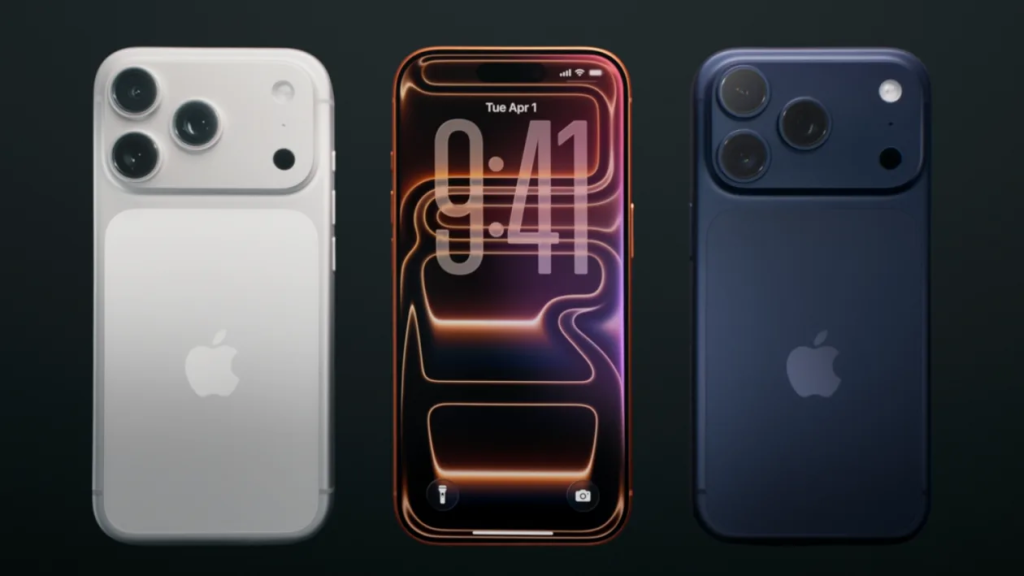
Apple raised the base price of the iPhone 17 Pro by $100 to $1,099, though storage now starts at 256GB rather than 128GB. Upgrading to 512GB costs an extra $200. A 2TB model will be $1,999. The iPhone 16 Pro started at $999.
Apple discontinued its mid-tier iPhone 16 Plus at $899. It has been replaced by the iPhone Air, starting at $999 and measuring 5.6mm thick.
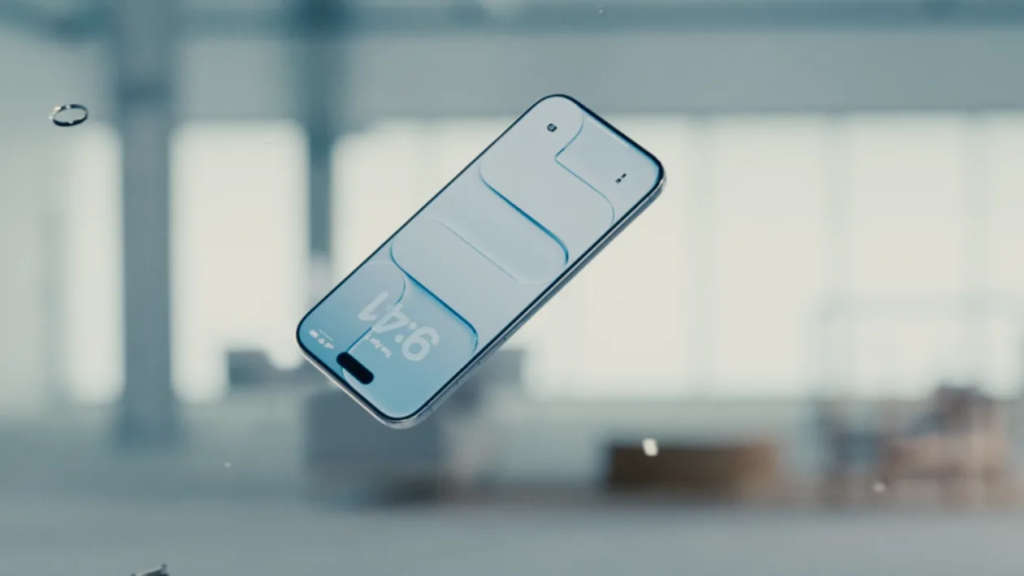
The Air prompted questions about battery life given its slim chassis and, consequently, smaller battery.
“Despite iPhone Air becoming much thinner and lighter, it still delivers all‑day battery life,” the company said.
The Air’s internal design increases space for the battery, and the new iOS 26 will add power‑saving features that learn usage habits and anticipate when the charge may run low.
The base iPhone 17 still starts at $799. It gains a 120Hz display refresh rate.
Top-end Pro Max models will start at $1,199.
The iPhone 17 Pro now uses an aluminium frame; titanium moves to the Air.
iOS 26 will roll out on 15 September, available to all users. The headline change is a visual redesign. Apple calls the new look “liquid glass”. Opaque, static buttons and menus across the system give way to animations and translucent elements that “flow” like water as users move through the interface.
Watches
Apple Watch prices are unchanged:
- the budget Apple Watch SE 3 starts at $249;
- the mainline Apple Watch Series 11 — from $399;
- Apple Watch Ultra 3 — from $799.
The Ultra gains a better display, satellite connectivity and 5G support.
Series 11—“the thinnest and most comfortable watch”—adds a ceramic coating on the glass for scratch resistance. It also gets a new 5G modem and an updated antenna architecture. They last up to 24 hours on a charge.
The watches now monitor hypertension. Background algorithms look for signs of chronic high blood pressure, analysing data over a 30‑day period.
Headphones
AirPods pricing is also unchanged—they start at $249.
Beyond live translation, active noise cancellation and longer battery life, the new AirPods Pro 3 will ship in five sizes. The company calls them “the most comfortable ever”.
“No matter which earphones you used before, with AirPods 3 you will get the world’s best active noise cancellation among in‑ear wireless gadgets. Transparency mode will let you hear your surroundings, and your own voice and the speech of people around you will now sound more natural than ever,” Apple said.
Battery life rises to up to eight hours on a charge, from six previously.
Shares
Apple’s shares dipped immediately after the presentation—a pattern seen every year.
🇺🇸アップル株の動き $AAPL
Apple Event, 2025/9/10(日本時間)
iPhone 17, iPhone Air, AirPods Pro 3ほか発表 pic.twitter.com/AQi0pUGrC7— 池田伸太郎 (@sikeda23) September 10, 2025
Portfolio manager Andrew Fisher noted that the drop reflected a lack of innovation. Other users agreed.
AI evangelist Linus Ekenstam pointed out that Apple has long been shrinking devices in preparation for “face‑worn computers”.
“For context: the modems, antennas—everything needed for iPhone Air to work—fit inside the camera bump. The rest of the phone is screen and battery,” he noted.
The company once again shows it “lives in its own world”, the expert stressed. With ample cash, it can afford to do so.
“We are witnessing a harbinger of Apple’s next big breakthrough,” Ekenstam concluded.
Apple is preparing a large-scale entry into the artificial-intelligence market with a lineup of new devices. These include robots, a smart speaker with a screen, home-security cameras and an enhanced version of Siri.