



One in Six Meme Tokens on Base is Fraudulent, 91% Have Vulnerabilities, Study Finds
Since the Dencun update, which reduced fees in L2 solutions, Coinbase’s Base protocol has seen a sharp increase in users, transactions, and TVL. Meme coins dominate much of this activity, with one in six coins being a scam, according to a report by Cointelegraph Magazine.
Researchers compiled “profiles” of 1,000 tokens launched between March 19 and 25. In total, Base hosts around 380,000 ERC-20 assets.
The coins were analyzed by auto-auditors on the DEXTools analytics platform to determine their safety. The tool examined locked liquidity, verified contracts, and the absence of “honeypots.”
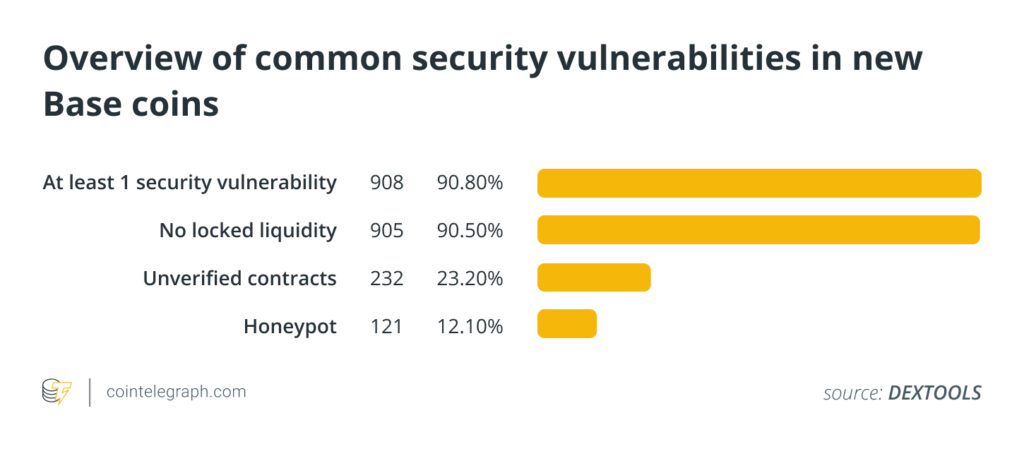
Some 90.8% of tokens were found to have at least one security flaw, and 90.5% lacked a locked liquidity pool (LP). Additionally, 23.2% did not have a verified contract.
About 12.1% were “honeypot” assets, which can be bought but not sold due to smart contract restrictions.
While the data suggests potential illegal activity, it also reflects a lack of knowledge among meme coin creators about security procedures, especially if they launched a token as a joke, the study notes.
“This scenario highlights the challenges faced by projects that may lack the resources to hire security experts or conduct independent assessments of their smart contracts,” said David Schwed, COO of security firm Halborn.
Blatant Fraud
According to the analysis, 16.9% of projects are suspected of criminal intent due to excessive sales fees or outright fraudulent smart contracts.
Potential “honeypots” were found in 121 assets, with 48 coins having commission fees reaching 100%, which is akin to outright theft.
“Meme coin fraud can take various forms, and automated auditors may mislabel tokens or even overlook some ingenious schemes,” noted Cointelegraph.
The most common vulnerability among the 1,000 analyzed projects was found in their LP. Some 90.5% of projects did not lock their liquidity, making them prone to failures and potentially susceptible to rug pulls.
“A direct countermeasure to the risk of developer disappearance is for teams to lock their liquidity pools. This action serves as a guarantee that they will not gain access to the assets. Sometimes these promises have an expiration date,” the study states.
However, the absence of liquidity lock does not always indicate fraudulent intent. Among the 905 projects without a lock, 675 had verified contracts.
Real Utility
According to trading data provider Birdeye, around 1,300 new tokens appeared on Base in the week leading up to March 25. Over the next seven days, their number grew to 4,000.
During this period, the weekly figure on the Solana network was about 19,000 coins. Based on the information obtained, researchers noted a shift of meme traders to Base’s decentralized exchanges (DEX).
From March 25 to April 2, trading volumes on Solana’s DEX significantly dropped, with the top five platforms in the ecosystem recording a decline of 20-60%.
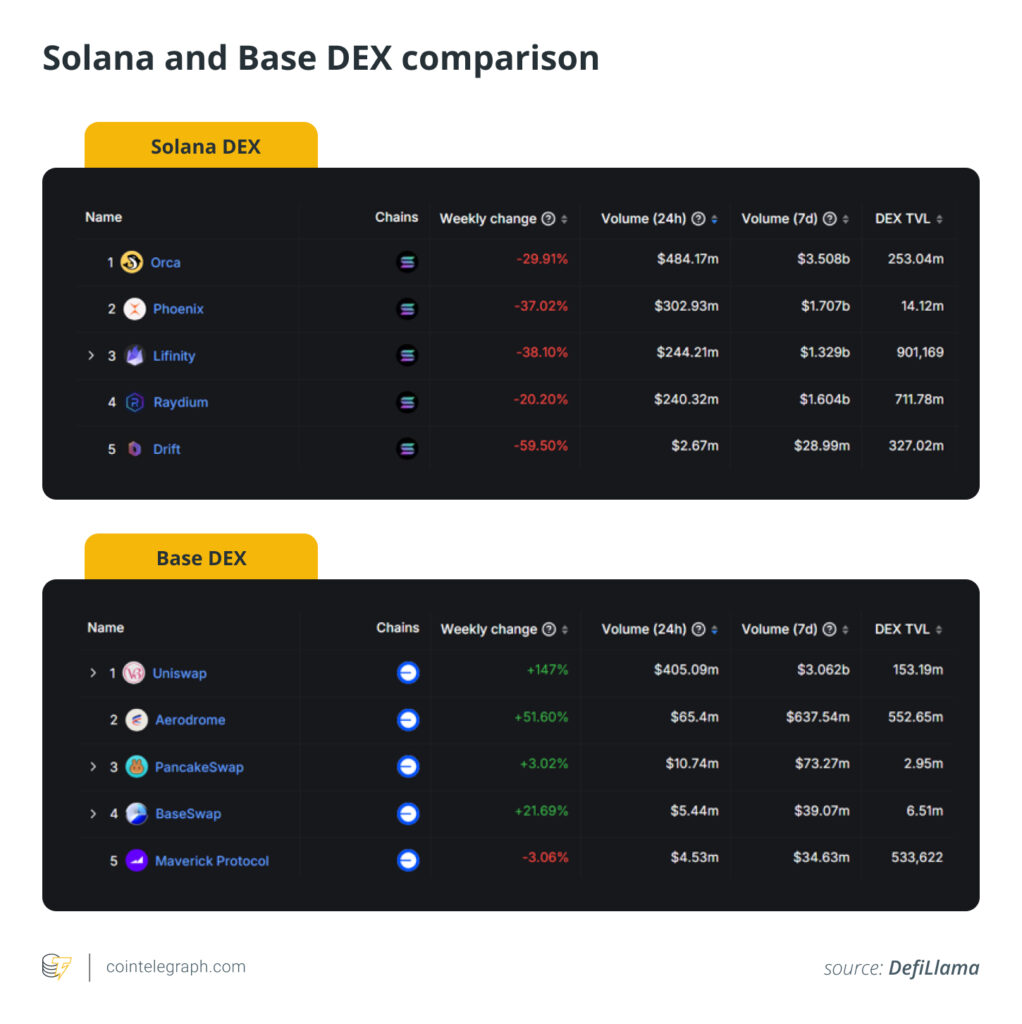
Meanwhile, four out of five decentralized exchanges on Base showed growth. The trading volume of leading Uniswap increased by 147%, reaching $405.09 million.
Previously, some industry experts criticized the meme coin boom, fearing a bubble burst. CryptoQuant founder and CEO Ki Young Ju stated that such projects harm the crypto industry. He compared the situation to the 2018 ICO craze, which resulted in most investors losing their funds.
Conversely, Messari’s head of research Martje Baas argued that meme tokens play an important role in attracting new users to cryptocurrencies. Former BitMEX CEO Arthur Hayes and macro investor Raoul Pal also saw value in these assets for the industry.
On April 3, the team behind the meme coin URF vanished with 2,400 SOL (~$450,000) collected during the coin’s presale.
Рассылки ForkLog: держите руку на пульсе биткоин-индустрии!