


Only one Bitcoin node is still running. What now?
Wars, epidemics, natural disasters and hacks of critical systems have, sadly, become the backdrop to daily life. Many of us now find ourselves grateful for simple things like uninterrupted water and electricity.
With that in mind, ForkLog and the metaverse Undeads imagined a world without the internet—and explored why, even then, you could still pay with bitcoin for a can of radioactive cockroaches.
Electric dependence
The modern world rests on two uninterrupted infrastructures: electricity and the internet. If the power stays off for long, a crisis inevitably follows in financial institutions, communications, transport networks and vital services such as water and medical care.
Blackouts occur for many reasons. Industrial accidents are common, as are malicious actions by hackers or terrorists. Natural disasters—earthquakes, hurricanes or floods—pose a similar threat, wrecking power lines.
Geomagnetic storms stand apart as a serious hazard with potentially catastrophic consequences. In 1989 one such storm knocked out Quebec’s grid for nine hours, affecting millions.
The strongest on record was the 1859 geomagnetic storm, known as the Carrington Event. It produced auroras across the globe, far beyond the high latitudes. A massive coronal mass ejection disabled telegraph systems in Europe, North America and Australia.
In 2012 Earth narrowly missed a Carrington-scale catastrophe: a blast of charged plasma particles passed by nine days ahead of the planet. Otherwise, the United States alone could have faced daily losses of around $40bn from grid failures, with recovery taking months or even years.
Since early 2024, unusual auroras have been seen worldwide, which signals rising solar activity at the peak of its 11-year cycle.
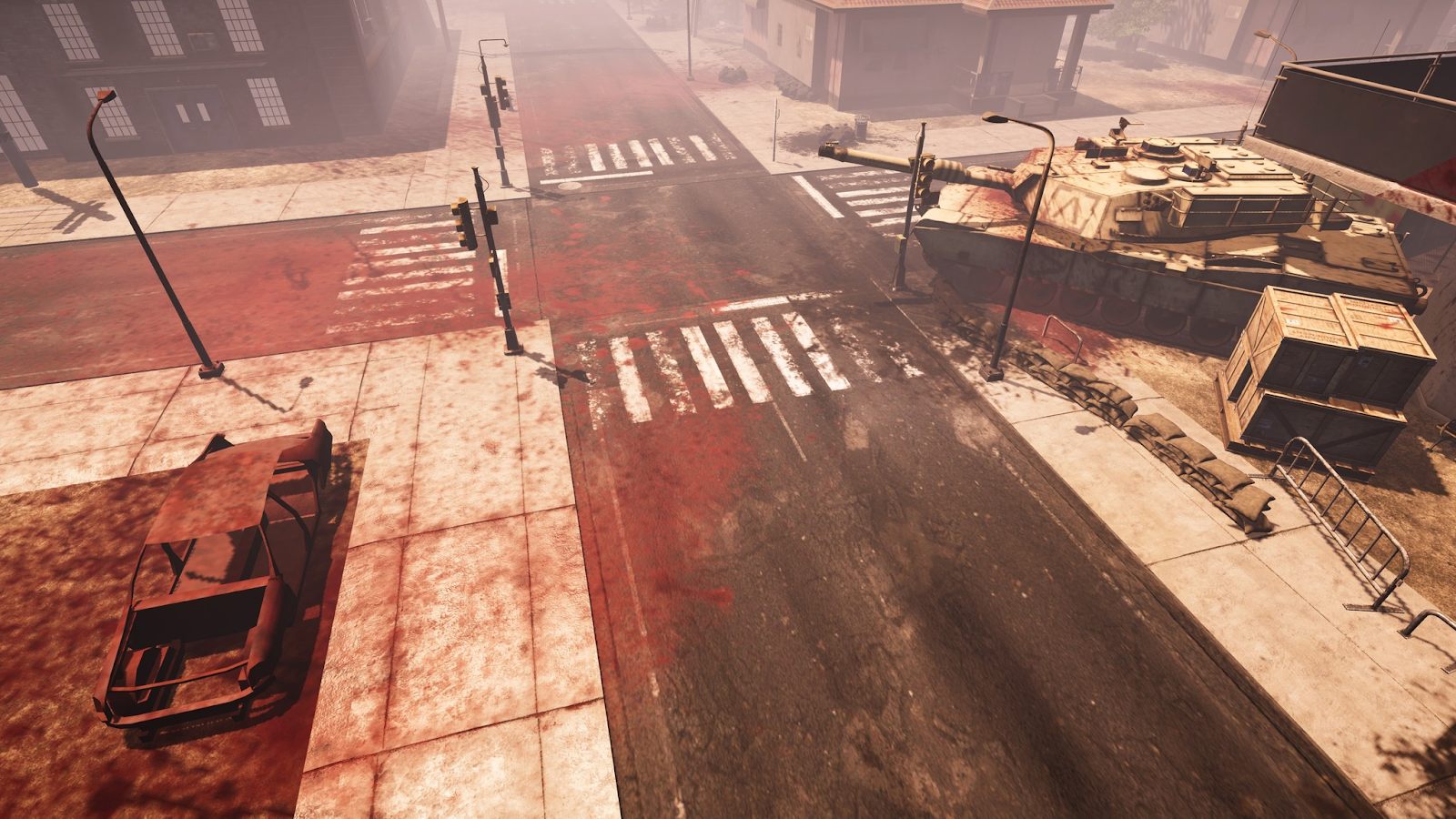
“But deep down all zombie fans are waiting for the day when they can show off the survival skills they’ve learned from games, films and YouTube videos,” notes Undeads CMO Ash Hodgets.
Bitcoin without power
If an entire continent lost electricity, generator fuel and batteries might last for a while—but it is unclear whether they could operate amid induced currents in conductors.
All forms of communication would be constrained, as satellites are hit first by solar particles. Even so, bitcoin and the broader blockchain industry have tools to mitigate the damage.
Satoshi Nakamoto set out to create a decentralised means of payment that did not rely on a vertical system housed on a single organisation’s server or in its data centre. Bitcoin has no single point of failure—an attribute that makes it more resilient than traditional finance and able to survive harsh conditions.
If a significant share of nodes goes offline, the network can adapt. Bitcoin’s mining difficulty adjusts every 2016 blocks; if the number of active nodes drops sharply, it will fall, allowing remaining miners to keep going.
Bitcoin’s resilience rests on several factors:
- decentralisation. To kill bitcoin, every node would have to be destroyed—an almost impossible task;
- permissionless access. Bitcoin does not require a third party’s approval to send transactions—especially relevant in an apocalypse;
- security. The SHA-256 hashing algorithm makes digital gold practically impervious to hacking;
- offline transactions. Bitcoin is data that can be transmitted in many ways, including by radio.
If only ten nodes remained worldwide, second-layer (L2) solutions would help. Less resource-hungry networks such as Lightning Network enable microtransactions off the base chain wherever the internet is available.
With no connectivity at all, Blockstream offers an option. Its protocol lets users download a full bitcoin node without internet access and also supports the Lightning Network. The company uses five geostationary satellites to “broadcast the blockchain” to Africa, Europe, South America, North America and the Asia-Pacific.
Another communications device useful in near-apocalyptic scenarios is RockBLOCK from Iridium. It is designed for short messages or small data packets (up to 340 bytes) when cellular or internet access is unavailable.
RockBLOCK connects to the Iridium satellite network, which covers the entire globe, including remote and hard-to-reach regions such as deserts, mountains and oceans. Its small module can be integrated into various devices—drones, buoys and research instruments—and is used for real-time monitoring, emergency alerts and scientific expeditions.
When radio is the only communications medium left, mesh networks can help.
One popular device in this segment is goTenna, which connects to a smartphone via Bluetooth to exchange SMS messages and share coordinates with other devices. It uses low-bandwidth channels on 151–154 MHz, which reach far.
In 2018, in cooperation with Samourai Wallet, a mobile app called TxTenna was created to send bitcoin transactions. In October that year a test successfully sent a bitcoin transaction over a mesh network at a distance of more than 12 km.
Back in 2014, the startup Kryptoradio transmitted bitcoin transaction data via Finnish terrestrial digital TV transmitters. The trial ran for two months, during which the project broadcast data to 5m people, or 95% of Finland’s population.
Finally, the old-fashioned method of delivering the medium by hand—
sneakernet. The term describes the physical transfer of data between computers and devices when a network connection is unavailable or impossible.
Often this proves the only viable approach where access to the network is limited, especially over long distances.
Emergency node
One promising way to toughen blockchains for hard times is to develop “light” networks and consensus protocols with a minimal number of validators:
- Mina Protocol. A blockchain weighing just 22 kilobytes. It uses zk-SNARKs to validate network state, reducing the amount of data needed to keep the network running;
- the layer-one solution Celo. From the outset it was built as a blockchain optimised for mobile devices, which can operate longer on limited power;
- blockchains with parallel transaction processing are better suited to constrained resources. Aptos, Sui, Hedera Hashgraph use different implementations of mixed DAG-BFT consensuses. Validation requires a small number of provers, helping to restore network operations under extreme conditions;
- energy-efficient blockchains such as Nano and Tezos. Such networks can meet user needs in emergencies;
- modular blockchains that take on part of Bitcoin’s performance workload.
Post-apocalypse
According to a study by the National Academy of Sciences, a Carrington-level storm could disable up to 90% of electronics on Earth—catastrophic for all modern systems, blockchains included.
Thousands of distributed bitcoin nodes give the network far better odds of surviving such an event. If even a single node endures, the entire system can be rebuilt from it.
In a global catastrophe, decentralised physical infrastructure networks (DePIN) would be among the more promising solutions. They can enable device-to-device interaction and build geospatial networks on-chain. Projects that might help:
- Helium provides coverage for IoT and 5G wireless connections. It could support blockchain nodes operating autonomously or, say, transmit data on repairs to damaged power lines;
- Hivemapper is building a dynamic world map, a potential rival to Google Maps. It belongs to the geospatial category, using sensor equipment (devices with sensors, smartphone cameras and car dashcams) to create alternative global maps and uncensorable, up-to-date data on air quality and road traffic;
- Filecoin and the IPFS distributed storage protocol. After a geomagnetic hit, vast amounts of data lost by unprotected data centres would need restoring. These tools can gather scattered data from across the planet and assemble a new archive.
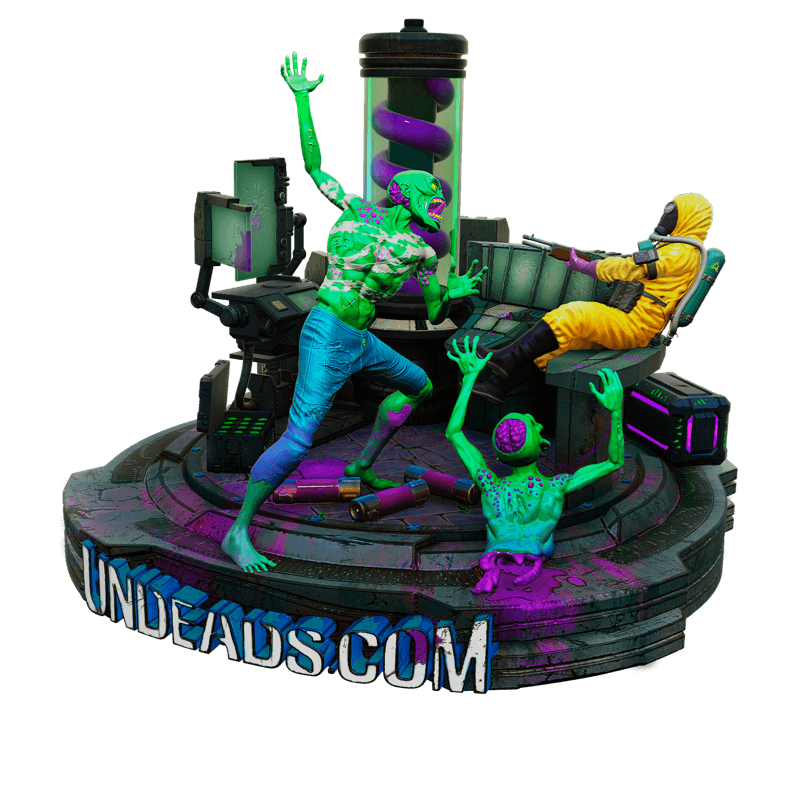
Commenting on its plans for the apocalypse, the Undeads team recommends stocking up on the metaverse’s branded merch.
“[After the end of the world] we will move to our special classified location where we will set up camp. The team has no plans yet to create, for example, board games. For offline fun we have our merch box,” concludes Ash Hodgets.
Conclusions
Gold has long been considered a store of value in hard times. Yet amid mass panic it is heavy to move and hard to guard. Fiat money, usable only as cash, inspires trust but is vulnerable to physical destruction.
A continental blackout or a major electromagnetic storm would pose severe challenges for blockchain networks. Even so, modern data-transmission tools, second-layer solutions, mesh and DePIN networks can keep blockchains resilient. And a single surviving bitcoin node can restore the entire network.
Рассылки ForkLog: держите руку на пульсе биткоин-индустрии!