



Out of 150 major protocols, only one has publicly disclosed its terms of cooperation with market makers. This conclusion was reached by experts at Novora.
New from Novora Research: IR & Token Transparency in 2026 https://t.co/qLW2R8yYvF
— Novora (@novora_) April 14, 2026
The study covered leading types of projects: decentralized exchanges, lending platforms, perp-DEX, L1 and L2 networks, cross-chain bridges, and CEX tokens. They varied in FDV from $40 million to $45 billion.
Experts assessed the protocols using a binary transparency system, considering information disclosure practices and coverage by third-party data. The verification was conducted using open sources.
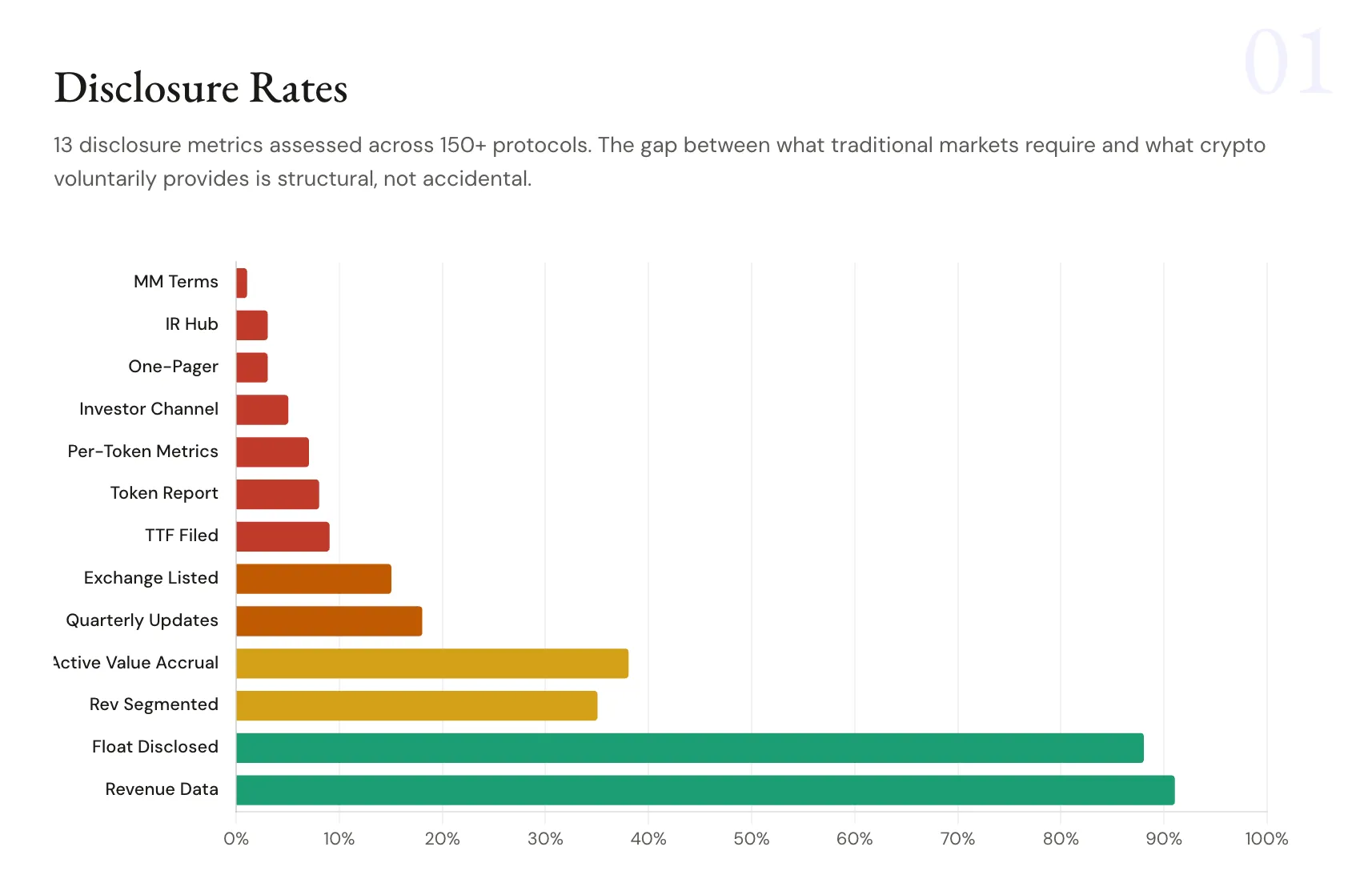
It was found that less than 1% of projects publicly disclose the terms of their work with liquidity providers. The only exception was the decentralized platform Meteora, whose developers detailed their partnership in the 2025 annual report for token holders.


“The most significant gap in transparency in our industry,” is how Novora founder Connor King described the situation.
According to him, such agreements are regularly disclosed in traditional markets, while “in the crypto sector, every participant operates without this information.”
Opaque terms of cooperation with market makers remain a longstanding issue in the crypto industry. Some agreements are poorly conceived and carry hidden risks.
For instance, under a common credit option model, projects lend tokens to market makers. They use them to maintain trading activity and volumes—often within listing agreements.
Critics argue that in practice, this structure merely encourages the sale of borrowed coins. The price drops, benefiting the intermediary. However, as a result, startups immediately face reduced liquidity and deteriorating market performance.
Reporting Gap for Investors
The study revealed a systemic shortcoming: projects hardly establish communication with investors. According to Novora, 91% of protocols generate trackable revenue, but only 18% of teams release quarterly reports, and only 8% provide materials for token holders.

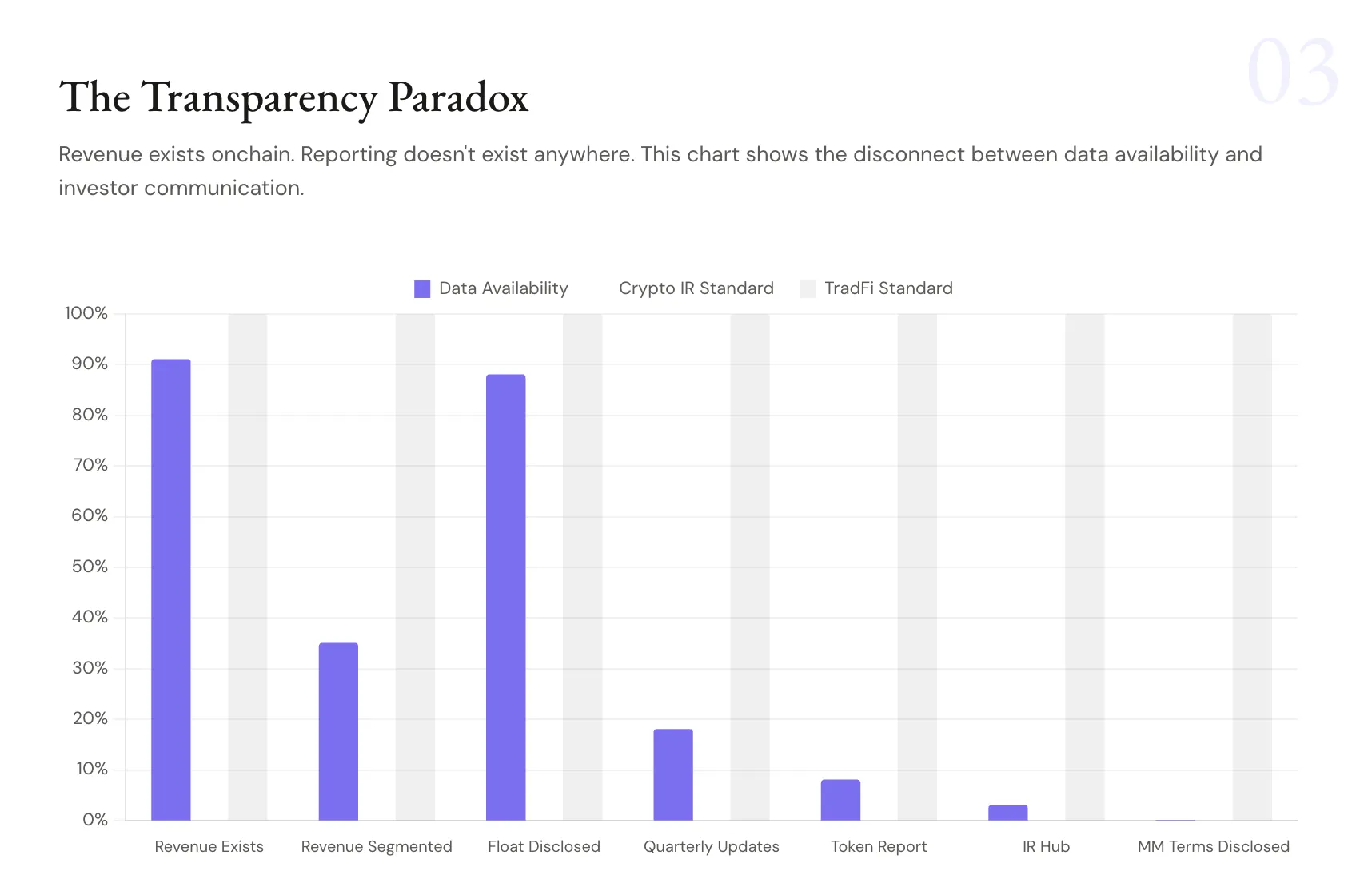
Meanwhile, third-party analytical infrastructure has already reached maturity: coverage on major platforms exceeds 85%. Basic data is widely available but rarely converted into formal reporting, specialists noted.
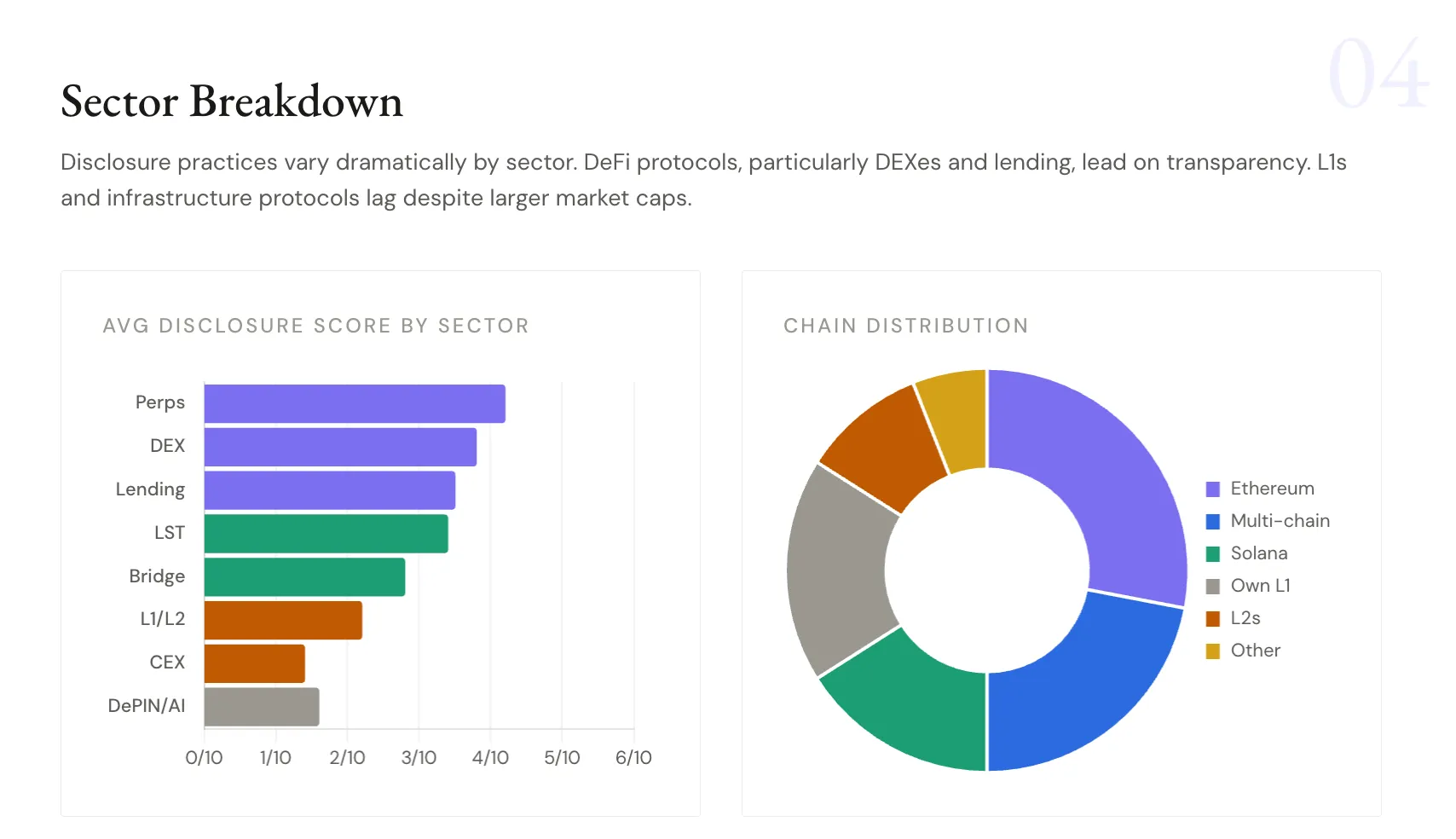
The breakdown by project type showed uneven transparency. For example, perpetual futures protocols and decentralized exchanges lead in information disclosure and value extraction mechanisms. Meanwhile, L1 projects and infrastructure platforms lag behind, despite higher capitalization.

Back in early 2025, market maker CLS Global admitted to fictitious trading of the AI token NexFundAI, created by the FBI to detect fraud.