



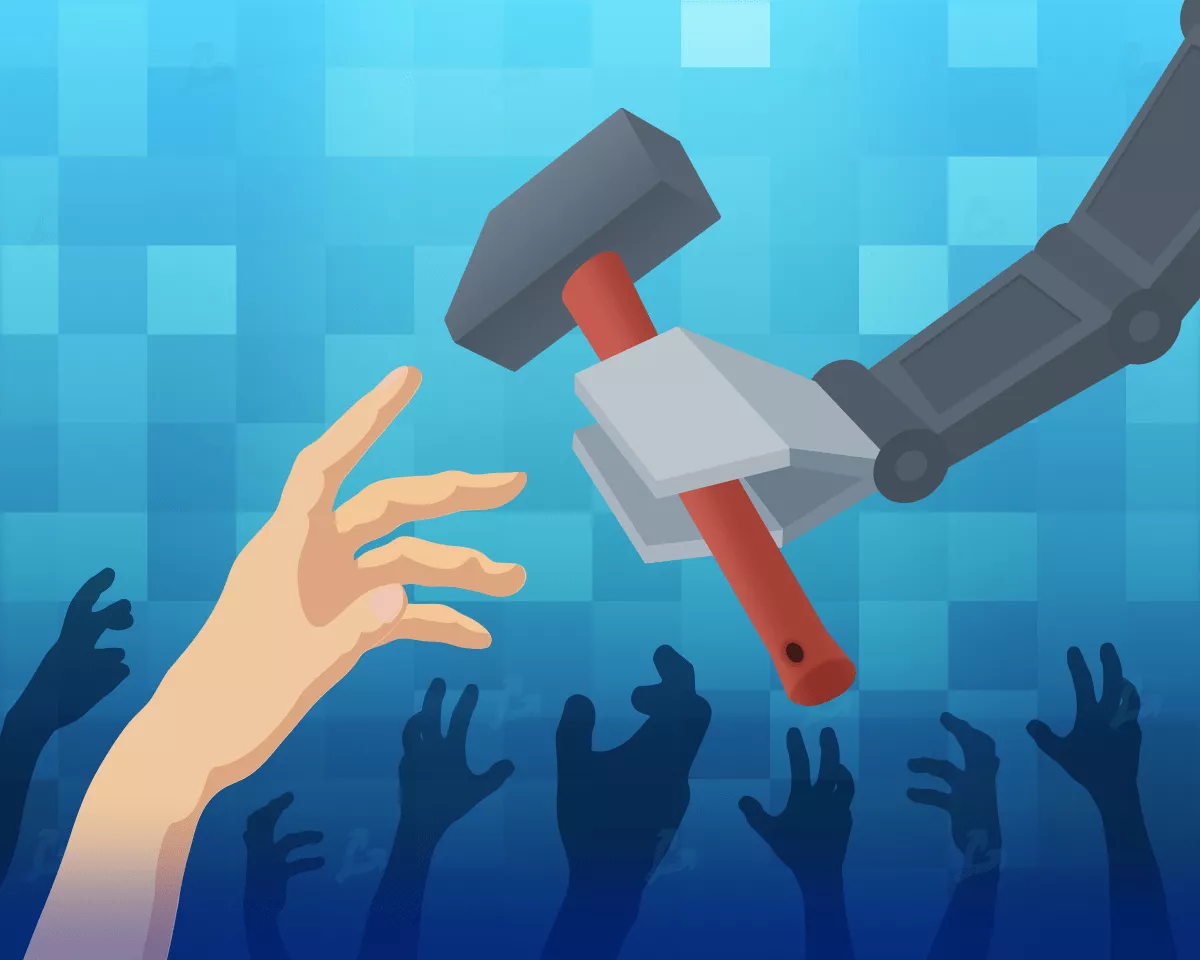
OpenAI believes that the overwhelming majority of American workers will automate a number of their tasks to some extent with the help of GPT models. This is said in a joint study by the company and the University of Pennsylvania.
Experts say that large language models will affect 10% of tasks for 80% of Americans. For 19% of workers, the figure will be at least 50%, they add.
The study notes that GPT affects higher-paid professions more, while spreading across almost all industries. According to researchers, large language models are general‑purpose technologies. They compared their emergence to the invention of the steam engine or the printing press.
The researchers used the O*NET database, which contains a list of 1,016 occupations with standardized descriptions. Then the experts and GPT-4 annotated the tasks associated with each position.
They then sought to determine where the model could save time in each profession by at least 50% without sacrificing the quality of work.
“The importance of science and critical-thinking skills is strongly negatively correlated with GPT impact. Professions that require these skills are less likely to be affected by modern language models,” the researchers write.
The study also notes that knowledge of programming and writing, by contrast, show a strong positive correlation. The researchers suggest that such activities are more susceptible to the influence of language models.
Professions with the greatest impact include:
- mathematicians;
- tax inspectors;
- writers;
- web designers;
- accountants;
- journalists;
- legal secretaries.
Professions with less susceptibility to GPT include graphic designers, search engine marketing specialists, and financial managers.
The researchers also outlined general expectations for the impact of large language models on various sectors. According to them, the spread of GPT will affect data-processing services, publishing, and insurance companies most. The least impact is expected in food production, wood products, and auxiliary activities for agriculture and forestry.
Experts acknowledge that the study has limitations. They say the annotators were familiar with the capabilities of the models and did not belong to some of the measured professions.
Another limitation is GPT-4’s sensitivity to the wording and composition of prompts. The algorithm is also prone to fabricating information.
Nevertheless, researchers are confident that the impact of large language models will be pervasive.
“Their growing economic impact will persist and increase even if we stop developing new capabilities today,” the researchers say.
In March, OpenAI presented GPT-4.
In the same month, OpenAI CEO Sam Altman said that artificial intelligence will fundamentally transform “the usual society.”