



DeFi-project Opium Protocol integrated insurance against loss of rental payments for fractional real estate purchased on the RealT platform.
RealT enables investors to acquire fractional real estate in the form of blockchain-issued tokens. When a real property is leased, owners receive rent proportional to their ownership stake in USD Coin (USDC).
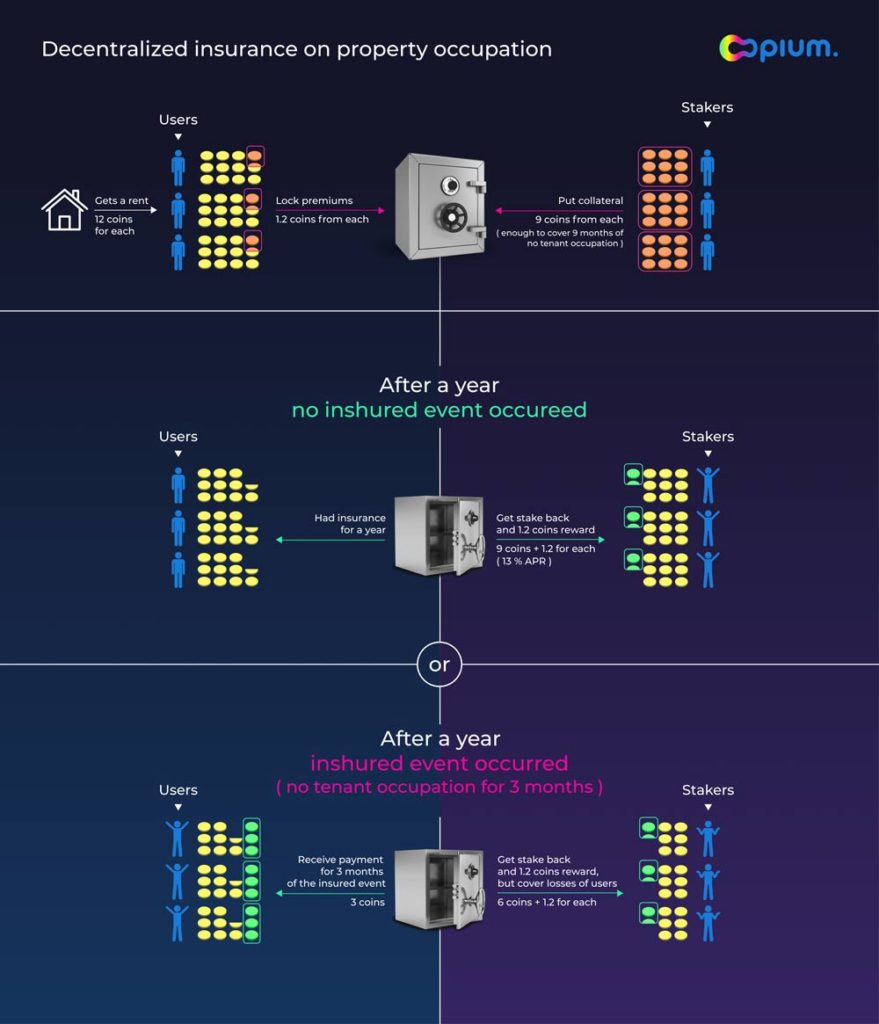
The insurance coverage on Opium Protocol protects investors from the risks associated with a tenant’s temporary absence. For example, after a fire, reconstruction can take up to three months, during which rent would not be paid. However, thanks to the new product, token holders will still receive funds.
To participate, a user must stake the insurance premium in the smart contract, calculated on the basis of the value of their stake in the property. If rental payments are interrupted, the protocol will continue to pay rent throughout the insured period.
The coverage of user losses is provided by stakers who contribute funds to the corresponding pools. If rental payments are interrupted, they cannot withdraw the assets and may lose the entire collateral. For taking on the risks after the end of the insured period, they receive the premium and the remaining pool tokens.
The more stakers in the pool, the longer a period of rent interruption it can cover, and the lower the yield for each participant.


According to Opium Protocol, the maximum duration of rent interruption on RealT has not exceeded three months. The product is available to all platform users, provided they pass KYC and have their addresses whitelisted.
In May, Opium Protocol launched an asset-insurance service for sidechains.