


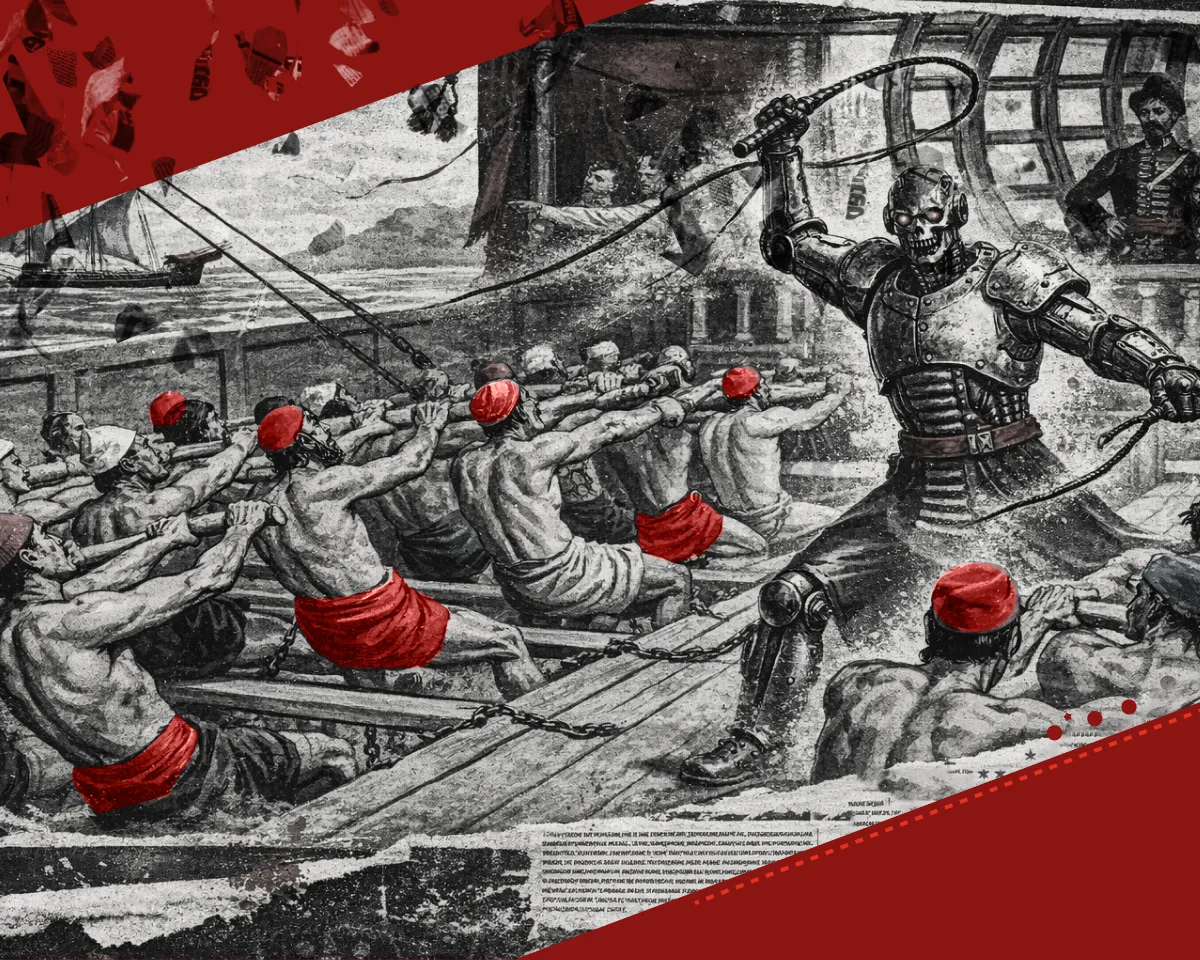
Oracle to Lay Off Thousands Amid AI Investments
Oracle lays off thousands due to AI investments and stock decline.
Oracle Corporation has commenced laying off thousands of employees amid a decline in stock prices and significant capital expenditures on AI infrastructure development, reports CNBC.
According to Business Insider, the layoffs have affected employees worldwide, though the exact scale remains unknown.
“After a thorough analysis of Oracle’s current business needs, we have decided to eliminate your position as part of a broader organizational transformation. Consequently, today is your last working day,” reads a copy of the letter reviewed by the media.
As of May 2025, Oracle employed approximately 162,000 people. The layoffs have impacted Oracle Health, Sales, Cloud, Customer Success, and NetSuite divisions.
CNBC highlighted that the company’s core business is facing challenges due to competition from generative AI models. Additionally, investors are concerned about rising debt and declining cash flows.
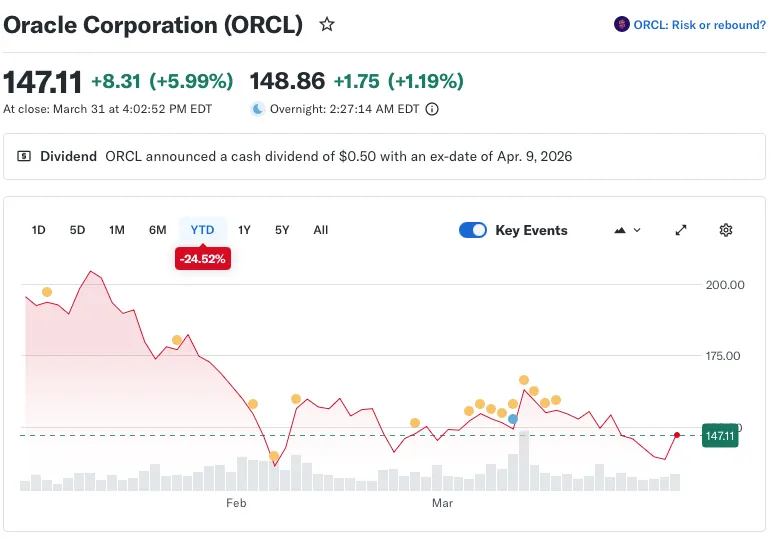
Oracle’s shares have fallen by 25% since the start of the year, a sharper decline than other tech giants.
Oracle continues to develop its flagship database for storing and processing corporate information. In recent years, the company, following competitors like Amazon, has increased spending on data centers powering artificial intelligence. However, in terms of business scale, it still lags behind other cloud players.
Focus on AI and Cost Optimization
Oracle is using borrowed funds to finance AI projects. In January, the corporation announced plans to raise $50 billion. However, in the latest report, management stated that no additional borrowing is expected in 2026.
In September 2025, the company reported that the volume of outstanding contractual obligations (a measure of future revenue) increased by 359% to $455 billion following a $300 billion deal with OpenAI.
According to TD Cowen analysts, cutting 20,000-30,000 employees could increase the company’s free cash flow by $8-10 billion.
Oracle’s management is confident that large-scale investments in artificial intelligence will pay off over time.
“Demand for AI infrastructure (GPU and CPU) continues to exceed supply. This is directly reflected in our $553 billion contract obligations,” stated the firm’s CEO Clay Magouyrk.
The Future of Corporate Structure in the AI Era
Weeks after laying off 4,000 employees, Block CEO Jack Dorsey presented his vision of the future workplace, where artificial intelligence replaces middle management.
According to the entrepreneur, AI can track projects, identify issues, allocate tasks, and relay important information faster than humans. Dorsey and Block’s lead independent director Roelof Botha confirmed that the company is in the early stages of transitioning to a tech-driven management model.
“We challenge the basic assumption that organizations must be hierarchical and that people should coordinate processes,” the experts noted.
They intend not only to provide each employee with an AI assistant but also to radically automate the management hierarchy itself. As a result, the company “will be built as an intelligence or mini-AGI.”

People Still Matter
In March, Block reinstated some employees who were laid off in February. Dorsey and Botha stated that while artificial intelligence may play a significant role in the proposed company model, humans will continue to make key business and ethical decisions.
Employees will be redistributed into three roles:
- individual contributors — create and maintain operating systems;
- accountable individuals — solve specific tasks and can use any necessary resources;
- player-coaches — combine coding and development with managerial duties, including mentoring and supporting colleagues.
Abandoning Traditional Hierarchy
Most companies are structured hierarchically: information flows from employees to managers, then to executives, and back down.
Dorsey and Botha believe that this approach was effective in the past, but AI can perform the same functions much faster.
“The model of a firm organized as intelligence rather than hierarchy is so significant that it will change the principles of company operations in the coming years,” the entrepreneurs stated.
According to them, accelerating the flow of information contributes to rapid business development. Hierarchy and middle management only slow this process.
Back in March, Crypto․com co-founder and CEO Kris Marszalek announced a 12% workforce reduction. The main reason was the integration of artificial intelligence into all processes.
Рассылки ForkLog: держите руку на пульсе биткоин-индустрии!