




The decentralized platform PancakeSwap warned that, effective March 9, 2022, it will block access to its services from IP addresses in ten jurisdictions.
The following jurisdictions were included:
- Belarus;
- Cuba;
- Democratic Republic of the Congo;
- Iran;
- Iraq;
- North Korea;
- Sudan;
- Syria;
- Zimbabwe;
- Crimea.
All of them are on the U.S. government’s sanctions lists.
When visiting the PancakeSwap site from these jurisdictions, a corresponding notice appears.


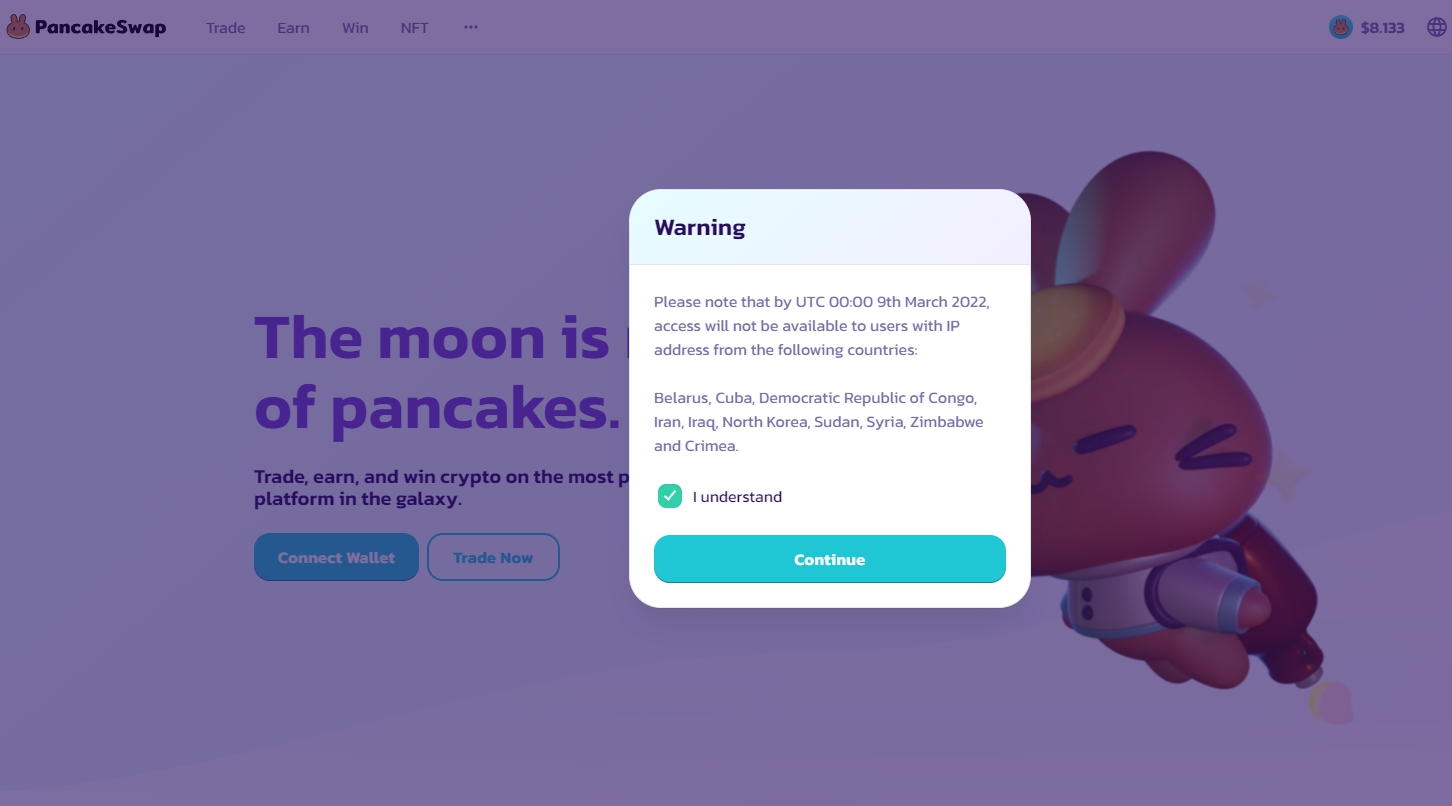
In the Iranian crypto community CryptoClub confirmed the geolocation-based blocking warning. Users began asking about the possibility of using VPNs.
📌Decentralized exchange PancakeSwap will not serve Iranian users from March 9! pic.twitter.com/niUBaaNHox
— CryptoClub | کریپتوکلاب (@irCryptoClub) February 10, 2022
According to DeFiLlama, PancakeSwap is the largest by value of assets locked in the Binance Smart Chain ecosystem. It accounts for $4.81 billion — about 36% of the total $13.25 billion.

In October 2021, the U.S. Treasury’s Office of Foreign Assets Control published guidance for crypto industry participants on complying with U.S. sanctions. The document recommended using ‘geolocation tools’ to identify and block IP addresses from sanctioned jurisdictions.
Earlier in September, the decentralized platform 1inch began blocking US users ahead of the launch of a product designed for them.
Binance, a centralized exchange, also resorted to restricting access for American users to avoid violating the country’s laws.