


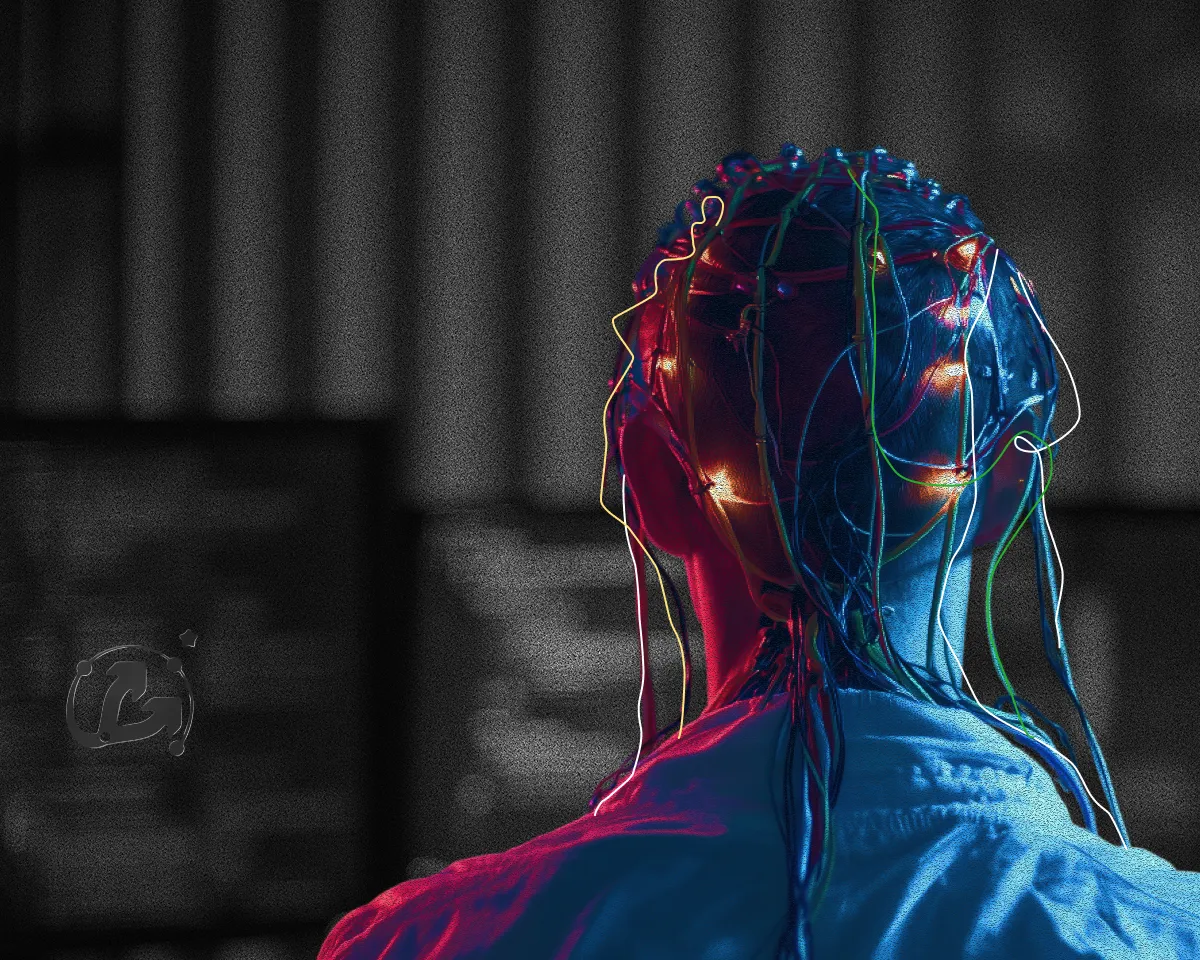
Galen Buckwalter, a user of a brain-computer interface (BCI), has learned to create music through thought alone. He discussed this in an interview with Wired.
The patient collaborates with Sean Darcy, a graduate student at the California Institute of Technology. The researcher developed an algorithm that converts neural signals into sounds.
Buckwalter has been a member of the Los Angeles punk rock band Siggy for many years. Some of the generated audio fragments have already been used in the track Wirehead.

“Even before the implant, I saw a YouTube video about mushrooms: if you connect electrodes to them, you can hear their sounds.[…] I thought: if a mushroom can ‘squeak’, I want to know what my brain sounds like. From day one, we talked about this with the researchers, and graduate student Sean Darcy developed software that translates thoughts into sound control,” commented Buckwalter.
Scientists identify neurons that the patient can consciously control and assign each a specific tone. When a cell is activated, the pitch of the sound increases.
Currently, Buckwalter can produce two tones simultaneously.
“In the future, I envision a whole DJ console in my head: you can create rhythms and overlay melodies,” he noted.
The sound appears when neuron activity exceeds a certain threshold. To create it, one simply needs to think about movement. To turn it off, one must concentrate more intensely.
Buckwalter suffers from quadriplegia due to a diving accident at the age of 16. In 2024, he agreed to undergo brain surgery to install a BCI as part of a California Institute of Technology study.
Six chips from Blackrock Neurotech are implanted in Buckwalter’s brain. They read neuron activity and decode intentions for actions. The system allows control of a computer through thought, restores finger sensitivity, and more recently, enables music creation.
Other BCI users also employ implants to create digital art. In 2023, Nathan Copeland, James Johnson, and Ian Schoierman showcased their works at the American Association for the Advancement of Science exhibition in Washington.
In March, Professor Xu Guanghua’s team developed a method to control a robot dog through thought.
