



On April 4, the payment company PayPal announced the launch of its cross-border payment and transfer service, Xoom.
Eligible U.S. customers can now convert PayPal USD to USD to fund transfers on Xoom, PayPal’s cross-border money transfer service. This new option allows eligible U.S. Xoom users to send money to friends and family abroad with no Xoom transaction fees. https://t.co/cFbDHffe9U pic.twitter.com/YHEMU9wwKp
— PayPal (@PayPal) April 4, 2024
The service is available to customers in the United States. They can send money to recipients in approximately 160 countries using the company’s stablecoin, PYUSD.
“This new option allows U.S. Xoom users to send money to friends and family abroad with no transaction fees,” the statement said.
In a press release, the company cited a World Bank report indicating that the average cost of sending $200 globally is just over 6%. Meanwhile, PayPal aims to expand the use of its stablecoin.
“Providing U.S. Xoom users the ability to conduct cross-border money transfers using PYUSD aligns with our goal of promoting the mass adoption of cryptocurrencies,” emphasized the company’s Vice President, Jose Fernandez da Ponte.
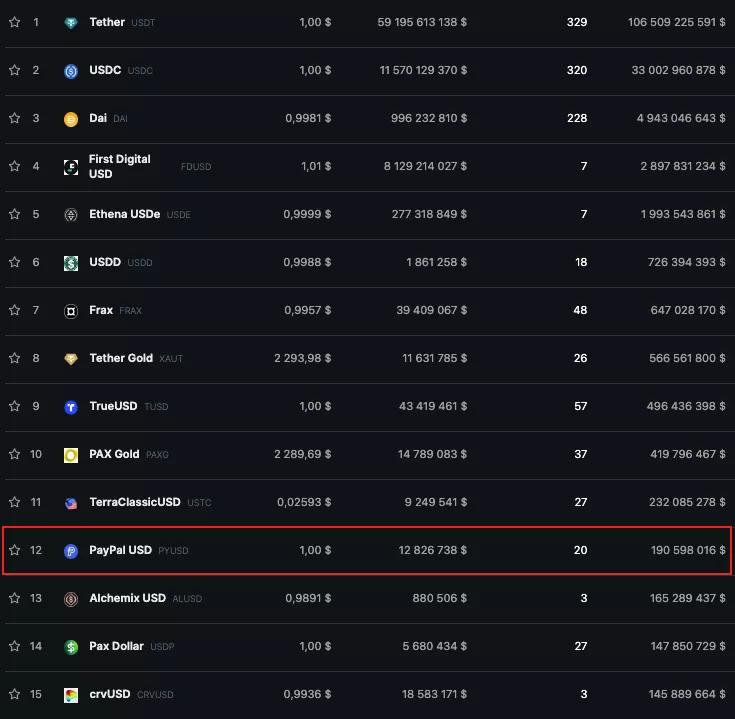
At the time of writing, PYUSD ranks 12th on CoinGecko with a market capitalization of $190.6 million. The leaders in the segment remain USDT and USDC.


PayPal launched its “stablecoin” in August 2023. The dollar-pegged asset was issued by the infrastructure crypto company Paxos.
The payment giant’s initiative sparked mixed reactions within the crypto community. Some viewed PYUSD as a catalyst for the mass adoption of digital assets, while others pointed to centralization risks.
JPMorgan analyst Nikolaos Panigirtzoglou stated that the coin could benefit Ethereum by increasing the total value locked in the network.
Experts at Bank of America suggested limited adoption of PYUSD due to competition from central bank digital currencies and established stablecoins. Analysts at Nansen confirmed initially low user demand for the asset.
The launch of PayPal’s “stablecoin” raised concerns in the U.S. Congress due to the lack of a regulatory framework for such assets. In November, it was revealed that the SEC had launched an investigation into PYUSD.
Earlier, on April 4, 2024, Ripple announced plans to launch its own dollar-pegged stablecoin.