




The Pike Finance team contributed an equivalent of $10,000 to the liquidity pool on the Aerodrome platform within the Base network. This modest amount led to a 94.1% collapse of the DeFi project’s token following the TGE.
Trading commenced at $0.02427, but within 20 minutes, the price had plunged to $0.001436. At the time of writing, the rate had recovered to $0.01261.


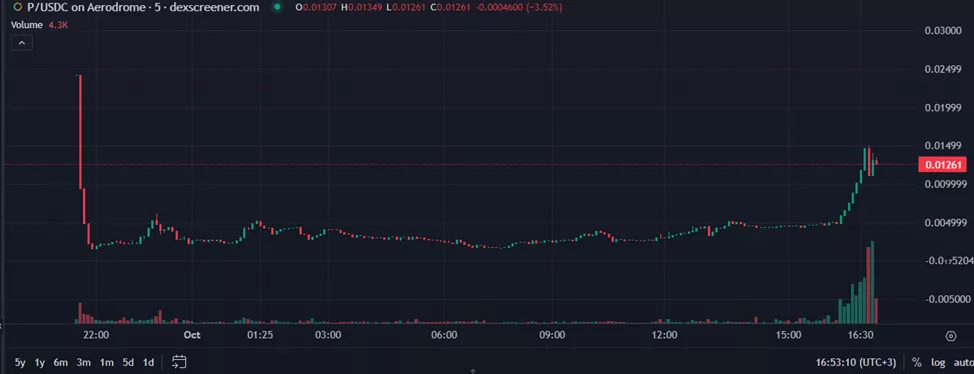
Some investors expressed dissatisfaction with the low liquidity, considering the $6.5 million raised during the pre-sale in March, where token purchase prices ranged from $0.0280 to $0.0374.
I put $1500 into the @PikeFinance pre-sale.
It’s currently worth $61.
The pool was seeded with $10k and instadumped in the first 30 mins.
I’m far too tired but can someone just sue these people please.
— Picolas Cage (@Picolas_Caged) September 30, 2024
“I invested $1500 during the pre-sale. Now the tokens are valued at $61. The pool was seeded with $10,000, which was depleted in the first 30 minutes. Can someone please sue these people,” commented one user.
Others called on blockchain analyst ZachXBT to investigate the situation.
Hey @zachxbt would love for you to take a look @PikeFinance .
Raised 6million USDC just added LP for TGE months after with 10k USDC Liquidity.0x4d014d49418be6d918c45651ebfd26e47ceea957$PIKE
Address related to the raise— Control (@controlloor) September 30, 2024
In response to the criticism, the team promised to purchase Pike tokens on the open market to boost liquidity. A representative warned that this would be a “gradual process” lasting several months.
The Block noted that the project, backed by Nuts Finance, has developed several other protocols, including Tapio Finance, Taiga Protocol, and ACoconut. The latter launched in 2021 and experienced a similarly sharp token decline. The asset did not recover, and the platform’s website is non-functional.
Back in April, attackers targeted Pike Finance, extracting 99,970 ARB, 64,126 OP, and 479 ETH, totaling approximately $1.68 million.