


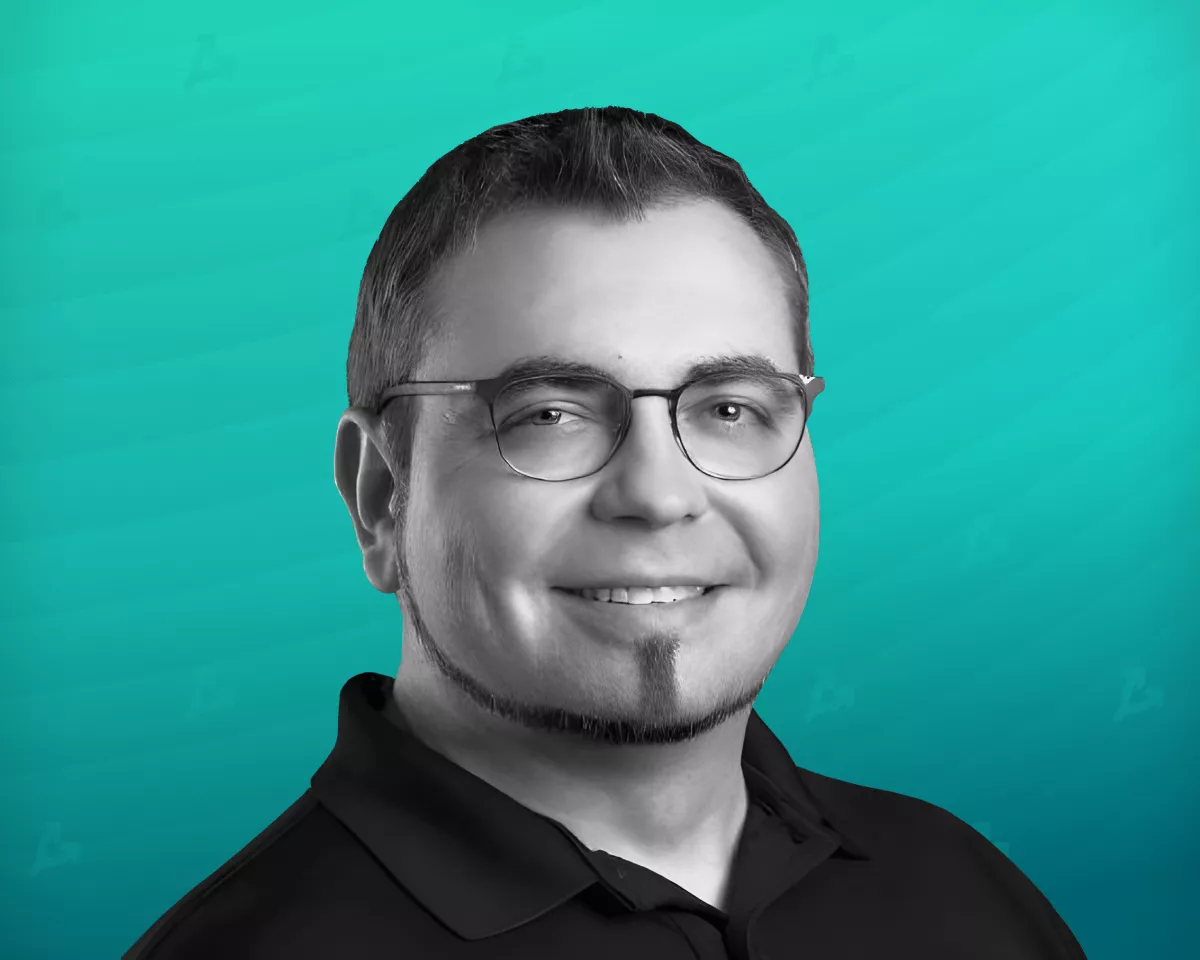
Poloniex CEO: Institutions view Bitcoin as tech-sector stocks.
Poloniex — one of the oldest exchanges in the world. Founded in 2014 by Tristan d’Agosta, the platform has changed owners several times: in 2018 it was acquired by fintech Circle, and a year later by a group of investors led by the creator of Tron, Justin Sun.
Shawn Scovil — Chief Executive Officer of Poloniex. He has been with the exchange since 2018. In an exclusive interview for ForkLog he explained what Justin Sun has done for Poloniex, what distinguishes users from the CIS, and whether Bitcoin will reach $100,000.
ForkLog: Hello, Shawn! After four years at Poloniex, how would you describe it?
Shawn Scovil: Good day! I would say that this is one of the oldest exchanges that remains an innovator in the crypto industry.
We were the first to launch trading of Tether (USDT), Ethereum (ETH) and Zcash (ZEC). In 2017 Poloniex led the token trading volume, and now it ranks in the Top-25 cryptocurrency exchanges according to CoinMarketCap.
Initially the Poloniex exchange operated in the United States, but over nine years it has become a truly international platform. Today we serve millions of traders from hundreds of countries.
Our platform has seen many ups and downs in the crypto market. But under any circumstances Poloniex has operated honestly and transparently, which allowed us to retain old users and attract new ones.
ForkLog: In 2019 Poloniex was acquired by Justin Sun. Did this affect the exchange’s operations?
Shawn Scovil: Yes, we shifted to the global market. Before that, the focus was only on countries with substantial investment experience such as the United States.
Poloniex changed its strategy and began to explore emerging markets. This decision has already borne fruit in the Asian region.
ForkLog: In other words, you are making Poloniex more accessible for beginner investors?
Shawn Scovil: Yes, the exchange was designed for professional traders, but now we strive to lower the entry threshold and attract users with varying levels of trading experience.
Over the past years we have expanded the number of instruments on the platform. Poloniex supports spot and margin trading, as well as perpetual contracts with up to 100x leverage. Users have access to more than 300 coins across 450 trading pairs. In addition, we offer some of the lowest trading fees on the market and substantial rebates for market makers.
We are completing the testing of a new trading system that processes hundreds of thousands of trades per second. After the kernel update, users will gain more liquidity and an interface tailored for professionals and beginners. We also plan to add market orders for retail traders, more precise charts for deep market analysis, and convenient conditions for margin trading and lending.
ForkLog: But many exchanges offer such tools. What distinguishes Poloniex?
Shawn Scovil: We care about data privacy and the security of users’ funds and invest in their protection. For example, one of our core values is “Vigilant guardianship” — an automated risk-warning system in cases of suspicious trading activity. It prevents account hacks and violations of the policy AML.
The team strives to make the exchange convenient for users from different regions: the website and apps are localized by professional translators. We are also expanding the support staff so that it can operate 24 hours a day, seven days a week.
But the main thing that distinguishes Poloniex from other exchanges is our commitments to customers. Exchanges come and go, but Poloniex remains a company that people trust. Customer needs come first for us.
ForkLog: Which crypto-industry trends do you consider the most promising?
Shawn Scovil: DeFi and NFTs are progressing well and can be useful for a huge number of industries. NFTs are especially interesting due to their wide range of applications.
Yes, much of it currently relies on pure speculation. But the need to prove ownership of a digital asset in the future will only grow. This is linked, among other things, to the development of metaverses, whatever forms they may take.
ForkLog: Does Poloniex follow the trends?
Shawn Scovil: Of course, we strive to give users access to cutting-edge technologies and services, for example integration with leading NFT marketplaces. The first experience is already here — this is the integration with the trading platform APENFT.
We offer top-tier GameFi-, DAO- and Web3 tokens, including Axie, Filecoin, ApeCoin, Uniswap and others. To make DeFi more accessible for users, we collaborate with developers of leading industry ecosystems, such as Fantom and Polygon.
Overall, we aim to give people around the world real opportunity to participate in the global economy and to use convenient financial services. To this end, we monitor trends and strive to be first in listing interesting new projects.
ForkLog: You mentioned expanding to a global market. Which jurisdictions are your priorities right now?
Shawn Scovil: At the moment we are focused on the CIS and Asia-Pacific region. Next we want to expand influence in the Middle East and in Latin America.
In each region we create a local team that better understands the specifics of the local crypto community and its needs.
ForkLog: And what is the specificity of Eastern European communities?
Shawn Scovil: In these countries the client environment is very heterogeneous. On one hand there are many professional traders, on the other — a lot of beginners looking for simple investment solutions.
For this reason we address two tasks: expand the range of services and tools for professional clients and develop an educational program for beginner investors. Some lessons are already available on Polopedia — a platform about trading on financial markets.
ForkLog: Does Poloniex conform to European sanctions in connection with the war in Ukraine? Do you have restrictions for users from Russia?
Shawn Scovil: Personally, I am deeply saddened by what is happening in Ukraine. War is terrible; it must be avoided at all costs.
However, Poloniex remains a neutral platform. We adhere to the idea of decentralising the global economy, which transcends political borders.
On that basis we continue to provide services to all users, including Russian citizens. Our team of lawyers closely monitors the situation and will inform us of changes we need to take into account.
ForkLog: Tell us more about Justin Sun and his investments in Poloniex.
Shawn Scovil: His Excellency Justin Sun — one of the pioneers of the industry and a big admirer of blockchain technology.
As the ambassador and permanent representative of Grenada to the World Trade Organization, he promotes cryptocurrencies and blockchain technology. He understands that removing barriers in the global financial infrastructure will benefit everyone: crypto enthusiasts, ordinary people, businesses and whole countries.
For Justin Sun, Poloniex is a key component in the process of transforming the global financial system. Like Binance and BNB Chain, Poloniex and Tron, in a linked arrangement, will develop each other.
ForkLog: What are your forecasts about market dynamics? Do you believe in Bitcoin at $100 000 in the near future, or is such a price unrealistic?
Shawn Scovil: It’s hard to forecast given the current circumstances. The market is influenced by inflation, the war in Ukraine, rising interest rates, and the fact that institutional investors view Bitcoin as tech-sector equities.
In the short term, Bitcoin price will fluctuate. Nevertheless, many projects receive significant funding, which means the industry has potential.
Bitcoin is unlikely to be worth $100,000 in the near future, but over the next few years the price will certainly take off.
Subscribe to the ForkLog channel on YouTube!
Рассылки ForkLog: держите руку на пульсе биткоин-индустрии!