


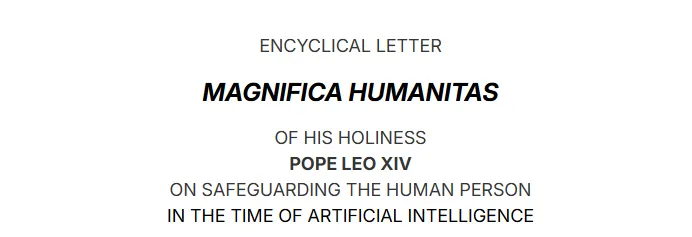
Pope Leo XIV released his first encyclical. The document, titled Magnifica Humanitas, is dedicated to the “protection of human dignity in the age of artificial intelligence.”


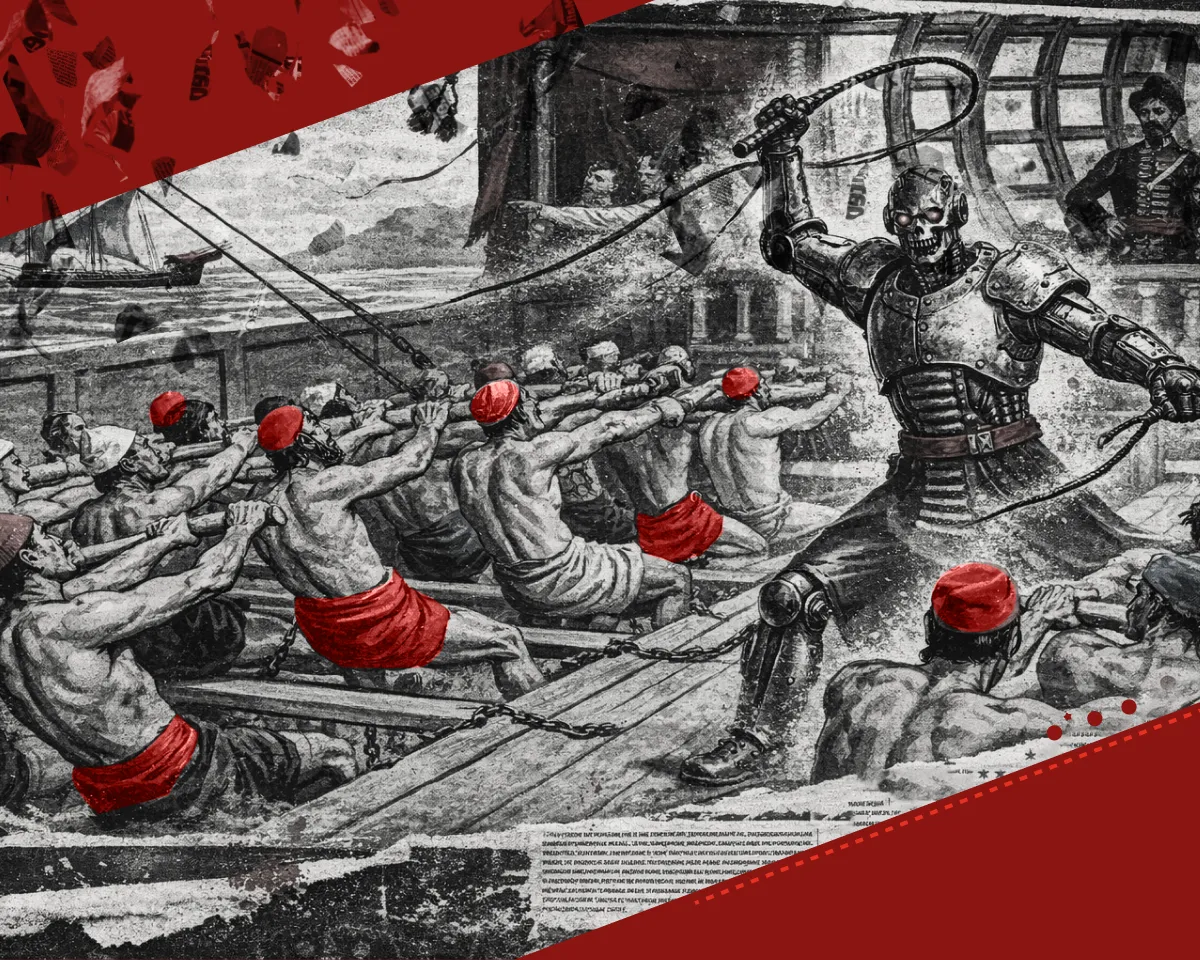
While AI serves as the main pretext, Leo focused on much older and broader issues: inequality, war, the erosion of democracy, and the concentration of power in the hands of those who do not aim to make humanity “magnificent.”
The 200-page document was presented at an event in the Vatican attended by Anthropic co-founder Chris Olah. It argues that technology created and controlled by a narrow elite cannot, by definition, serve the common good.
“When such power is concentrated in the hands of a few, it tends to become opaque and evade public scrutiny. There is an increased risk of distorted forms of development that generate new dependencies, exclusions, manipulations, and inequality,” the encyclical states.
Key AI Risks
Pope Leo XIV asserts that, as with every major technological shift, AI tends to amplify the power of those who already possess economic resources, expertise, and access to data. Elites may use their influence to “shape information and consumer patterns, impact democratic processes, and steer economic dynamics in their own interests.”
Separately, Leo XIV warned against equating AI with human intelligence. He noted that such systems can mimic language, behavior, and analytical skills but lack experience, embodiment, conscience, and accountability for consequences.
The Pope highlighted three risks of personal AI use: the ease of obtaining answers, the illusion of objectivity, and the imitation of human interaction. He cautions that AI interlocutors might create the appearance of care, friendship, or love, especially where real human connections are lacking.
Leo XIV specifically urged states not to fully delegate decisions affecting employment, credit, access to public services, and personal reputation to algorithms. He stated that such systems appear “neutral” but can actually entrench developer biases and exclude vulnerable groups without a clear mechanism for appeal.
Among the risks, the Pope also cites the environmental burden of AI: large models require significant amounts of energy, water, computational power, data centers, and other infrastructure.
A separate section is devoted to the military application of artificial intelligence. Leo XIV declared that moral judgment cannot be reduced to calculation, and lethal or irreversible decisions should not be delegated to opaque automated systems. He noted that AI could make conflict faster, more impersonal, and lower the threshold for the use of violence.
Effective Development
The Pope called for the development of LLM to be guided by “clear criteria and effective regulation.” Communities affected by the technology should be involved.
The pontiff also emphasized the need to end the AI arms race—the pursuit of ever more powerful algorithms and large datasets to ensure political and commercial dominance.
“To disarm is to dismantle the belief that technological power automatically grants the right to govern,” he stated.
In February, during a meeting with the clergy of the Roman Diocese, Pope Leo XIV urged them to “resist the temptation to conduct sermons using artificial intelligence.”