



Post-Halving Dynamics: Experts Weigh In
On April 20, the Bitcoin network underwent a halving, reducing the block reward from 6.25 BTC to 3.125 BTC. In comments to ForkLog, experts discussed the significance of the event and its impact on the crypto market.
Initial Reactions
The halving is programmed into Bitcoin’s code, occurring every 210,000 blocks, or roughly every four years, until the cryptocurrency’s issuance ends with the mining of 21 million coins, expected around 2140.
Historically, the event has positively influenced Bitcoin’s price. However, with each cycle, the percentage increase has diminished.
#BTC Bull Market Progress:
▓▓▓░░░░░░░ 36.5%
(Progress bar based on standard Halving Cycles)$BTC #Crypto #Bitcoin pic.twitter.com/bE7UqyeaAU
— Rekt Capital (@rektcapital) April 22, 2024
In the two days following the halving, digital gold rose from $64,000 to nearly $66,000 at the time of writing.
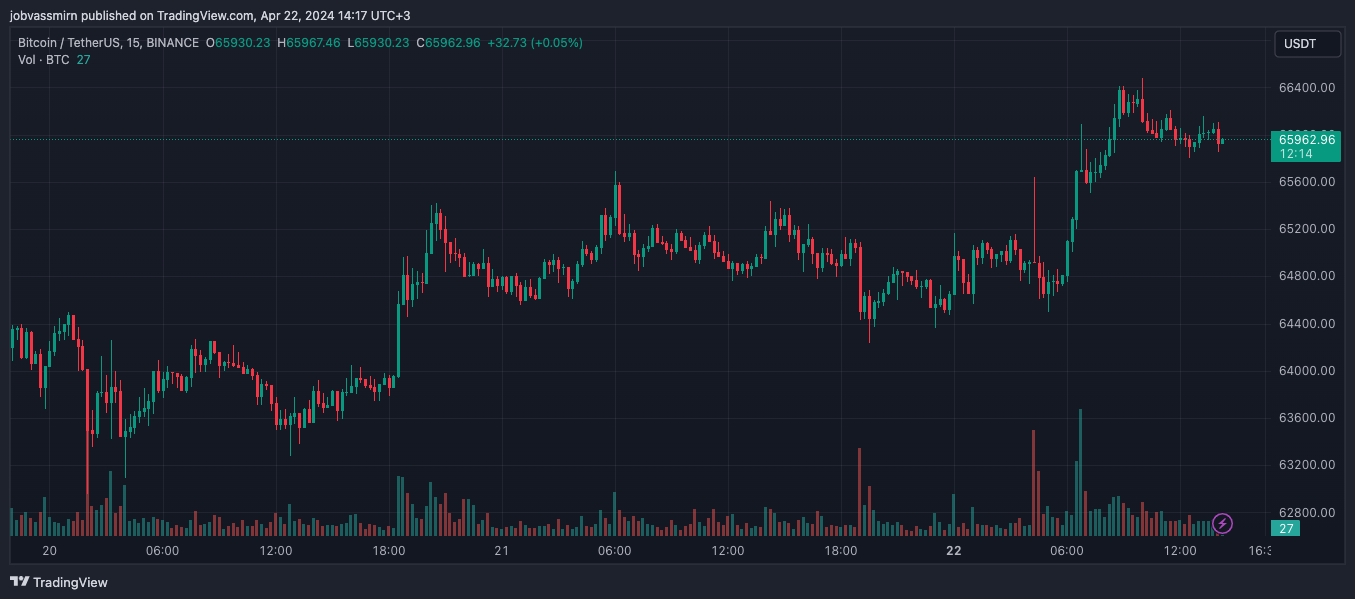
“The market had been preparing for the halving for quite some time, so its impact was largely anticipated. The lack of a sharp price movement may indicate that this event was already priced in by speculators,” said Blum co-founder Gleb Kostarev.
Trader and Coenplus Telegram channel author Vladimir Coen argues that the reduction in Bitcoin’s block reward “has long turned into a narrative used for manipulation, but in reality, it has little impact on the asset’s price.”
“With each cycle, the halving’s impact diminishes. In 2016, 75% of bitcoins had been mined before the event. Even then, the significance of miners began to decline significantly. The post-halving dynamics decrease in percentage terms each time due to the growth in capitalization — the more expensive the asset, the less potential it has for upward movement,” the expert added.
Impact on Mining
According to BitInfoCharts, the average hash rate of the first cryptocurrency stands at 603 EH/s, up 5.77% over the past day. This indicates an increase in computing power by miners.
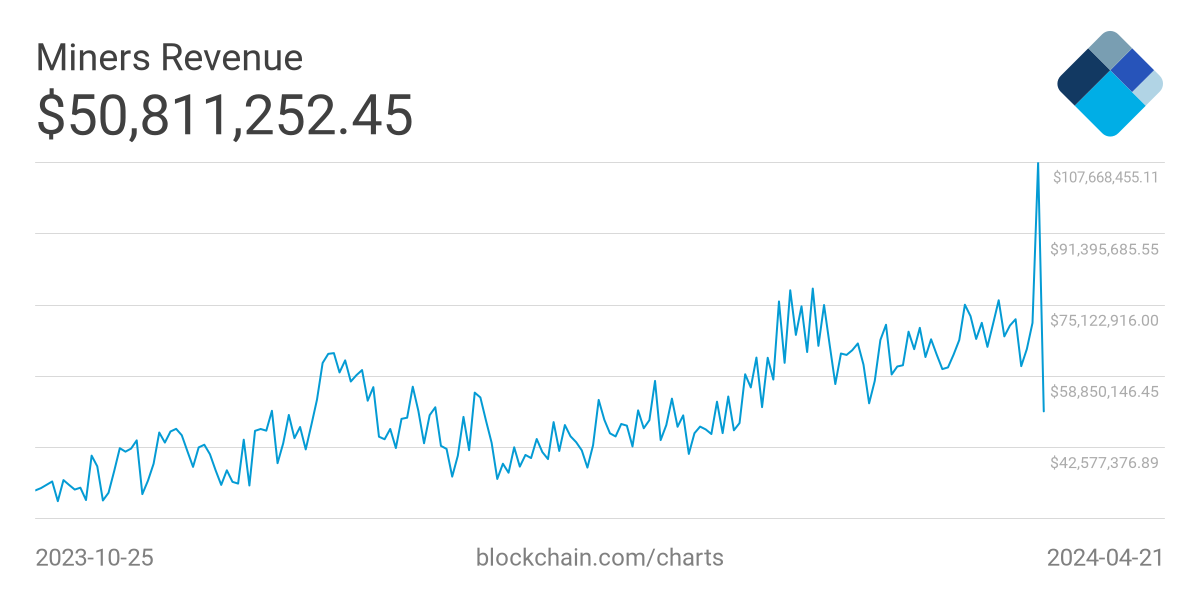
On April 20, the revenue from mining the first cryptocurrency reached a record $107.7 million. On the day of the halving, fees in the historic block #840,000 cost users $2.4 million.
Coen noted that 93.75% of the total supply of 21 million BTC has already been mined. Thus, the volume and price pressure of circulating coins is “about 100 times greater than the volume miners can sell,” he believes.
“In the medium term, the halving is usually accompanied by an increase in demand for Bitcoin, as its market supply decreases. However, the final results depend on numerous factors, including the overall economic situation globally and regulations. Additionally, the Fed rate and institutional investor demand for ETFs will also influence long-term dynamics,” Kostarev emphasized.
According to Coen, there is currently a popular misconception regarding Bitcoin’s cost calculations. At present, it is estimated at around $45,000, but this does not imply a doubling of the figure post-halving, the trader clarified. The asset’s price can fall significantly below cost, which has happened many times before, he warned.
Major Players
Coen identified the launch of spot exchange-traded funds (ETFs) in the US as the main driving force for digital gold this year. He believes that by May, Bitcoin could reach $80,000 or higher if ETF sales are successful:
“The price of any asset is determined by the balance of supply and demand. Bitcoin is no exception. If buyers dominate, prices will rise, regardless of the halving and miners’ policies.”
According to the Dune dashboard, from April 15 to 21, spot Bitcoin funds showed a net outflow of $396 million. The previous week saw an inflow of nearly $200 million.
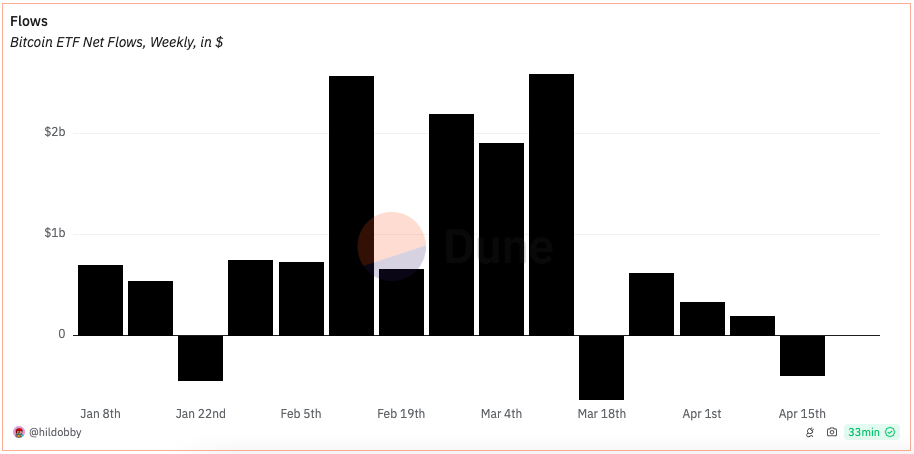
Despite the temporary decline, ten ETFs based on the first cryptocurrency have collectively accumulated over 835,000 BTC worth approximately $53.83 billion — 4.24% of the asset’s current supply.
“Fidelity has been openly operating in the crypto market since 2018. They could have accumulated large reserves of Bitcoin during this time. Surely, BlackRock also purchased the asset through affiliated structures back in 2022 at lower prices than during the ETF launch. The main risk factors for the industry now are geopolitical tensions, a strengthening dollar, and declining US stock indices,” Coen emphasized.
Future Prospects
Kostarev is confident that Bitcoin will continue to attract investor attention until the next halving.
Long-term dynamics depend on “a wide range of factors, including the adoption of the first cryptocurrency as a means of payment and savings, as well as the development of blockchain technologies,” clarified the Blum co-founder.
“Overall, we should expect more and more institutional investors to add Bitcoin to their portfolios. According to [CEO ARK Invest] Cathie Wood, by 2030, digital gold could reach $1.5 million. This forecast is based on the assumption that institutional investors allocate at least 5% of their capital to the asset,” Kostarev concluded.
Coen anticipates a “significant influx of liquidity” by autumn, leading to substantial growth in risk assets, including Bitcoin. According to his optimistic forecast, the coin will reach $250,000 in the current bull cycle, unless “the dollar depreciates significantly.”
Back in April, in honor of the halving, the ForkLog team held the AllTimeHalf 2024 online forum with developers, entrepreneurs, enthusiasts, and visionaries. Recordings are available on the YouTube channel.
We also suggest exploring the event-related research by CoinGecko and Binance.
Рассылки ForkLog: держите руку на пульсе биткоин-индустрии!