




Each December, investment behemoths and research houses publish outlooks for the year ahead that many in the industry treat as lodestars. Yet deep expertise and institutional tooling do not guarantee accurate prophecy.
ForkLog reread top analysts’ calls for 2025 and compared them with what actually happened.
The $200,000 club
Investors hunting for outsized gains in crypto crave signposts on price charts. The ultimate aim of technical and fundamental analysis is to divine future prices—above all for bitcoin and the most popular altcoins.
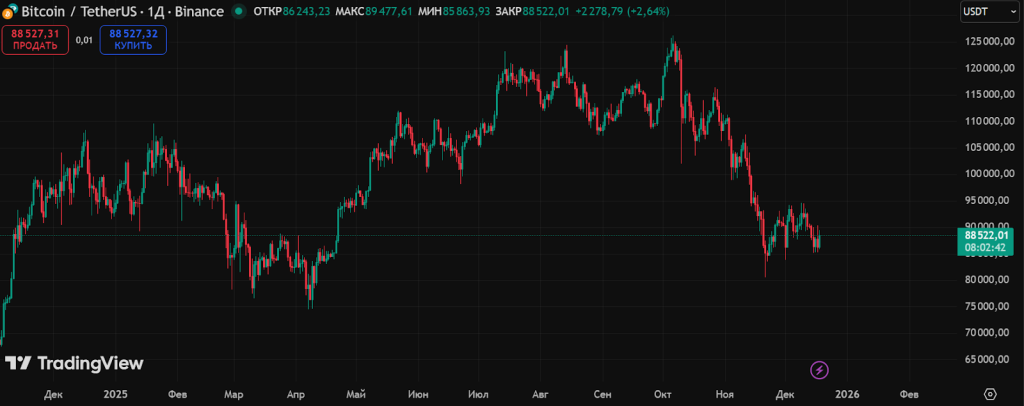
The late-2024 exuberance, fuelled by the election of America’s self-styled “crypto president” Donald Trump, emboldened eminent forecasters. Most converged on bitcoin at $200,000 by end-2025—a view shared by leading analysts at Bernstein, Standard Chartered and Bitwise.
They were wide of the mark. On October 5th the bellwether set a new all-time high at “only” a little above $125,708.


Joining the “$200,000 club,” Bitwise added that Ethereum and Solana would set fresh highs. Strictly speaking, they were right: both briefly pierced their prior peaks, by just a few dollars. SOL reached roughly $295 on January 19th 2025, while ETH set a record on August 23rd, trading at $4,889 on Binance.


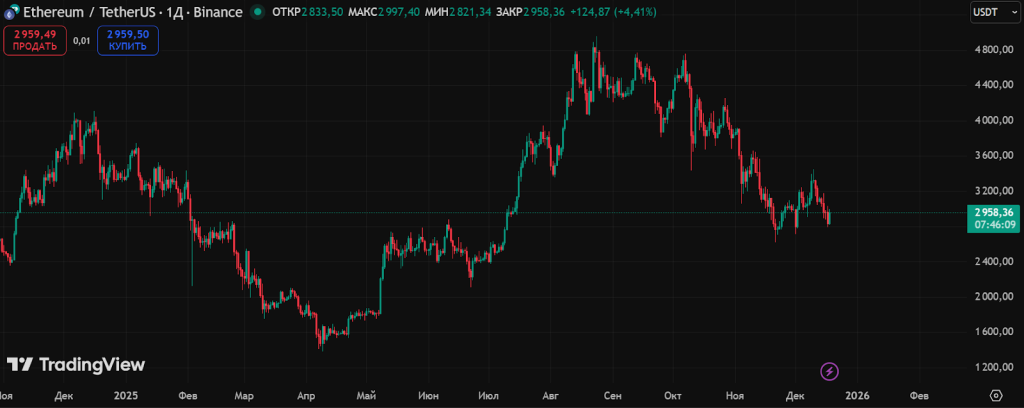
VanEck went further, naming precise levels. They saw Ethereum at $6,000 and Solana at $500, but were more restrained than others on BTC at $180,000.
“After the first peak [in Q1 2025] we expect a 30% correction in BTC, while altcoins may face a sharper drop—up to 60% against a backdrop of market consolidation in the summer months. However, a recovery is likely in the autumn: major tokens will regain momentum and by year-end return to their previous all-time highs”, the authors of VanEck’s 10 Crypto Predictions for 2025 predicted.



In December the $162bn manager broke with its yearly tradition and, tongue in cheek, refused to publish 2026 predictions, merely wishing everyone good luck.
No predictions for 2026. Good luck out there! pic.twitter.com/mQTe9u0BMh
— VanEck (@vaneck_us) December 16, 2025
Long-dated calls are a handy way to dodge charges of amateurism. At ARK Invest, Cathie Wood prizes that approach, building five-year views. In April the fund revised its bitcoin target from $1.5m to $2.4m by 2030.
Its bear, base and bull cases were set at $500,000, $1.2m and $2.4m, respectively. In the prior February 11th note the markers were lower—$300,000, $710,000 and $1.5m.
For their part, Bernstein expect $500,000 by 2030 and $1m by end-2033, with bear phases along the way.
Analysts also overreached on crypto stocks. Though Bitwise correctly called the inclusion of Coinbase Global in the S&P 500, they badly missed on price:
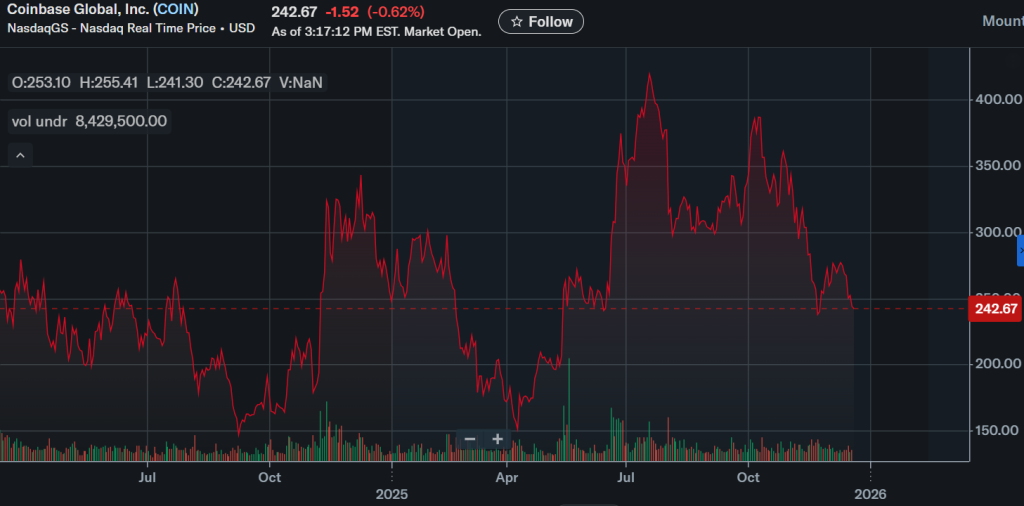
“Coinbase will overtake Charles Schwab to become the most valuable brokerage firm in the world, and its shares will exceed $700 apiece.”
According to TradingView, COIN failed to clear $444 a share, with a peak market capitalisation of about $107bn. For comparison, Charles Schwab’s equivalent peaked at $176bn.


It will take longer
The bitcoin halving, approval of crypto-ETFs, and improved regulatory backdrops fired up even the hard-nosed. Analysts called many trends well, but misjudged macro crosswinds and institutional behaviour. In some corners, hype met the inertia of the real world.
Blockchain’s transparency and convenience drew big players and retail users to RWA. VanEck and Bitwise, banking on a mass migration of US debt on-chain, forecast $50bn in tokenised securities.
According to RWA.xyz, the sector did post solid growth in 2025, but peaked at roughly $18bn.


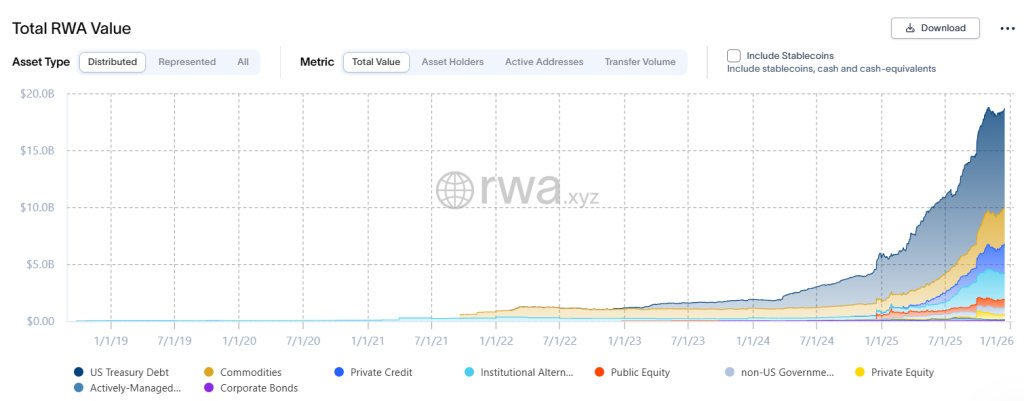
The chief drag was likely bureaucracy and regulatory uncertainty. The RWA narrative is alive, but $50bn will take time.
The authors of Coinbase’s 2025 outlook for institutions likewise highlighted the theme’s promise:
“The trend around RWA extends beyond US Treasury bonds and money market funds, gaining momentum in areas such as private credit, commodities, corporate bonds, real estate, and insurance. We believe that, over time, tokenization can simplify the entire portfolio construction and investment process by moving it on-chain, although it may take a few more years to get there.”
Another area that drew intense attention was L2 on bitcoin (BTCFi). Teams at Messari, Bitwise and VanEck predicted rapid expansion and the unlocking of trillion-dollar capital.
At first BTCFi grew briskly: in the second half of 2024 alone, total value locked (TVL) climbed more than tenfold, topping $7bn. By early 2025, however, momentum faded, giving way to stagnation and then declines.
VanEck estimated that aggregate TVL in bitcoin L2s would reach 100,000 BTC in 2025—about 600% growth versus the previous year.


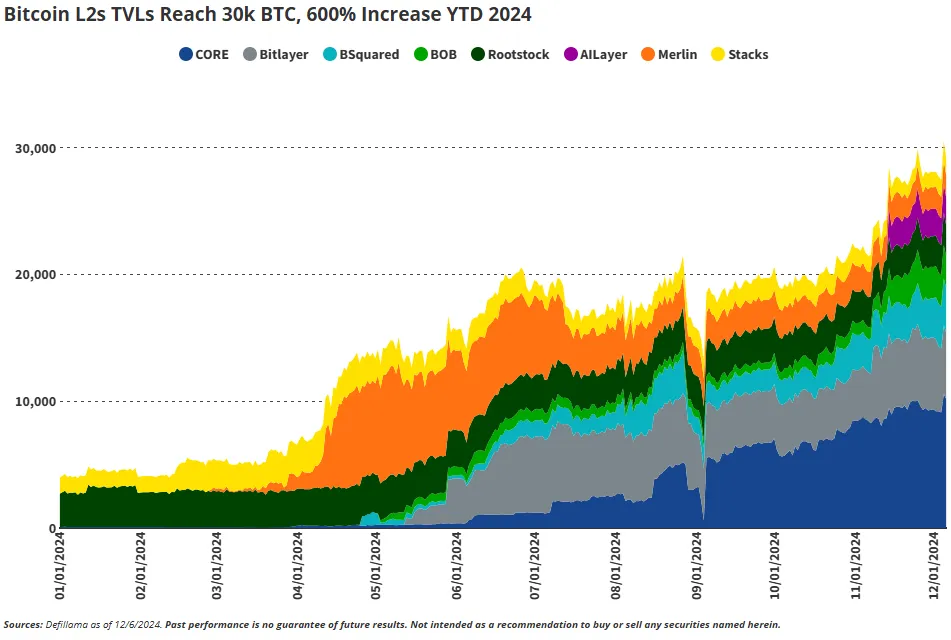
Adoption accelerated in the autumn, and on December 15th, per DefiLlama, the total surpassed 78,000 BTC—only slightly shy of VanEck’s call.


Even so, the segment hit serious adoption snags. As ForkLog editor Alex Kondratyuk noted, “the key barrier to the segment’s growth remains the extremely poor usability of services,” and apps in this niche “are impossible for an ordinary person to use”.
Wide of the mark
Sometimes trend-spotting not only misses reality but produces the opposite outcome. So it was with entire crypto sectors.
Messari’s The Crypto Theses 2025 spotlighted two areas—GameFi and DeSoc—that proved disappointments of the year.
“We are convinced that gaming retains enormous potential as an entry point into Web3. As major Web2 players move into the sector, the release of higher-quality games and improving sentiment among gamers are expected to create a positive cumulative effect”, Messari forecast.
Despite heavy marketing and onboarding of gamers into the new AAA title Off The Grid, GameFi as a whole stagnated.
According to Messari, at its peak the project drew more than 150,000 concurrent viewers on Twitch—helped by streams from star creators such as Ninja, TimTheTatman and Shroud. These influencers not only showcased gameplay mechanics but also explained the product’s Web3 components in plain language.
Even that push could not keep blockchain gaming afloat. To mass-market gamers, the sector held little appeal.



Per Footprint Analytics, active users of Web3 games fell from a 2.5m peak in August 2024 to 600,000 by December 2025.


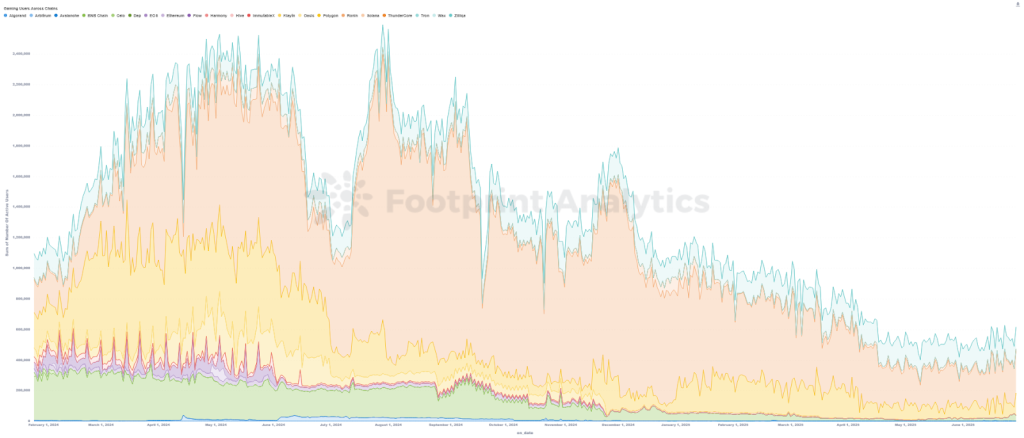
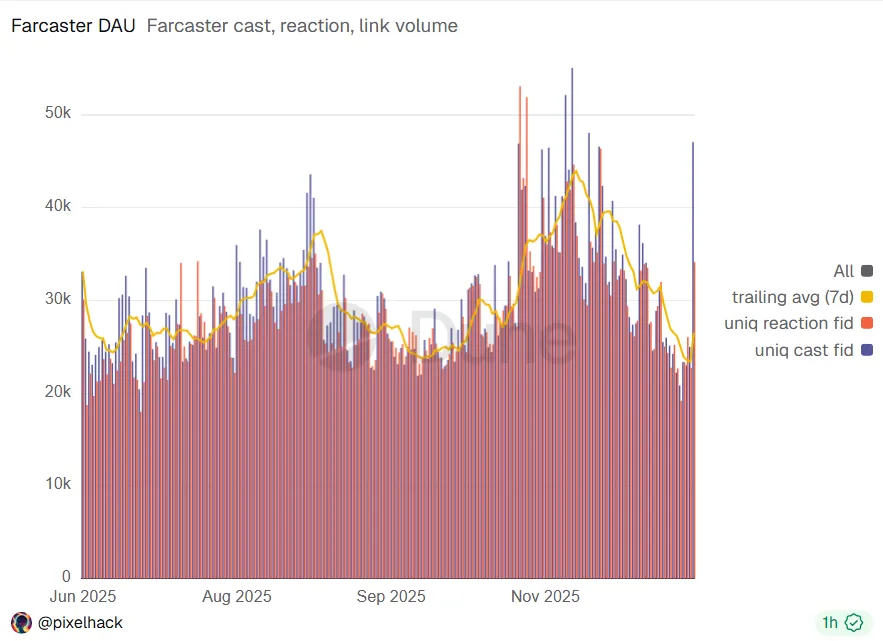
Blockchain social networks fared similarly, remaining niche. According to Dune, daily users of the leading platform Farcaster slipped over the past six months, hovering around 30,000. Stats for Lens and Friend.Tech point to a lack of activity.

Error margins are inevitable when forecasting fast-moving markets. Many analyst calls missed; memecoins, especially those tied to AI, no longer command past levels of user interest. Token and points pre-sale platforms have faded from the news cycle—and so, too, have tap-to-earn apps like Hamster Combat.
Even so, specialist media turn to forecasts and research. Such materials help readers navigate an ever more complex, fast-changing crypto market, increasingly shaped by politics and corporate power.
But no expert’s authority relieves anyone of the need to make independent, well-considered decisions.