



Researcher Proposes Countermeasure to Centralization and MEV in Ethereum
An Ethereum researcher known as malik672 proposed a block formation mechanism to combat centralization and MEV in the network of the second-largest cryptocurrency by market capitalization.
The specialist noted that as of February 2025, approximately 80% of blocks were formed by just two organizations:
“This undermines the decentralized spirit of Ethereum. MEV — the value extracted by rearranging or censoring transactions — remains a problem as advanced players dominate the Proposer-Builder Separation (PBS) ecosystem.”
The researcher proposed a mechanism called Decentralized Random Block Proposal, which involves all clients in block formation, not just validators and the proposed builders in PBS.
According to his concept, clients like Geth and Nethermind use a function similar to the Verifiable Delay Function (VDF) used by validators to randomly select transactions from the local mempool. Participants then simultaneously broadcast the assembled block to validators, who filter out invalid transactions and compute the hash.
The expert believes that due to the random selection of transactions, MEV manipulations at the block level will become impossible — no one knows which operations will be included in the set and cannot influence their order.
Moreover, such a mechanism is more resistant to DDoS attacks — “spam” is evenly distributed across the mempool, preventing overload of individual nodes.
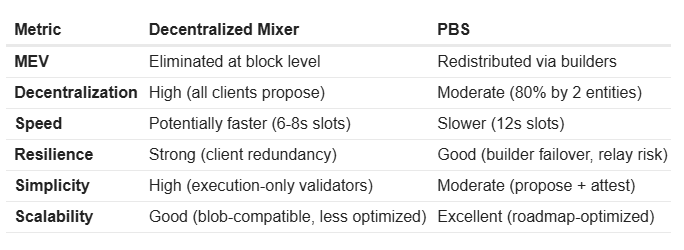
The researcher added that the proposed method is not as optimized for rollups as PBS, but “prioritizes fairness and full democratization”:
“It’s a trade-off: impartiality versus L2 precision. It’s the best option for Ethereum, which values equality over efficiency. For those chasing scalability, PBS is suitable,” he noted.
Back in late February, the non-profit Ethereum Foundation established an independent group to uphold the network’s values.
Рассылки ForkLog: держите руку на пульсе биткоин-индустрии!