




A week after fighting erupted in the Middle East, global markets are still digesting the escalation. Oil has surged, the dollar has strengthened and cryptocurrencies have shown “unexpected resilience”.
Crypto market
On February 28, amid US and Israeli strikes on Iran, bitcoin fell to $63,000 and ether slid to $1,800. Combined liquidations across digital assets over the first weekend of the conflict exceeded $963m.


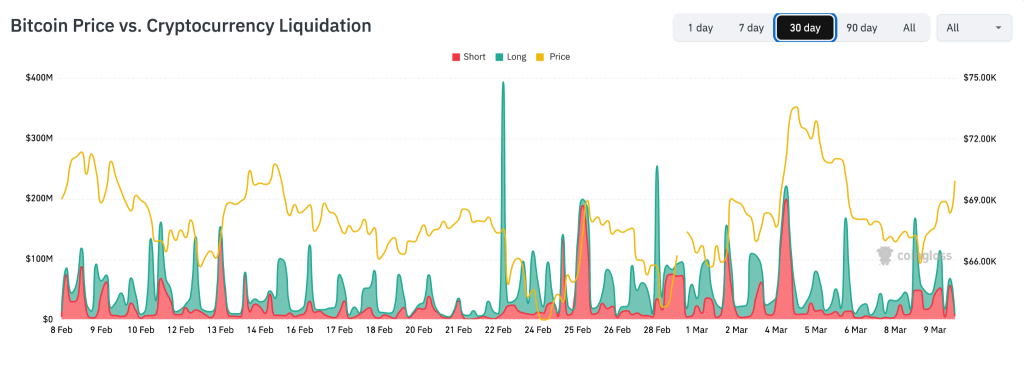
The dip, however, proved short‑lived. By March 1 the price of the leading cryptocurrency had recovered to $67,700, and on March 4 it tested $74,000.
Some analysts called that trajectory expected, citing bitcoin’s status as a neutral store of value. Others deemed the market’s reaction “unexpectedly resilient”, given the broader weakness in risk assets and global equities.
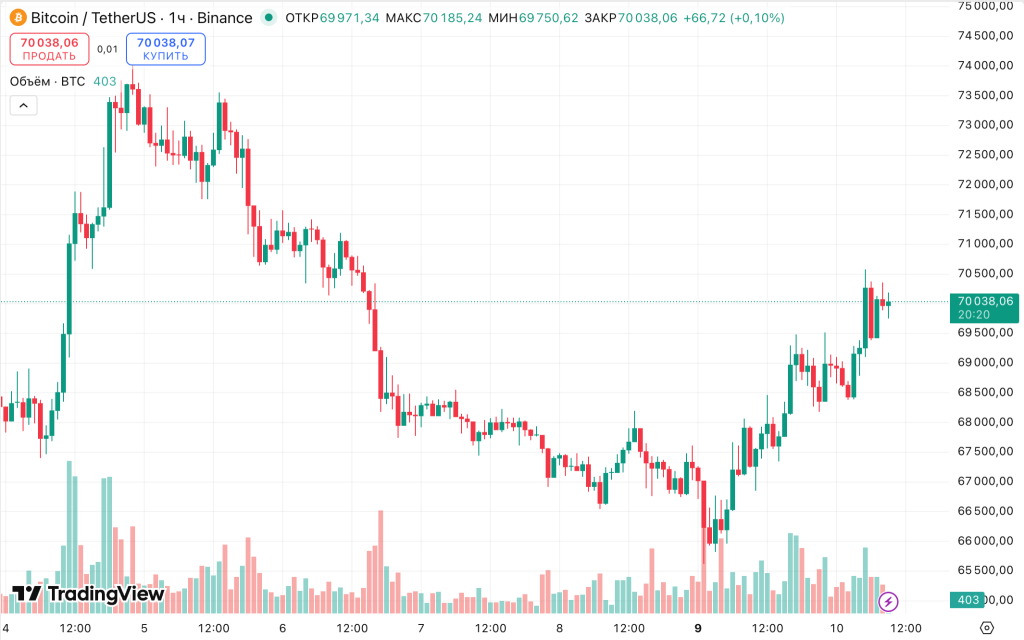
At the time of writing bitcoin had pulled back to $70,000. Over the past 24 hours the price rose 3.7%. Sentiment was buoyed by a statement from US president Donald Trump about a possible swift end to the operation in Iran.


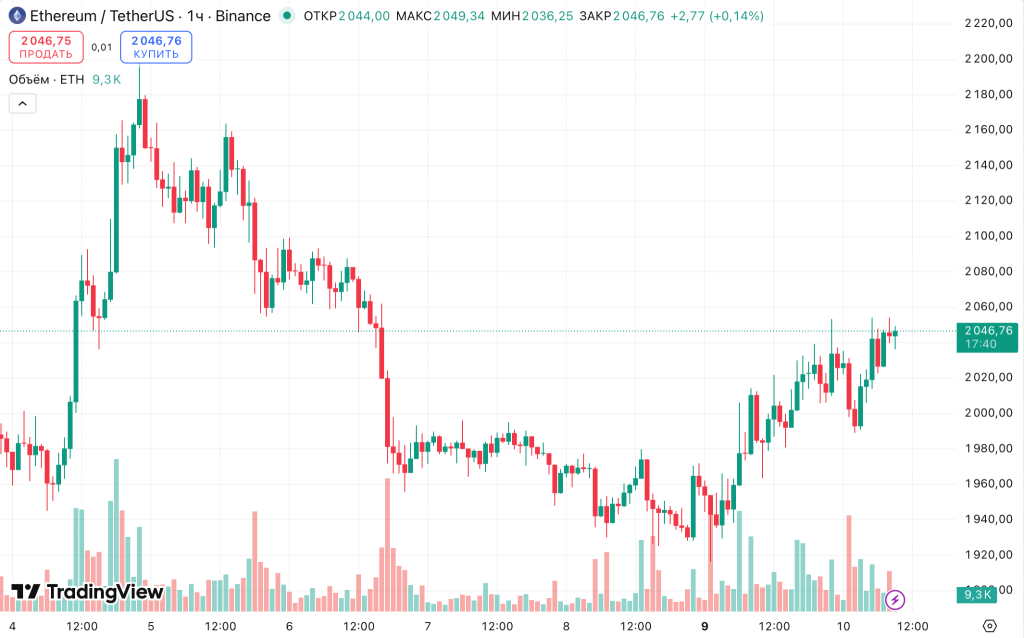
Ether is hovering around ~$2,000 (+2.8% over the past 24 hours).


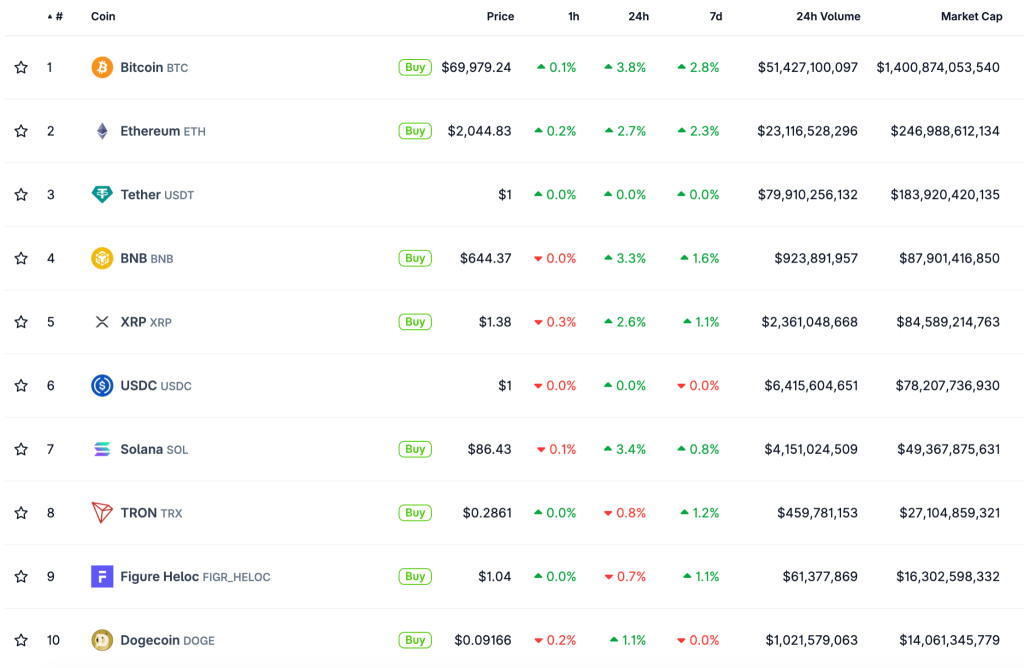
Top‑10 coins by market capitalisation moved in step with the two leading cryptocurrencies. The sector’s total market value rose 3.2% to $2.4 trillion.


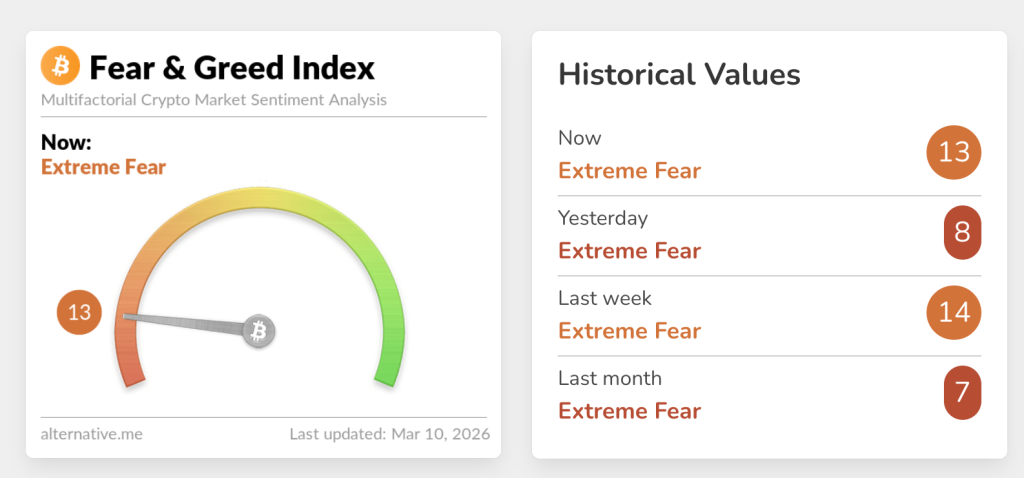
Even so, uncertainty prevails among crypto investors. A popular gauge of market sentiment sits in “extreme fear” territory.


Gold and equities
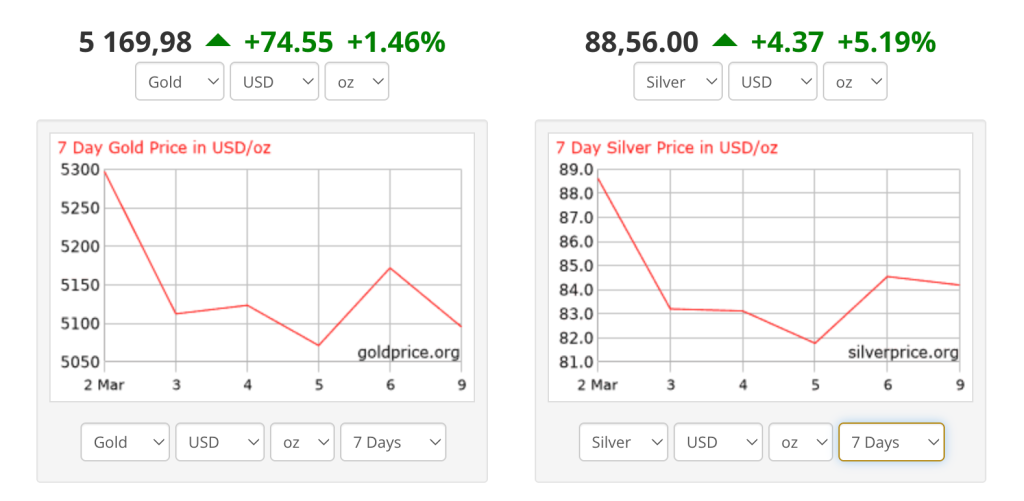
At the outset of the conflict gold burnished its reputation as a classic haven. On March 2 the spot price climbed to $5,297 per ounce, while futures settled even higher—around $5,312. By the time of writing, quotes had eased to $5,170.
Silver showed a similar pattern. Over the past week the metal gained nearly 7%, to $88.6.


The first week after the strikes on Iran saw equity markets in risk‑repricing mode. Investor reactions varied markedly by region.
American benchmarks fell relatively mildly. Over the past seven days the Dow Jones slipped by 1.5%, the S&P 500 by 0.5%, while the Nasdaq added 0.8%.
Europe’s sell‑off was steeper owing to the oil spike and fears of a new inflationary wave. By March 9 the STOXX 600 was down 0.6% and nearly 6% below its record close on February 27. Over the week the index lost 1.5%.
Asia suffered the most. The region reacted sharply to threats to trade routes and heavy dependence on raw‑material imports. Over seven days South Korea’s KOSPI plunged by 4.4%, and Japan’s Nikkei by 3.5%.
Oil
As a result of US and Israeli strikes on Iran, the country’s supreme leader, Ayatollah Ali Khamenei, was killed. One of Tehran’s responses was to close the Strait of Hormuz—a vital route for exporting oil and LNG from the Persian Gulf. Threats to attack tankers sparked panic in commodity markets.
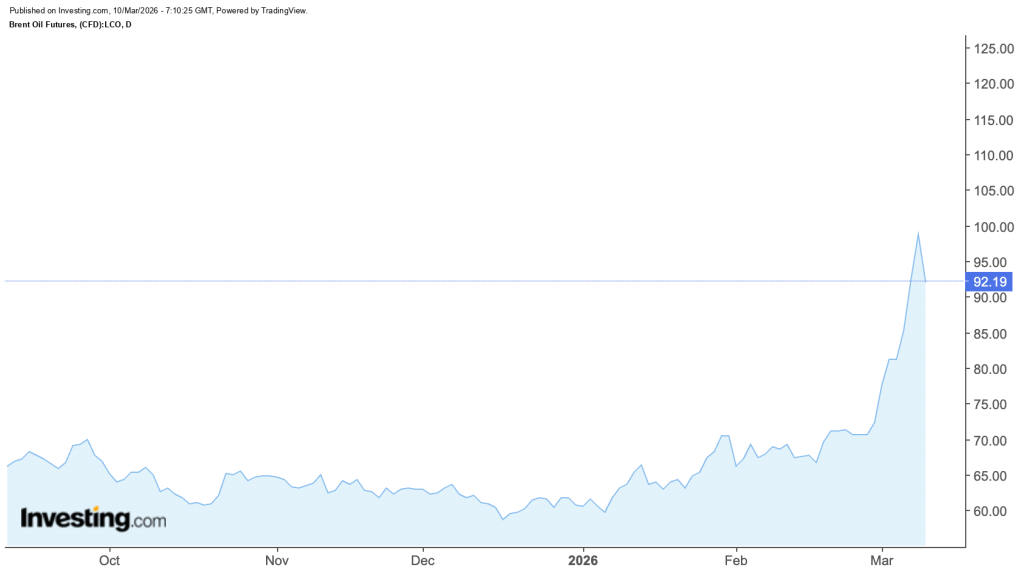
Crude became the chief barometer of investor nerves. On March 1–2 prices rose on fears of supply shortages. On March 9 oil topped $120 a barrel for the first time since June 2022. After Trump’s words about likely de‑escalation, Brent fell to $92.


At CryptoQuant, analysts called the oil rally a negative for bitcoin. A geopolitical shock, they said, could stoke inflation and create an adverse backdrop for cryptocurrencies.
One of the chief risks, analysts say, is potential disruption to shipments through the Strait of Hormuz. The effects would extend far beyond the local conflict: pressure on the global energy market would intensify inflation risks and heighten financial‑market volatility. Some reckon the logistics shock could outlast the war itself.
Dollar
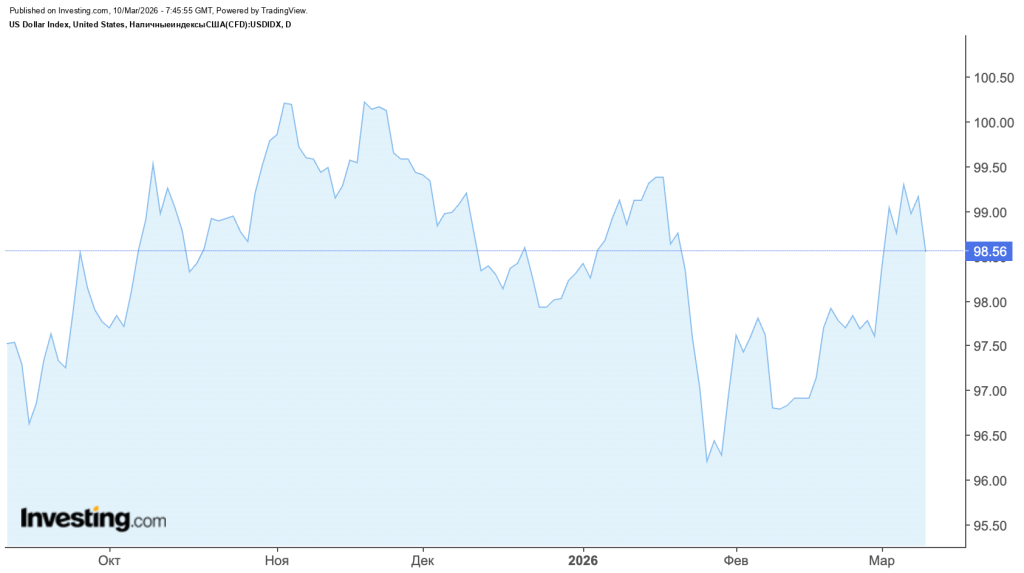
Foreign‑exchange trading followed a familiar escalation pattern: investors crowded into havens. Stronger demand for dollars lifted the DXY index, which on March 5 rose to 109.
Iran’s currency woes predated the conflict. In early December 2025 the rial collapsed to the lowest level in the Islamic Republic’s history—1.2m per US dollar. In late January 2026 the rate fell to 1.5m.
Amid the escalation, cryptocurrencies stood alongside the US dollar and gold as tools to at least partially sidestep inflation. But after the strikes began, the domestic market shrank sharply owing to mass internet and telecom shutdowns nationwide.
According to TRM Labs, crypto transaction volumes from February 27 to March 1 fell by roughly 80%. Analysts recorded a one‑day spike of $3m in late February, but attributed it to internal fund movements rather than capital flight.


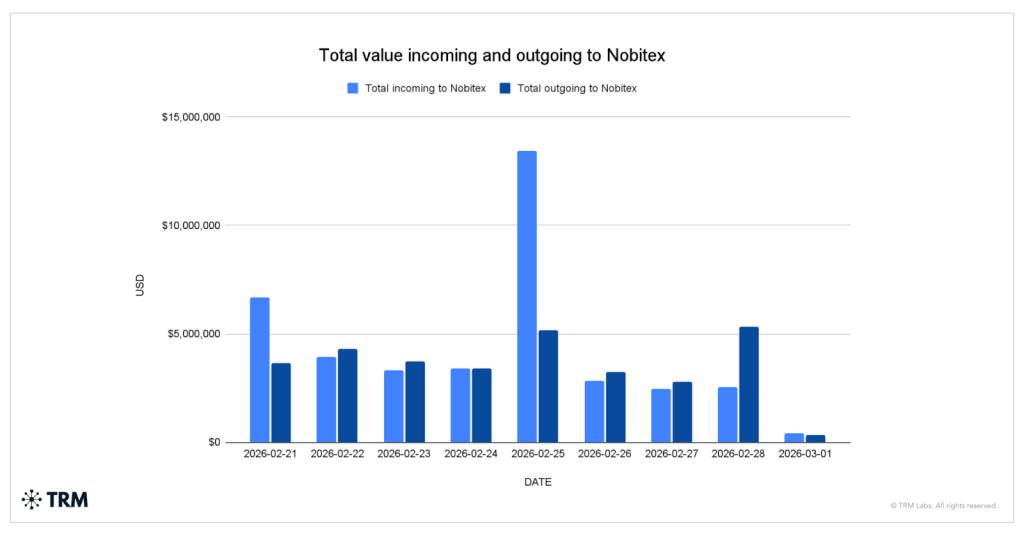
Some analysts nonetheless observed outflows. According to Elliptic, in the first minutes after the start of the joint US‑Israeli military operation against Iran, withdrawals from the country’s largest crypto exchange, Nobitex, jumped 700%.
In January, Elliptic disclosed the central bank of Iran’s purchase of USDT stablecoins worth $500m.