




Ripple chief executive Brad Garlinghouse said it is ‘absurd’ to accuse a judge of good-faith application of the law in the SEC’s case against the company.


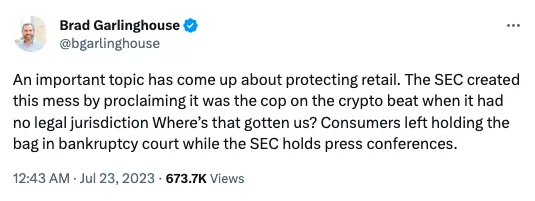
“The SEC has created this mess, imagining itself as the policeman in the crypto battle, when it had no authority to do so. What has that led to? Retail investors are stuck in bankruptcy proceedings while the regulator holds press conferences,” he said.
In Garlinghouse’s view, “reasonable legislation, not coercive regulation” is the only way to establish clear rules and protect retail investors.
filed a lawsuit against Ripple in 2020, accusing the company of distributing unregistered securities worth about $1.3 billion in the form of tokens.
On July 13, 2023, Judge Analisa Torres ruled that selling XRP directly to institutional investors violated the SEC’s rules, while offerings to retail investors on exchanges did not.
Recently the agency asked the judge to ignore part of the Ripple case ruling, as it does not conform to current securities laws and may be appealed. In the updated suit against Terraform Labs and its CEO Do Kwon, the SEC said the verdict “creates an artificial distinction between the expectations of institutional and retail investors.”
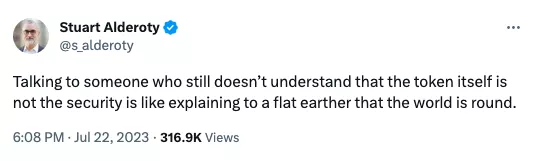
Ripple’s chief legal officer Stewart Alderoty also joined the criticism. In his words, attempts to justify XRP’s non-security status are like arguing with a flat-Earth advocate about the round Earth.

Earlier, SEC Chair Gary Gensler said the agency was ‘disappointed’ with the decision regarding retail investors, but ‘pleased’ with the verdict regarding institutional sales.
Earlier, former SEC lawyer John Reed Stark called the verdict in the Ripple case ‘shaky’. He did not rule out that the agency would appeal the ruling, and a higher court could overturn the previous decisions.