



Ripple lacks any “secret access” to the XRP Ledger (XRPL) network, which is entirely decentralised. This was stated by the company’s Chief Technology Officer, David Schwartz, in an interview with Decrypt.
“We make a significant contribution to the ecosystem. It is certainly very important to us. But we have neither the interest nor the desire to control the network,” he said.
For many years, critics have often pointed to the relatively small number of validators in XRPL. According to XRPScan, there are 187 of them—significantly fewer than in the Bitcoin network (23,000, according to Bitnodes).


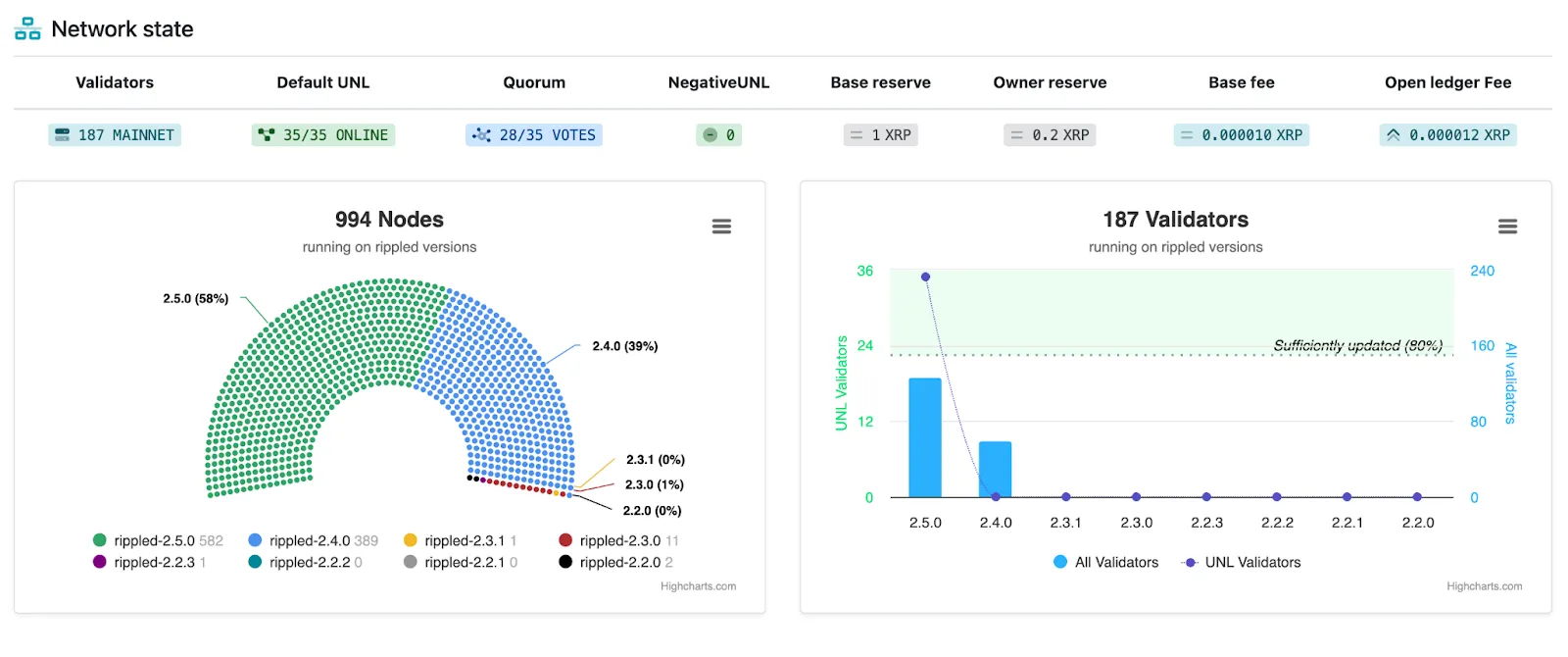
As Schwartz explained, the key factor is not the number but the distribution of nodes among independent operators. According to him, Ripple supports only one of the 35 validators—less than 1% of the entire network. All significant protocol changes require the consent of 80% of participants.
“We physically cannot block any transaction or unilaterally change the rules of the game,” emphasised the CTO.
XRP Ledger is protected by Unique Node Lists (UNL)—a list of trusted nodes. Each validator independently chooses which nodes to trust. The official UNL from the XRP Foundation previously included Ripple nodes, but it is now used independently.
Some also claim that the company influences the market through periodic XRP sales—it manages about 38 billion tokens. However, Schwartz refuted allegations of manipulation. According to him, the sale of coins from escrow affects market liquidity but not the blockchain’s operation.
Back in June, the CTO of Ripple announced that more programmable features would be introduced to the XRP Ledger. The “Ethereum-like” update includes the launch of smart contracts for payment management and a new lending protocol.