



Robots learn to reproduce; Clearview AI fined $22.6 million and other AI news
We aim to inform readers not only about events in the bitcoin industry but also about developments in adjacent technology spheres—cybersecurity, and now the world of artificial intelligence (AI).
ForkLog AI has assembled the week’s most important AI news.
- Qualcomm unveiled next-generation processors for smartphones and laptops.
- Yandex expanded support for new languages in its YouTube video-dubbing service.
- Apple will release AR glasses to replace the iPhone in 2022.
- In Kyiv, AI-powered cameras will be installed under the Safe Capital programme.
- Britain fined Clearview AI $22.6 million for unlawful data collection.
- Researchers created “living robots” capable of reproduction.
- The week’s most notable AI deals.
Qualcomm unveils next-generation mobile processors
The flagship mobile processor Snapdragon 8 Gen 1 is built on a 4‑nm process. It combines eight compute cores based on the Armv9 architecture and includes a 5G modem capable of speeds up to 10 Gbps.

The notebook processor Snapdragon 8cx Gen 3 is built on a 5‑nm process. It features eight Kryo cores and delivers a CPU performance uplift of 85% and a GPU uplift of 60% versus the previous generation.

Both new chips support the AI Engine. According to the company, it is four times more powerful than its predecessor. The engine has twice as much system memory and an enhanced Tensor accelerator.
At the summit, the company announced a collaboration with Google Cloud to explore neural architectures and to create next-generation AI models and deploy them on edge devices.
Yandex adds new languages to its YouTube video dubbing service
The company “Yandex” expanded the list of languages for video dubbing. It now supports French, Spanish and German content.
The system recognises speech, converts it to text, translates it into Russian, synthesises the voice and overlays it with the video. It also determines the speaker’s gender and voices the speech with a male or female voice.
The tool is available in Yandex Browser and the Yandex mobile app.
Meta asks users to send intimate photos to combat revenge porn
Meta (formerly Facebook), together with the UK’s Revenge Porn Helpline, launched StopNCII.org to shield people from non-consensual intimate imagery. The project is backed by 50 partners from NGOs worldwide.
On the platform, users can upload their intimate images in hashed form and check whether such imagery is circulating online without their knowledge.
The system analyses encrypted data locally on the device and searches files on participating platforms. If matching content is found, individuals can remove it.
If the distributed image has been edited, including cropping or applying a filter, the algorithms may fail to recognise it and the user would need to create a new sample.
Insider: Apple to release portable AR glasses in 2022
Renowned analyst Ming-Chi Kuo has said Apple will release an augmented reality headset by late 2022. It will feature an M1-class processor and will operate without being tethered to a Mac or iPhone.
According to the insider, the AR glasses will be equipped with two processors. The high-performance processor, comparable in computing power to the M1, will run core tasks, while a secondary one will handle sensor functions.
Kuo said Apple would first make the headset independent of other devices, then add support for a wide range of applications with the aim of replacing smartphones within the next decade.
In Kyiv, AI-powered cameras will be installed
In 2022, AI-powered cameras will be installed on Kyiv’s streets as part of the Safe Capital programme.
According to city councilor Vitaliy Nestor, the devices will also be equipped with a number-plate recognition algorithm. This should reduce crime and raise the level of public safety, he said.
This is the second AI-based surveillance system in Kyiv after the Interior Ministry of Ukraine installed cameras for automatic traffic violations.
The Safe Capital programme runs from 2022 to 2024.
UK authorities fine Clearview AI $22.6 million
British regulators fined the facial recognition company Clearview AI $22.6 million for breaches of data-protection laws.
The Information Commissioner’s Office said the company did not inform citizens that their photos were collected from various websites and social networks. The regulator ordered the company to stop processing UK residents’ personal data and delete the collected images.
Clearview AI may appeal the fine and the allegations. A final decision is expected by mid-2022.
DeepMind taught AI to prove theorems and tackle difficult mathematical problems
Researchers at DeepMind, in collaboration with leading scientists, applied AI to solving difficult mathematical problems and proving theorems.
They developed an algorithm that lets researchers quickly formulate hypotheses, test them, and seek out non-obvious patterns.
During the study, the models helped Australian professor Jordi Williamson and his colleagues find a solution and a proof for two conjectures in the area of knot theory and representation theory.
In particular, they opened a new approach to the Kazhdan–Lusztig conjecture, proposed four decades ago. According to DeepMind, this signals broad potential for AI across science.
Researchers created “living” robots capable of reproduction
Scientists used AI to create “living” robots made from frog heart and skin cells. They consume single-celled organisms and replicate themselves.

The algorithms generated and tested billions of potential xenobot configurations to find a viable form able to replicate.
Researchers say that in the future living bots could be deployed for tasks related to the human body or the environment—for example, collecting microplastics from the oceans, regenerative medicine, or monitoring plant root development.
South Korean preschools deploy developmental robots
In Seoul’s preschools, trials of robots to educate children aged three to five have begun.
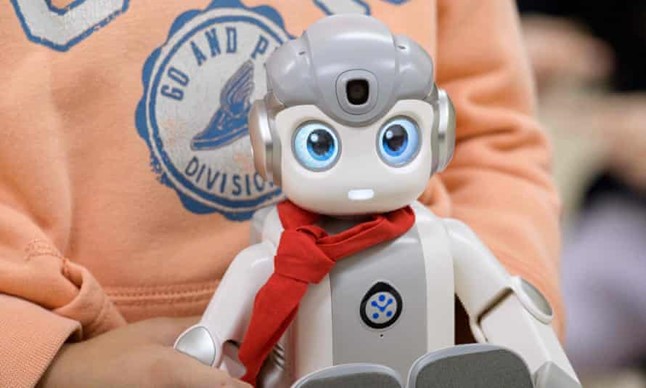
Alpha Mini can sing, dance, tell stories and teach Kung Fu moves. It also demonstrates simple exercises to imitate, including one-legged stands and push-ups.
The 24.5 cm tall robot is equipped with a camera for recognition and photography. It can blink and morph its pupils into “hearts” when interacting with children.
Researchers teach AI to create movie trailers
Scottish researchers developed an AI algorithm to generate trailers for films.
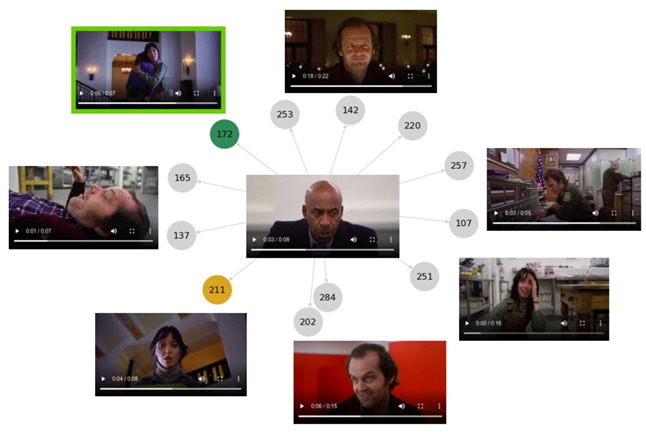
It consists of two neural networks. The first processes the film’s audio and video components to identify “interesting” scenes. The second analyzes the textual version of the movie.
As a result, the combination of the two models highlights the film’s most important parts and generates a trailer from them.
The week’s most significant AI deals
From 27 November to 3 December 2021, AI startups raised more than $430 million. Here are the most notable deals.
- Robot maker FJDynamics raised $70 million to enhance automation products for labour in farming, construction and horticulture.
- Kakao Mobility raised $55 million to advance autonomous driving technologies.
- CloudTrucks secured $115 million to expand its software engineering team for managing freight operations.
- Convious raised $12 million to scale its AI-powered e-commerce platform for the “experience economy.”
- Particular Audience raised $7.5 million.
- Smartling raised $160 million to expand its tooling for automated content translation.
- Karamba Security raised $10 million to support security products for the automotive industry and IoT devices.
Also on ForkLog:
- Russia will deploy AI for persona analysis on social networks.
- Media: China tracks dangerous journalists using facial-recognition systems.
- AI artist Botto has earned more than $1m from NFT sales.
- Russian authorities will grant access to government data for AI developers.
- The US regulator has filed suit to block Nvidia’s acquisition of ARM.
Subscribe to ForkLog AI on Telegram: ForkLog AI — all AI news!
Рассылки ForkLog: держите руку на пульсе биткоин-индустрии!