


RUNE price climbs 34% as synthetic assets go live on THORChain
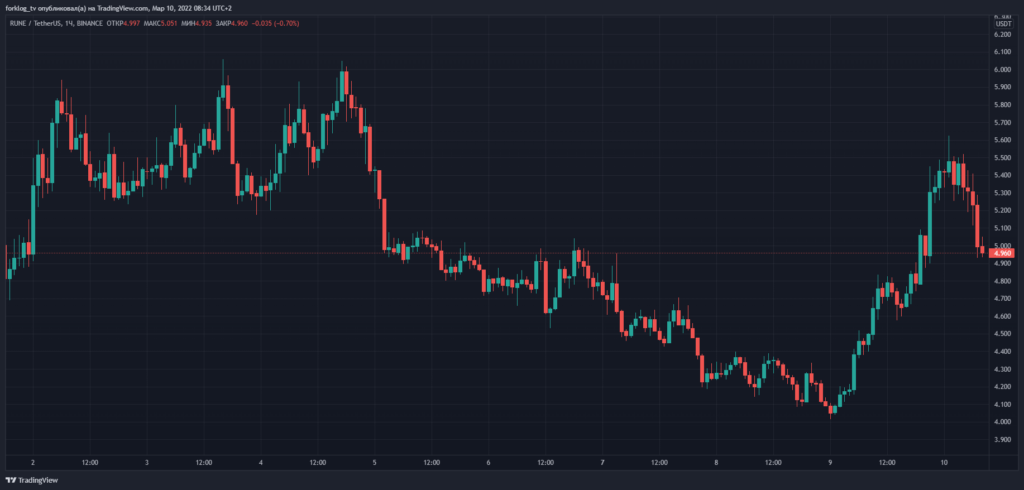
On March 9, amid the activation of synthetic-asset pools, the native token of the cross-chain THORChain protocol (RUNE) rose by 34%.
🚨 SYNTHETICS ARE NOW LIVE ON @THORChain 🚨
1 Synthetic #Bitcoin on THORChain is always redeemable for 1 #Bitcoin from the liquidity pools.
Result:
-Better prices
-Faster tx settlement (5 seconds)
-Increase trade volumeComplete Launch Details:https://t.co/kqxZQNoIJX🧵
— THORChain #THORFI (@THORChain) March 9, 2022
At the time of writing, quotes had adjusted by 10%, with RUNE trading at around $4.96.
Synthetic assets, or «synths», are tokens with collateral backing, their price based on the value of other tokens. In the THORChain protocol, collateral pools are used, composed in equal parts of base cryptocurrencies and RUNE.
Lead THORChain developer Chad Barraford explained that this approach helps to increase the security and resilience of the network.
Because the synth is half backed by $RUNE, it can always ensure economic security of the synthetics, and that the network security is always greater than the value of the synthetics, even if they go 1000x up in value.
— Chad Barraford (@CBarraford) March 9, 2022
«Because synths are half-backed by RUNE, the latter can always guarantee the economic security of these assets, and the network security is greater than the value of such tokens, even if their price rises 1000x», he wrote.
According to him, synths halve the exchange fees and enable «almost instant trades» at lower gas costs. He also added that by using such assets, liquidity providers can earn income on a greater amount than they deposited into the pool.
What does this mean for the LPs?
For anyone that mints a synth, they add capital to the pool, but DON’T take ownership of the pool. Instead any yield they would have gained is passed off to LPs. This effectively means that LPs gain the yield of a higher amount than they deposited— Chad Barraford (@CBarraford) March 9, 2022
In 2021, THORChain suffered a series of hacks. In July the attackers managed to «deceive» the Bifrost service, which is responsible for connecting nodes to blockchains and implementing witness transactions.
Several days later, the protocol was again hit by hackers. Using a special contract they forced Bifrost to accept fake assets and moved them into real assets.
In the wake of these incidents, the project team announced a halt in operations.
Read ForkLog’s bitcoin news in our Telegram — cryptocurrency news, rates and analysis.
Рассылки ForkLog: держите руку на пульсе биткоин-индустрии!