



We aim to inform readers not only about developments in the bitcoin industry, but also about what happens in adjacent tech spheres — cybersecurity, and now the world of artificial intelligence (AI).
ForkLog AI gathered the most important AI news of the past week.
- In Russia, a neural processor for artificial intelligence is being developed.
- A “Quantum Valley” will appear in the Nizhny Novgorod region.
- Chinese scientists tested a powerful electromagnetic weapon created with AI.
- German designers created a smart poncho that can evade recognition by surveillance cameras.
- Artificial intelligence helped Canadian doctors find a potential treatment for COVID-19.
- Baidu unveiled a smart mirror with an assistant for exercise.
- The week’s most notable AI deals.
Russia’s Ministry of Industry and Trade orders development of a domestic neural processor
The Ministry of Industry and Trade of Russia restarted multibillion-dollar tenders to create an indirect analogue to Nvidia Jetson Xavier and the Elbrus-32S microprocessor.
The NeuroMatrix-architecture chip will be developed by the Scientific-Technical Center “Module” — work is to be completed by 30 November 2025. The initial maximum contract price stands at 7.63 billion rubles.
The tender documents specify that the processor must include a neural-network accelerator with at least eight cores.
Also, “in the near term” the Ministry of Industry and Trade will identify the developer of the Elbrus-32S processors for tasks of the Ministry of Defence. The starting maximum contract price is 7.14 billion rubles.
According to the documentation, the plan is to create a 32-core microprocessor for computing systems in the class of high-performance servers and high-end data storage systems (СХД).
The contractor must deliver an early batch of chips and software to support their architecture no later than 30 November 2026.
Russia to create a “Quantum Valley” for AI development
By 2030 in the Nizhny Novgorod region a scientific-technical center “Quantum Valley” will be created to advance artificial intelligence and quantum technologies.
Researchers will work on innovative manufacturing and smart transport systems, implementing projects in high-tech healthcare and medical instrumentation, ecology, and the remediation of accumulated damage.
Within the center, laboratories, scientific-technical facilities, prototyping and engineering centers, shared spaces, and work areas will be built. This will enable the creation of more than 1,300 new jobs.
“Quantum Valley” will be funded from the regional budget and non-budgetary resources.
Chinese scientists, with AI, created an electromagnetic weapon
Researchers from China applied artificial intelligence to create an electromagnetic weapon. The prototype is pistol-sized, and its barrel length is 12 cm.
The device is equipped with three coils powered by a battery, generating an electromagnetic field that accelerates a magnetized bullet and pushes it outward. Its muzzle energy reaches 150 J, comparable to the power of a small-calibre rifle.
According to the researchers, AI in the design process was essential to achieving this performance.
The Chinese Navy is also applying artificial intelligence in the development of shipborne railguns.
AI helped identify potential COVID-19 treatments
In Canada, AI helped identify more than 1,000 potential COVID-19 treatments.
Dr. Artem Cherkasov together with colleagues analysed about 40 billion molecular structures and identified 1,000 compounds likely to affect the SARS-CoV-2 virus.
From them, researchers highlighted seven potential antiviral drug candidates and are preparing them for animal testing.
According to Cherkasov, thanks to AI the search took just 19 days instead of the expected ten years.
“Sber” teaches AI to recognise firearms from surveillance cameras
Engineers at Sber applied artificial intelligence to recognition of firearms from surveillance cameras.
The company stated that the system can distinguish a service pistol from a toy with 99% accuracy.
The technology is already in use by Russia’s law-enforcement agencies.
iPhone to include facial-recognition for intimate photos on underage devices
Apple will add in iOS 15.2 a feature that detects intimate photos in messages of minors. It will warn the child but won’t notify parents.
When explicit content is found in Messages, the AI-based tool will display a warning and blur the preview until the user opens it. It will also suggest that the adolescent speak with a trusted adult if the transmission occurred under pressure.
Apple said it will not have access to the files, as they are end-to-end encrypted.
Researchers present a simulator for training “soft” robots
Researchers at the Massachusetts Institute of Technology have developed a two-dimensional simulator Evolution Gym for designing, training, and testing AI-powered “soft” robots. It allows programming models for simultaneous development of their bodies and their brains.
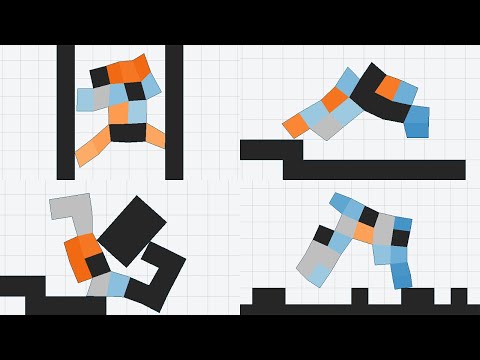
The researchers created 30 unique tasks, including walking, jumping over obstacles, carrying or dragging items, and crawling beneath barriers. They also allowed researchers to define their own conditions.
The simulator enables algorithms to redesign the robot’s construction by linking squares, and to control them. It also provides feedback to the AI on how well the 2D model handles the task.
According to scientists, some AI-redesigned bots took the form of a galloping horse or a monkey to complete the distance faster or to climb a tall block.
Evolution Gym is released under open source.
Baidu unveils a smart mirror for workouts
The Chinese IT giant Baidu launched a smart mirror with AI and LTE support for home workouts — the Smart Fitness Mirror.



The device is equipped with an eight-core AI processor with a computing power of 3 Tops and a 43-inch IPS screen. It also features a configurable wide-angle sensor that improves image quality in low light by 40% and expands the viewing angle to 144 degrees.
The fitness mirror recognises user movements and compares them with a virtual trainer’s examples. It ships with a built-in exercise app offering personalised lessons from top instructors.
The Smart Fitness Mirror costs $662 for the base kit or $740 for the premium version.
Pokémon Go creators invite players to scan the real world for virtual rewards
Niantic added an AR-scanning quest to Pokémon Go that involves scanning landmarks. The company will use the data to develop a “metaverse of the real world.”



Players must film objects and locations at PokéStops, then send the footage to the developers. In-game rewards will be granted to participants.
Designers craft a poncho that hides a person from surveillance cameras
The German design studio WertelOberfell, with technical partners created the Ignotum poncho capable of “fooling” AI surveillance systems.

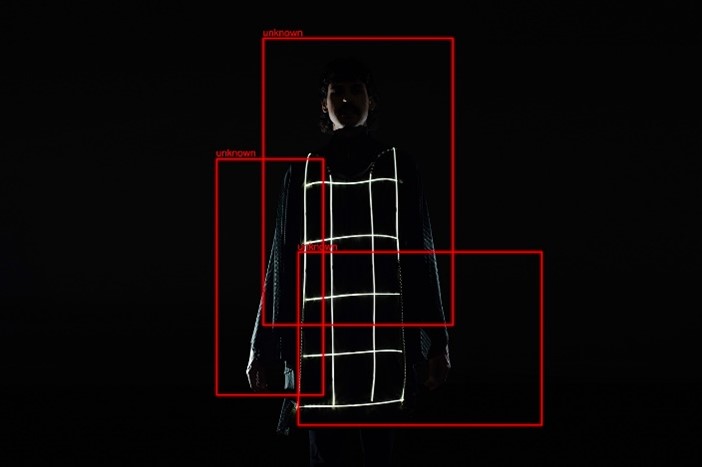

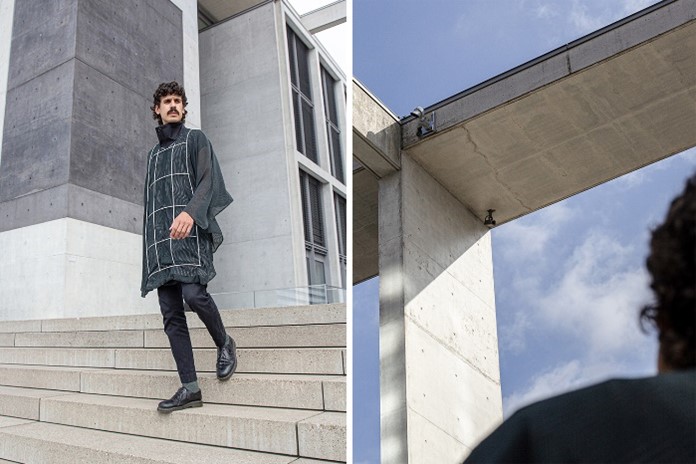
Engineers used cameras with an object-detection algorithm MobileNetV2 trained on the COCO dataset. They created a digital mannequin and tested it with hundreds of variations of clothing in a virtual environment.
Subsequently, researchers designed several real-world costumes with LED strips. The result was a three-layer moiré cloak with embedded technical components, capable of lowering AI recognition accuracy in different conditions to a level where image processing becomes impossible.
The week’s most important AI deals
From 4 to 10 December 2021, AI startups attracted over $882.5 million. Here are the most interesting deals.
- Bird Buddy got $8.5 million.
- Robust Intelligence raised $30 million to build tools for stress-testing AI models.
- Edge Impulse raised $34 million to enhance a platform that helps enterprises deploy TinyML.
- NewtonX raised $32 million to expand its B2B market research and analytics service.
- Creators of the video-generation platform with digital avatars Synthesia raised $50 million.
- Suki raised $55 million to grow its voice assistant user base.
- Incode raised $220 million to support its omnichannel biometric identity service.
- Pento raised $35 million for payroll-automation software.
- Serve Robotics raised $13 million to expand its fleet of delivery robots.
- Sense raised $50 million to support its hiring platform.
Also on ForkLog:
- Clearview AI запатентует технологию распознавания лиц.
- Илон Маск: роботы Tesla предотвратят крах цивилизации.
- Eurostar протестирует систему распознавания лиц на европейских путешественниках.
- DeepMind представила языковую модель с 280 млрд параметров.
- Meta открыла доступ к VR-соцсети в США и Канаде.
Subscribe to ForkLog AI on Telegram: ForkLog AI — all the AI news!