



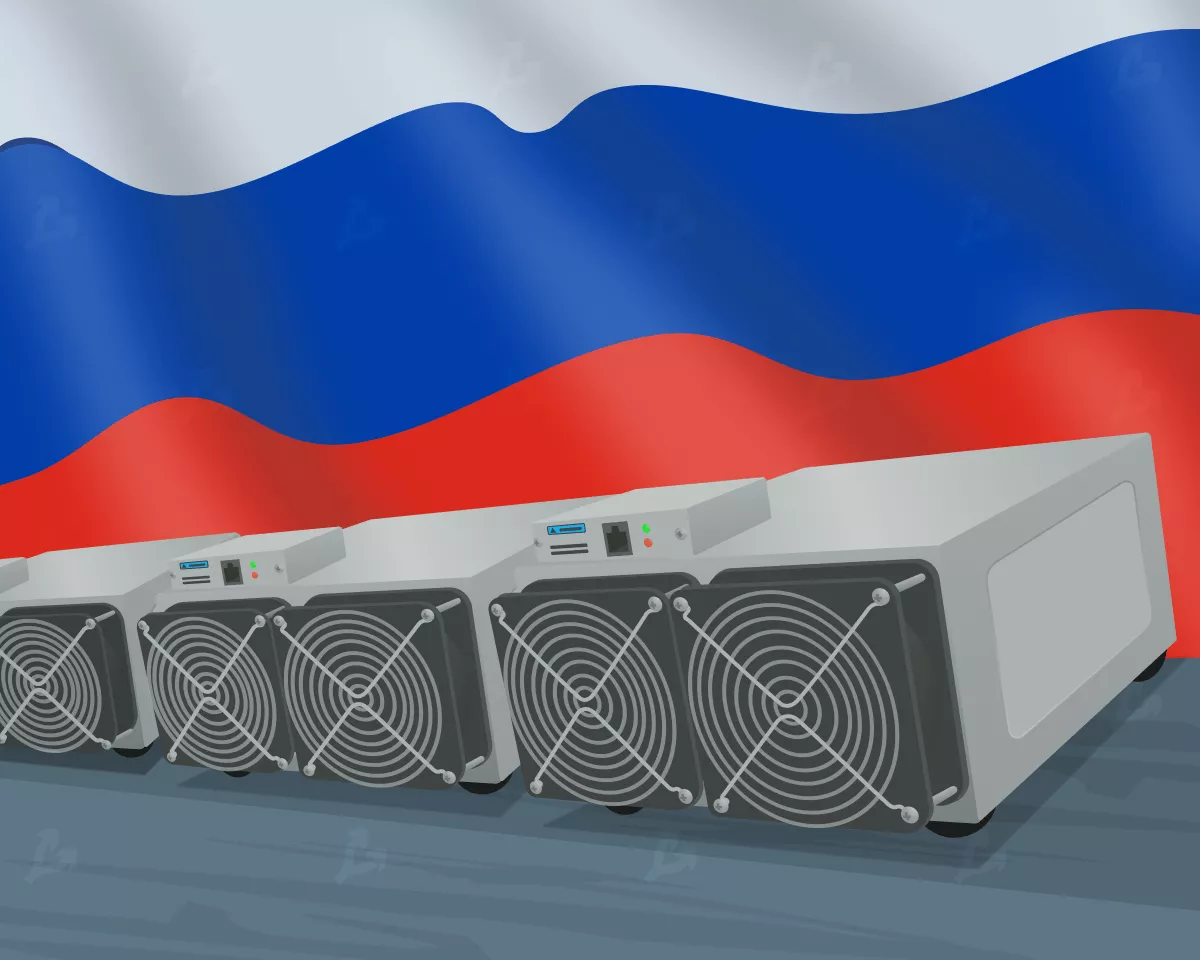
The Russian Ministry of Energy is preparing to sharply raise tariffs for mining centres located in southeastern Siberia, which have become one of the causes of local energy shortages. As reported by Kommersant.
Due to the surge of crypto farms following the mining ban in China and the imposition of strict restrictions in Kazakhstan, it is already impossible to connect industrial, social and utility facilities.
By 2029, a shortfall in capacity could rise to 1.23 GW, necessitating the construction of new power plants at a cost of 430 billion rubles, according to the Schemes and Programs for the development of Russia’s energy system.
Media reported in September on plans to raise transmission tariffs for electricity for crypto farms, focusing on Buryatia, Zabaykalsky Krai and Irkutsk Oblast. According to sources, the ministry thus intended to push miners to regions with surplus capacity.
In October, Deputy Minister Pavel Snikkars confirmed the information and warned that tariffs from 2024 could rise by “two, five or more times”.
Sergey Bezdelov, director of the Association of Industrial Mining, reminded that the share of electricity in the overall cost structure of mining data centres averages over 70%.
The ministry wants to raise tariffs so that crypto farms find it more profitable to leave the energy-deficit territory at least during the construction of new generation.
In the Energy Consumers’ Community warned that for a well-equipped IT infrastructure facility, into which resources have been invested to ensure reliable power supply, cooling, communications, and around-the-clock maintenance, relocation could be tantamount to destroying the business.
«If we are talking about data centres above 50 MW, there will be losses of up to 90% of investments», Bezdелov said.
According to the publication, owners of crypto farms criticise the ministry’s proposals, arguing that the main cause of the situation is poor planning of the energy system’s development. Miners claim they warned regulators about the growth of data centres as far back as 2020.
Legitimate players are supported by the authorities of Irkutsk Oblast, who do not see a problem in the sector’s development. The government of Buryatia also has no objections to mining centres, aside from their connection to the main power grids.
Sources see the cause of Siberia’s energy shortage in a large amount of “grey” cryptocurrency mining (in homes, garages, barns and apartments) conducted under the guise of residential consumers or via illegal connections to networks. In the south of Irkutsk Oblast, the volume of illegal mining may reach 260 MW, according to their estimates.
Crypto-farm owners warn that the Ministry of Energy’s initiatives will only increase such mining, because legitimate players will move into the grey zone.
In the FAS they see a solution in implementing differentiated tariffs for households, which rise with higher electricity consumption. The new model is planned to be adopted for now only in Buryatia and Kaliningrad Oblast; Kuzbass was a pioneer.
Earlier, the Ministry calculated that electricity consumption by cryptocurrency miners in Russia in 2023 reached 1.5 GW.
Meanwhile, a bill regulating the sector has been registered in the State Duma since mid-November 2022. It obliges individuals and legal entities to report mined cryptocurrencies to the tax authorities, specifying the address to which proceeds are credited. Its adoption is expected in 2024.