



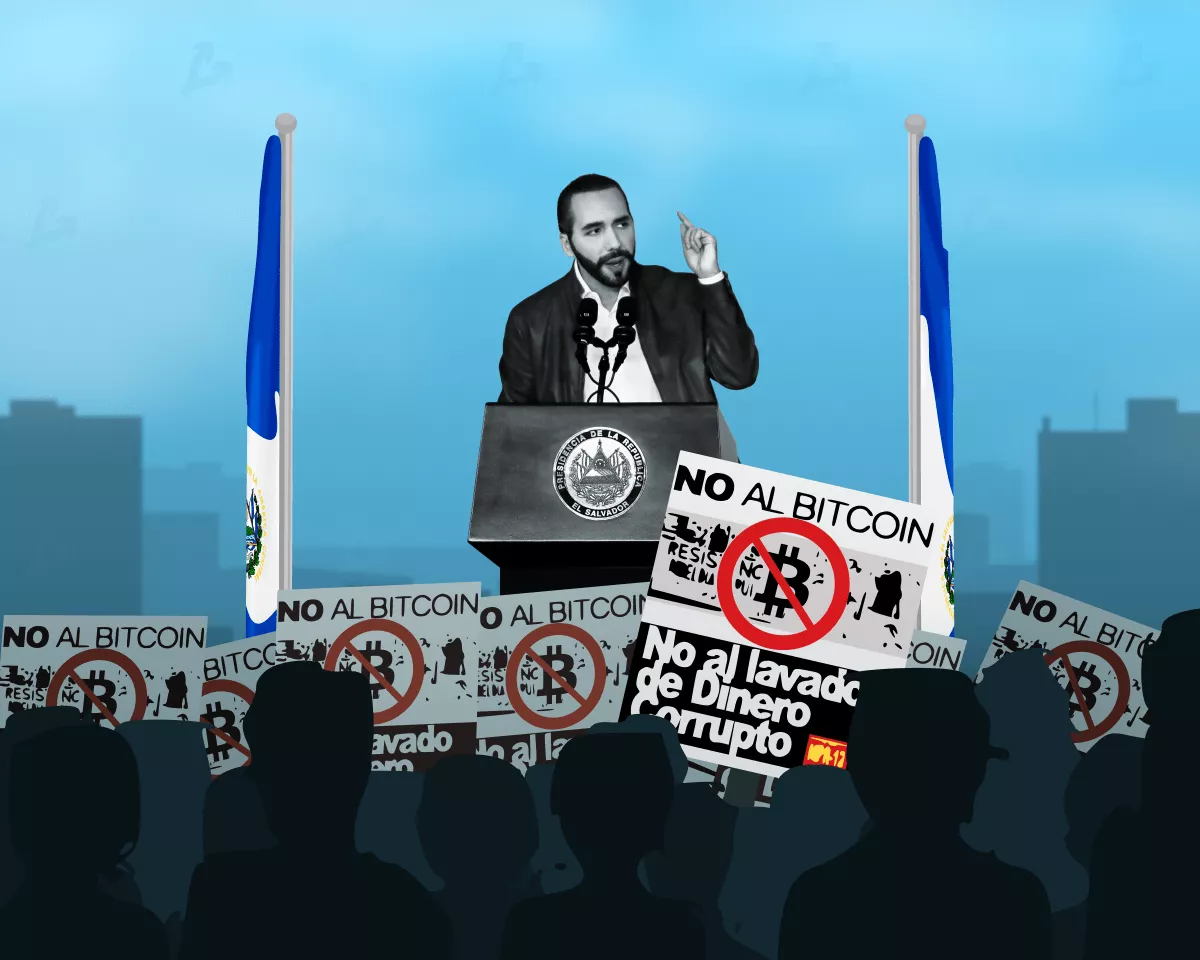
In early June, El Salvador’s president Nayib Bukele spoke at the Bitcoin 2021 conference, where announced his intention to legalise digital gold. A few days later, the parliament adopted the corresponding law, and on 7 September it took effect.
El Salvador became the first state to accord Bitcoin the status of an official currency. Opinions among ForkLog experts surveyed were divided: some do not exclude that this step could attract investment to the country, while others predict capital outflows.
Some members of the community saw the event as a major victory for the industry and said that the experiment may attract other regions.
There is also a sharply polarised view. Cryptocurrency analyst Mr. Whale described Bitcoin as a “Trojan horse” for the Salvadoran government, and what happened as “Satoshi’s worst nightmare.”
By using #Bitcoin as a Trojan horse, El Salvador’s government has now gained full control over their citizens funds.
Don’t be fooled by the maxi’s and moon boys supporting this authoritarian nonsense.
What’s happening in El Salvador is Satoshi’s worst nightmare. pic.twitter.com/nyxphnbFvm
— Mr. Whale (@CryptoWhale) September 19, 2021
Using Bitcoin as a Trojan horse, the Salvadoran government has gained full control over the funds of its citizens. Don’t be fooled by the maximalists and biased investors supporting this authoritarian nonsense. What happened in El Salvador is Satoshi’s worst nightmare,
- El Salvador is a small, densely populated country in Central America. Almost a quarter of its GDP comes from remittances. For some households, these inflows account for up to 50% of total income.
- Residents have already felt the consequences of one monetary reform — the government abandoned the national currency in favour of the US dollar. Salvadorans regard dollarisation as a failure, arguing that the gains accrued mainly to elites and financial institutions.
- Despite all the advantages of cryptocurrency, the opaque actions of the Bukele administration have raised many questions about the real aims of Bitcoin’s legalisation.
Not the best place for a financial revolution
Between Guatemala and Honduras, El Salvador is the smallest and most densely populated country in Central America, and the region’s only country without Caribbean access. In 2020 its GDP per capita was estimated at $3,798, and the average monthly wage was $375.
Historically, the bulk of the republic’s land was used for growing coffee, which locals call el grano de oro [Spanish for “golden bean”]. By 1920 this crop accounted for 90% of the country’s exports, and by 1980 the sector accounted for about half of its GDP. Coffee estates still cover about 10% of El Salvador’s territory.
In 1979 a brutal civil war erupted — Salvadorans were drawn into a proxy conflict of the Cold War between the United States and the USSR. The United States backed the state regime to combat communist rebels, hoping to avoid a Cuban scenario.
The war, stretched for nearly 13 years, ruined an infrastructure that was already underdeveloped. By 1998, the purchasing power of urban Salvadorans was only about a third of what it had been in 1980.
As a result of the conflict, more than 75,000 people were killed and over a million forced to flee their homes. Nearly half of these people moved to the United States.
After the war a new wave of violence swept the country, this time due to clashes among gangs. By 2015 El Salvador had become one of the most dangerous places in the world — on average a murder occurred every two hours.
It is hard to imagine such a country becoming a hub for a digital monetary revolution. Yet El Salvador, once described as a zone of combat six years ago, is now discussed as a pioneer in financial technology.
The sober lesson of dollarisation
When considering Bitcoin’s legalisation, it is hard not to draw a parallel with dollarisation in El Salvador.
Because of the war, the ensuing gang violence, disasters, and the agrarian sector’s inability to meet a growing population’s needs, El Salvador accumulated a substantial external debt. Even today the state relies on foreign aid, loans and remittances.
In the 1980s, nearly 10% of the population emigrated to the United States. Given that, it is not surprising that remittances now account for about 24% of El Salvador’s GDP. There is even a saying in the country: “Our biggest export is people.”
Remittances from abroad are received by around 70% of Salvadorans. On average people send about $195 a month to loved ones, and for some households these inflows account for 50% of total income.
In 2001 El Salvador abandoned its own currency, making the US dollar the sole legal means of payment. President Francisco Flores announced the reform in November 2000, and 39 days later the law came into force. The country dollarised to 98% in just 18 months.
Unlike Ecuador, which adopted a similar measure in 2000 amid hyperinflation, currency depreciation in El Salvador occurred at a modest pace. Dollarisation helped stabilise key macroeconomic indicators, offsetting the adverse effects of exchange-rate revaluations.
Yet Salvadorans themselves regard Flores’s decision as controversial. In 2002, a survey by the Central American University (UCA El Salvador) found that 62% of respondents said the switch to the dollar had a “negative effect on their personal economic situation.”
During the currency reform, a fifth of the population could not read, so many faced problems with new price labels. Some traders exploited this, rounding up prices to the nearest column in a practice known locally as causing inflation of up to 25% in some cases.
In the mid-2000s the average wage rose only marginally while food prices rose by more than 14%.
Unlike the poor, the elites and financial institutions gained unambiguously from the dollarisation — primarily through lower interest rates. In 2002, 70% of all loans in El Salvador were issued by four large banks, while loans to 400 clients accounted for 60% of total lending.
Given this experience, it is clear that dollarisation is a painful memory for many Salvadorans. That is why the plan to legalise a digital currency unknown to most of the population culminated in protests, unrest and even arson.
Bitcoin Beach
Official confirmation is lacking, but it may be that the story of Bitcoin’s legalisation began as far back as 2017 in the remote village of El Zonte.
A local nonprofit received a donation in Bitcoin. Not knowing what to do with the cryptocurrency, it turned to a California-born observer, Michael Peterson, who had come to El Salvador for surfing but stayed to do charity work.
An anonymous benefactor sought teams to deploy part of his capital to create a parallel economy with an alternative currency and to address real problems. Peterson was intrigued and took up the project.
The project founder named his poverty-fighting initiative Bitcoin Beach. He pursued the objective by building a closed-loop economy based on Bitcoin.

El Zonte met Bitcoin with skepticism, but as more merchants and individuals joined, scepticism gave way to acceptance. New users discovered not only the asset’s liquidity but also that paying with Bitcoin could be easier than using cash.
In July 2020, Forbes drew attention to Bitcoin Beach, six months after Peterson appeared on Peter McCormack’s What Bitcoin Did podcast. The world learned about the small village in El Salvador. The project also attracted interest from experts including Strike founder Jack Mallers and Square product lead Miles Suter.
In early 2021 Peterson and his Bitcoin Beach colleagues met with El Salvador’s tourism minister. They spoke for several hours about the idea and strategy of adopting Bitcoin as a legal tender.
Officials began visiting El Zonte, showing interest in the project. In April and May a deputy education minister and the tourism minister visited in person. A month later Bukele announced the forthcoming legalisation of digital gold.
“The Coolest Dictator in the World”
He is described as a chameleon and an opportunist. On his path to the presidency, the 40-year-old Nayib Bukele switched parties three times.
The future leader of El Salvador was born into a wealthy family that owned OBERMET, a company specialising in advertising. After finishing school, he enrolled at UCA El Salvador but dropped out at 18 and ran the family business. He is also co-owner of Yamaha Motors El Salvador.
In 2012 Bukele was elected mayor of Nuevo Cuscatlán from the ruling Farabundo Martí National Liberation Front (FMLN). While in office, he focused on youth education and safety.
In 2015 the politician became mayor of San Salvador, but in 2017 he was expelled from the FMLN for libel and for “attempting to split the organisation.”
Leaving the FMLN, he announced the New Ideas movement. Bukele planned to register it as a party and run for president in 2019. However, the Supreme Electoral Tribunal delayed the process, forcing him to abandon the plan.
To contest the elections, Bukele struck a deal with the left-libertarian Democratic Change party, and when its registration was revoked he joined the centre-right coalition in the Big Alliance.
Bukele won in the first round, securing 53% of the vote — 21.3 percentage points ahead of the nearest rival, Carlos Calleh, who held right-wing views. Since taking office in June 2019, his approval rating has hovered near 90%.
Nayib Bukele, presidente electo de El Salvador https://t.co/S7dgSTOnL9 pic.twitter.com/MQoiDFgjGK
— Diario Co Latino (@DiarioCoLatino) February 4, 2019
Popularity stems largely from his success in the fight against organised crime. If the war’s end in El Salvador left almost 150 murders per 100,000 people, by 2020 the figure had fallen to 20.
Independent papers like El Faro attribute this to authorities negotiating with gangs, though the Bukele administration denies this, and the public cares about the outcome.
But the problem is that Bukele used his popularity to concentrate power and undermine democratic institutions.
The first alarm bell came in February 2020. Amid a standoff with Parliament over police funding, the president ordered the military to seal off the Legislative Assembly.

In February 2021 Bukele’s party won a crushing majority in Parliament. In May five Supreme Court judges were fired and replaced by Bukele allies. The attorney general investigating corruption in the government was also removed.
In August, Parliament passed a law allowing all judges and prosecutors with more than 30 years’ service or over 60 years of age (about 66% of the judiciary) to be forcibly pensioned.
In September, the Supreme Court allowed the president to seek a second term, even though the Constitution prohibits it.
The US ambassador in El Salvador recently compared Bukele to Hugo Chávez. But Human Rights Watch noted that the late president of Venezuela needed 15 years to consolidate power, whereas Bukele did it in two.
Such comparisons do not seem to bother the politician. In the manner in which he teased the IMF, Bukele dubbed himself the “coolest dictator in the world.”
Bukele’s Grand Wallet Gamble
The cornerstone of the Bitcoin integration campaign is a cryptocurrency wallet called Chivo, which in local slang means “cool.”
When the Bitcoin law took effect, it became clear that individuals were not obliged to use the new instrument, but for companies it became a requirement.
The Chivo Bitcoin wallet, launched on 7 September, is meant to solve implementation problems. Citizens can register an account using their phone number and personal identification number.
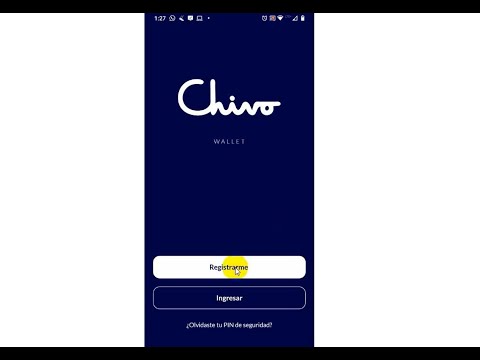
With Chivo one can pay for goods and services, convert cryptocurrency to fiat, withdraw cash at Lightning Network–compatible ATMs, and transfer funds to other accounts for free. The wallet is also compatible with the Lightning Network, enabling acceptance of transactions from external Bitcoin addresses.
To popularise the app, authorities distributed $30 in digital gold to every user. To support liquidity, the government also approved a Bitcoin fund that has already purchased 700 BTC.
Little is known about Chivo’s implementation. Bitso, a Bitcoin exchange, is the main technical solutions provider for the national wallet. In a conversation with The Block, a Bitso representative said it “provides custodial services, enabling storage and security functionalities and exchange services.”
El Salvador made history by becoming the first country to make Bitcoin legal tender, and today, we’re proud to announce that Bitso is committed to building and developing El Salvador’s vision of Bitcoin by being the core crypto-service provider for Chivo.
Let’s #MakeCryptoUseful https://t.co/2rrTNDdXab— Bitso (@Bitso) September 7, 2021
Bitso also explained how dollars are converted to Bitcoin: users buy BTC, which the government previously acquired from liquidity providers such as Bitso.
A partner of the Mexican exchange in this project was the Californian crypto bank Silvergate. It reportedly “facilitates Chivo transactions conducted in US dollars.” Bitso uses the Silvergate Exchange Network for real-time payments.
The Bitcoin ATM operator became the American Athena Bitcoin. Shortly before Chivo’s launch, a diagram of the wallet’s backend architecture leaked online. Cointelegraph noted that Athena Bitcoin “provides some frontend services,” though there is no official information about the company’s exact role.
#TapudoLeaks. This is the structure with which the #ChivoWallet will operate, and it’s not a joke. pic.twitter.com/N7YCovR3dJ
— El Tapudo (@eltapudosv) August 23, 2021
Forbes reports that BitGo’s custodial service “provides the infrastructure for Chivo and the security platform, serving as the exclusive supplier of hot wallets.”
Koibanx, a provider of Blockchain-as-a-Service (BaaS), led the Lightning Network integration. Its ambitions appear to extend well beyond this collaboration. In late August the firm said it would develop in El Salvador a blockchain infrastructure based on the Algorand technology, in a deal with the government.
Too many questions
Salvadorans are heavily reliant on remittances, and adopting cryptocurrency not only reduces costs but speeds up transfers. Traditional payment firms can take days and charge higher fees. Chivo makes transfers nearly free and nearly instantaneous.

According to Bukele, residents annually enrich the remittance system by about $400m, which they could lose. It may be true — Bitcoin ATMs are popular, and many users employ cryptocurrency specifically for transfers.
Wondering how @chivowallet is doing? Going nuts🚀🇸🇻
I didn’t count, but there are more than 70 persons in the line, waiting to use one #Bitcoin ATM.
It’s not just this ATM. I have seen several.. some with even more people!
Don’t know if they’re here for deposits or withdrawals pic.twitter.com/e8Z9sElDMb
— Arnold Hu₿ach ⚡️ (@st4rnold) September 21, 2021
Yet despite the benefits, the opaque actions of the Bukele administration have given rise to many questions about the reform. It is not clear how much the project cost the country. The government says funds were allocated by the Central American Bank for Economic Integration, but it does not provide a figure.
Nobody knows what the Bitcoin trust will do with the purchased cryptocurrency. If it engaged outside providers to ensure liquidity, why the need for a separate fund? Perhaps to avoid liquidity shortages, but no official position has been given.
Non-governmental organisations have voiced concerns. Cristosal asked El Salvador’s Court of Auditors to audit the Bitcoin Trust’s governance. In response the government launched an investigation.
#ElSalvador | La Corte de Cuentas de la República nos ha notificado la admisión de la denuncia que interpusimos como Cristosal el 10 de este mes, para realizar examen de auditoría a la ejecución del fideicomiso Bitcoin. Compartimos fragmento del documento recibido. 👇 pic.twitter.com/FXlkrWhCD3
— Cristosal (@Cristosal) September 16, 2021
The government promised to exempt foreign investors from capital gains tax and income tax on Bitcoin transactions. The move could attract further capital, but it will require a payment-tracking mechanism to be implemented.
The tracking mechanism could also be used to monitor citizens’ funds. Moreover, presidential legal adviser Javier Argüeta openly suggested the possibility of suspending crypto transactions to mitigate volatility.
There are also questions about the haste with which El Salvador legalised Bitcoin. From announcement to law’s entry into force, only 93 days elapsed — a little longer than with dollarisation.
The Bukele initiative is hurting El Salvador’s credit rating and threatens to derail an IMF agreement. The IMF is expected to provide about $1bn in financial support.
Ethical concerns also remain open: opponents have labeled the currency reform unconstitutional, and some argue that forced integration of digital assets conflicts with crypto-community values.
Bukele’s Big Gamble
According to Bukele, the Chivo wallet is used by more than 2 million people — nearly a third of the population. It is unclear how actively they transact or in what scenarios, but the scale is striking. Four years ago, however, crypto operations could carry up to 15 years in prison.
A former National Security Agency (NSA) employee and Central Intelligence Agency (CIA) contractor, Edward Snowden, said other countries could “fall behind” if they fail to follow El Salvador’s lead. He suggested that pressure would push laggards to acquire cryptocurrency, perhaps as a reserve asset.
Today Bitcoin was formally recognized as legal tender in its first country.
Beyond the headlines, there is now pressure on competing nations to acquire Bitcoin—even if only as a reserve asset—as its design massively incentivizes early adoption.
Latecomers may regret hesitating https://t.co/mggfDk4v9z
— Edward Snowden (@Snowden) September 7, 2021
At Cornell University, scholars partly agree with Snowden’s view. They see the global adoption of Bitcoin as a case of game theory dynamics underlying Nakamoto’s consensus.
Two aspects emerge in the context of Bitcoin’s legalisation:
- the prisoner’s dilemma. The science suggests the greatest gain goes to the player who first implements a successful technology. The issue is there is no guarantee of the digital gold’s success.
- a coordination game. When several players share a goal and can coordinate, their chances of success rise significantly. This is about the network effects of a cryptocurrency.
Only time will tell whether El Salvador won or lost from legalising Bitcoin. If the country fully harnesses the benefits of the new technology, and the technology proves effective, this experiment could mark the start of a global financial revolution.
Read more Bitcoin news from ForkLog in our Telegram — cryptocurrency news, rates and analysis.