


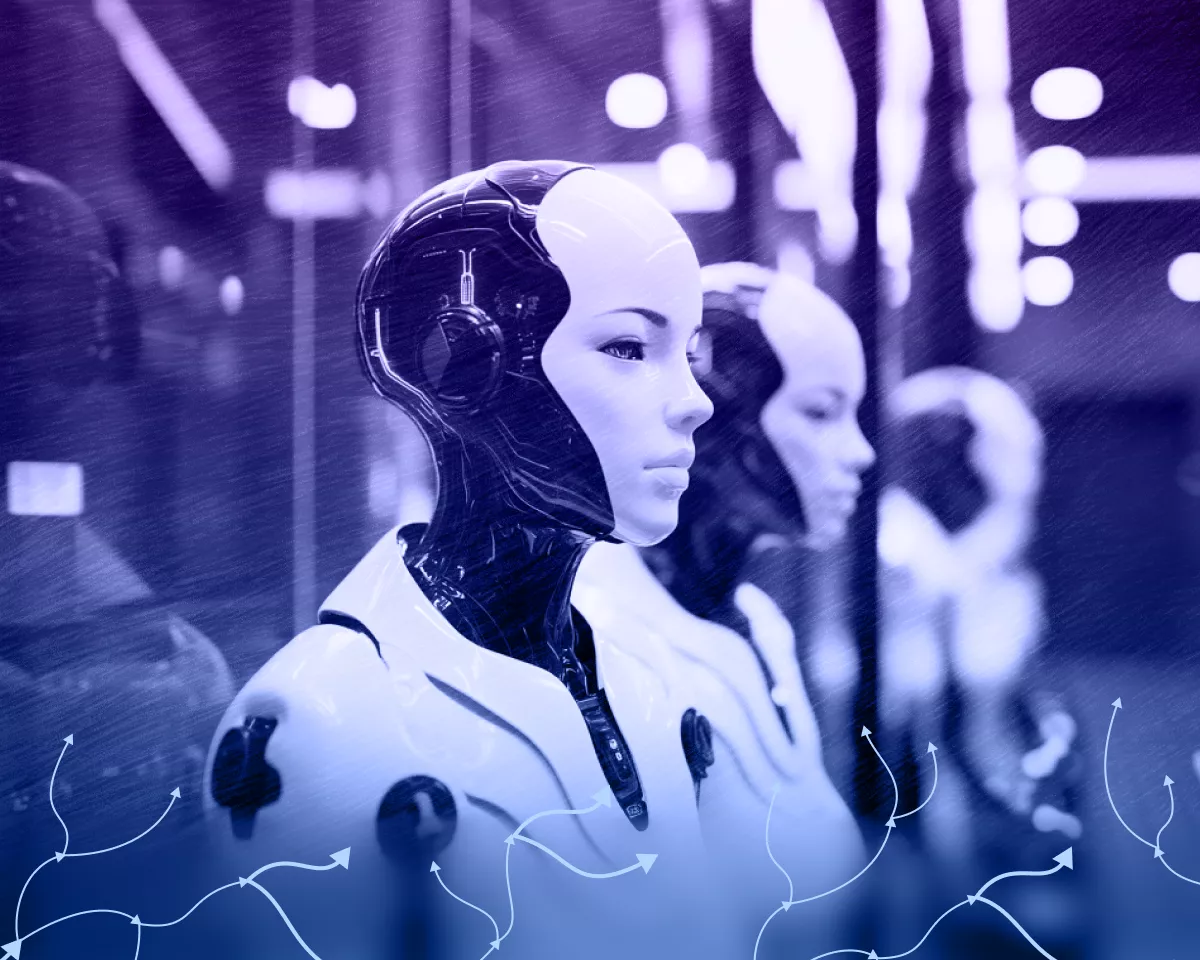
On May 6th, a Buddhist ceremony in Seoul saw a humanoid robot take vows and become a monk.
South Korea’s first humanoid robot monk made its debut at Jogye Temple in Seoul, ahead of Buddha’s birthday. Gabi, the 130-centimeter-tall robot, wore a traditional grey-and-brown Buddhist robe and stood before monks as it pledged to devote itself to Buddhism pic.twitter.com/NDzDANRkhl
— Reuters (@Reuters) May 6, 2026
The robot, named Gabi, stands 130 centimeters tall and is a creation of the Chinese company Unitree Robotics. During the ceremony, it was dressed in traditional grey-and-brown Buddhist attire.
“We tried to choose a name that is not too difficult to pronounce or old-fashioned, and also symbolizes the spread of Buddha’s compassion worldwide,” noted monk Son Won, who oversees cultural matters in the Jogye Order.
“Gabi” means “compassion.”
At the Jogye Temple, the robot took a vow to dedicate itself to Buddhism. It folded its hands, bowed, and answered questions from the monks, affirming its readiness to serve Buddha and his teachings.
A necklace of 108 beads was placed around Gabi’s neck, and a sticker was attached to its hand instead of the traditional incense burn marks.
The participation of the robot was conceived as a symbolic adaptation of monastic customs for a non-human entity. Using Gemini and ChatGPT, the five Buddhist precepts were rewritten for the humanoid:
- respect life and do no harm;
- do not damage other robots or objects;
- obey humans and do not contradict them;
- refrain from deceitful statements or behavior;
- conserve energy and avoid recharging.
Monk Son Won described the ceremony as the first step towards the coexistence of humans and machines in cultural and spiritual spaces.
At the end of May, Gabi will appear at a festival alongside other robots Sokja, Mohi, and Nissa.
Robotic Developments in Europe
Meanwhile, French startup Genesis AI has unveiled its first AI model, GENE-26.5, and robotic arms.

In a demonstration video, the robotic arms perform long sequences of complex operations: breaking eggs, slicing tomatoes, and preparing food. GENE-26.5 controls bots from various manufacturers.
“We always aimed to create the best model, but soon realized the importance of controlling the hardware as well. So we decided to go full-stack,” stated co-founder and CEO of the startup, Zhou Xian.
The Genesis AI hand replicates the size and shape of a human hand, allowing for more data collection for training the LLM and performing an expanded range of tasks.
The company developed a special glove with sensors for data collection. It is lightweight, comfortable, and inexpensive to produce.
“We are in talks with many clients. The value of the glove is that it can be worn while performing everyday tasks in a lab or pharmaceutical facility,” said Genesis AI co-founder Théophile Gervais, who previously worked as a research associate at Mistral AI.
Plans include equipping a wide range of workers with video cameras for additional data collection. GENE-26.5 has been trained on “a vast amount of internet videos featuring humans.”
Genesis AI raised $105 million in investments in July 2025, just months after its founding. The funding helped the startup expand its workforce and operations, with offices in Paris, California, and London.
The company plans to unveil its first universal robot with a body soon.
Robots: The Driving Force of China
Robotics is an area where China has taken a leading position. According to a new study by Morgan Stanley, humanoid bots will drive the next phase of growth in China’s manufacturing and export share.
Similar to electric vehicles, which became a growth point a decade ago, investments in robotics are expected to increase the country’s share of global manufacturing from 15% to 16.5% by 2030.
In recent years, bots have moved from labs to the real world: they are being implemented in tech parks, factories, and universities, aided by government procurement.
“China has repeatedly demonstrated its ability to identify promising growth areas in advance and plan for long-term development,” the bank’s report states.
As with electric vehicles, China is ramping up production capacity across the entire supply chain of humanoid robots, giving it an edge over competitors from the US, Japan, and South Korea.
In April, a bot from Honor ran a half marathon in 50 minutes and 26 seconds—six minutes faster than the men’s world record.