



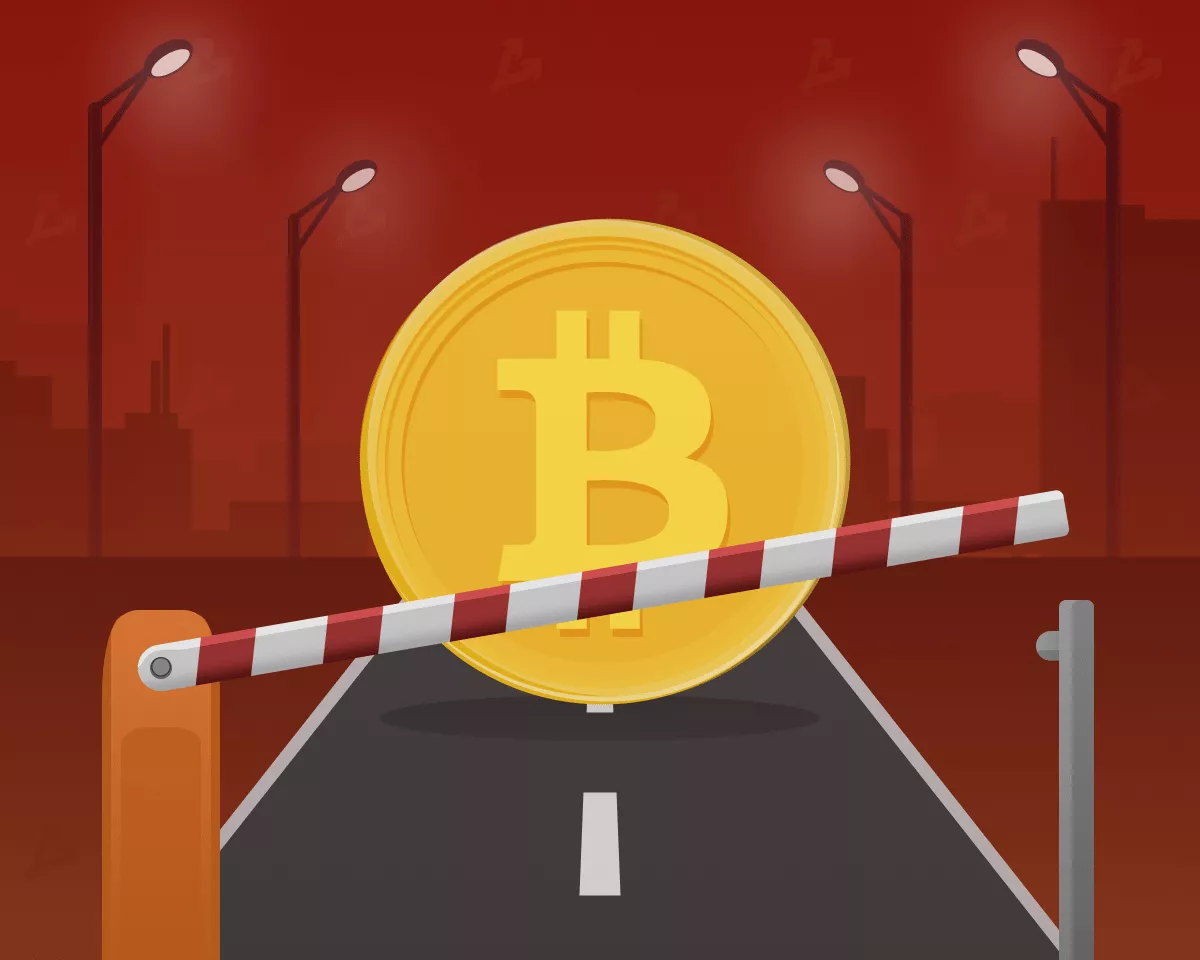
On 2 September, the Kushnarenkovsky District Court of Bashkortostan ruled to declare information disseminated on the websites of several cryptocurrency exchanges banned in the Russian Federation. If the pages deemed illegal are not removed, Roskomnadzor may block them.
According to the RosKomSvoboda register of banned sites, the court orders blocked the pages of 17 exchanges. The exchanges’ owners themselves were not involved in the proceedings, ForkLog was told by the Digital Rights Center, a law firm that plans to appeal the decisions on behalf of six exchanges that approached it.
In all cases the plaintiff is the prosecutor of the Kushnarenkovsky District of Bashkortostan, and the Roskomnadzor office for the republic is the interested party.
In the decisions it is stated that the sites “contained information about the possibility of exchanging, cashing out, transferring funds, cryptocurrency using electronic payment systems”:
«Access to the online resource is free; user registration for access is not required. Anyone can review the content and copy materials in electronic form. There are no restrictions on their transmission, copying or dissemination».
According to data on the Kushnarenkovsky District Court site, the claims were granted in a “package” — the difference between the decisions is only a few minutes. The text of all documents also appears virtually identical.
As ForkLog explained, Sarkis Darbinian, managing partner of the Digital Rights Center, said the list for blockings was apparently compiled using the online aggregator Bestchange:
«We took the first two dozen Bitcoin exchanges on ‘Sber’ (this is indicated by the referral links that appear in the decisions themselves), and for each, the prosecutor filed a separate administrative suit».
In 2019 Roskomnadzor, guided by the decision of the Kuybyshev District Court of Omsk, restricted access to the Bestchange.ru aggregator and blocked its access. Later the court issued a decision to lift the block.
Subsequently Roskomnadzor blocked the Bestchange.ru domain by the decision of the Kotlas City Court. In November the Arkhangelsk Regional Court overturned the first-instance decision to block the site, and later Bestchange.ru was removed from the register of banned sites.
The current decisions differ from earlier rulings on blocking bitcoin exchanges. Besides the “rather expansive” rationale for prohibiting the use of monetary surrogates, there is now also argumentation about an alleged violation of law No. 115-FZ, says Darbinian:
«Although I am sure prosecutors did not actually check which KYC/KYC/AML tools operate when attempting to exchange 600,000 rubles. No cases under the anti-money laundering law were pursued either».
The rulings also state that the current law forbids obtaining funds by cashing out using foreign payment systems.
«I would like to ask the prosecutor which foreign state Ethereum belongs to, and on what basis he concluded that there was a foreign payment system in the transactions?»
Although the decisions include a specific URL, which makes them blockable on a page-by-page basis, the page containing the exchange request itself has been deemed illegal. Without it, exchanges “simply cannot exist,” Darbinian emphasised.
«It would appear that prosecutors do not wish to accept the reality that the Digital Financial Assets Law has already been adopted and the legislature did not go down the path of a total ban on cryptocurrencies, but merely restricted their use and civil turnover»
Lawyers are now preparing appeals and will seek a full revocation of the decisions.
As a reminder, Russian courts began issuing blocking decisions against cryptocurrency exchanges several years ago.
In June 2021, a court in Perm Krai restricted access to resources advertising the sale of Bitcoin for fiat currency.
In September the Bank of Russia defined criteria enabling banks to identify cards and electronic wallets used by the shadow economy. The regulator classified Bitcoin exchanges among them.
The Bank of Russia also again stated that it remains sceptical about treating cryptocurrency purchases as investments and will not assist in widening access to them for non-qualified investors.
From 1 January 2021, the law “On Digital Financial Assets” took effect in Russia. It recognises cryptocurrencies as property and prohibits their use for payments for goods and services within the country. The buying and selling of cryptocurrencies is not prohibited by law.
Read ForkLog’s bitcoin news on our Telegram — cryptocurrency news, prices and analysis.