




The shares of Nakamoto, formerly known as Kindly MD, have plummeted by 95% over three months—from $35 to $1.3. The decline continued following the release of a controversial letter to investors.


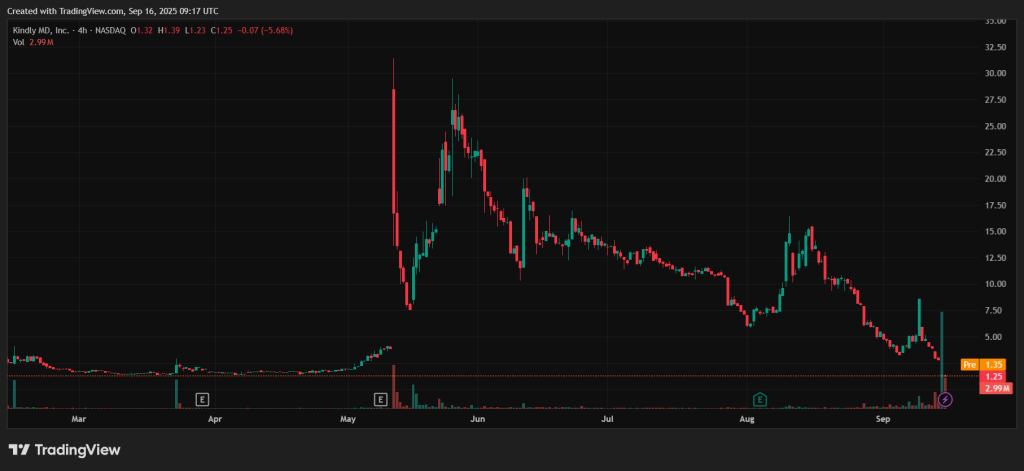
On September 15, the firm’s CEO, David Bailey, who is also the founder of Bitcoin Magazine, warned of impending NAKA volatility in a letter. He added that he would prefer to see uncertain investors exit.
“To shareholders who came looking for a bargain, I recommend exiting the business. This transition may be a moment of uncertainty for investors,” he stated.
By “transition,” Bailey referred to the filing of an S3 registration form with the U.S. Securities and Exchange Commission (SEC) on September 12. During the company’s formation, some shares were sold at a discount, and investors who purchased them were prohibited from selling until the S3 form was submitted.
It is likely that the SEC filing triggered the recent downturn. Although NAKA has been declining almost continuously since May, when the asset was at its peak.
Almost 80m shares have traded today. Once again I’m humbled by the support and look forward to meeting all our new shareholders!
Meeting with PIPE investors throughout the week as well. Most I’ve known for many years and I expect to ride with us for the long term. Cannot…
— David Bailey🇵🇷 $1.0mm/btc is the floor (@DavidFBailey) September 15, 2025
“Almost 80 million shares were sold today. I am once again humbled by such support and look forward to meeting all our new shareholders,” Bailey noted on X.
The company’s CEO acknowledged the issue and stated that the only way to deal with it is to “go through it.”
The firm emerged from the merger of medical provider Kindly MD and bitcoin holding Nakamoto. Initially, it raised $710 million to create a bitcoin reserve.
At its peak, Nakamoto was valued at more than 20 times the worth of its first cryptocurrency reserves. However, the mNAV has now fallen to 0.82.
According to Nasdaq rules, if a company’s shares close below $1 for a month, it receives a warning and is given 180 days to rectify the situation. Otherwise, the asset will be delisted from the exchange.
Earlier, JPMorgan described the exclusion of Strategy from the S&P 500 as a “blow to crypto treasuries.”