


Startup builds a smart beehive; AI turns cartoons into real people, and other AI news
We aim to inform readers not only about developments in the Bitcoin industry, but also about what is happening in related technological fields—cybersecurity, and now in the world of artificial intelligence (AI).
ForkLog has gathered the most important AI news from the past week.
- Yandex will buy Uber’s stake in Yandex Self-Driving Group.
- Skolkovo Foundation will award 5 billion rubles in the form of grants to AI developers.
- An autonomous Tesla crashed into a parked police car and an SUV.
- ARM China’s chief executive seized the company and announced the launch of its own line of processors for IoT devices.
- Israeli startup developed an AI-powered smart beehive.
- Japan to deploy AI to patrol its territorial waters.
- A neural network has learned to transform portraits of people into realistic photographs.
- Artificial intelligence has transformed well-known characters into real people.
Yandex to buy Uber’s stake in Yandex Self-Driving Group for $1B
Yandex will buy Uber’s stake in its self-driving-group Yandex SDG, as well as indirect stakes in the services Yandex.Eda, Lavka and Delivery, for $1B. The deal is set to close by the end of 2021.
This will give the Russian tech giant 100% ownership of all four ventures. In Yandex, officials said the acquisition will broaden the company’s strategic control and flexibility in autonomous driving.
According to Uber’s filing with the SEC, the entities will continue to jointly own MLU B.V., with Yandex able to buy the remaining stake within two years.
Skolkovo to award AI developer grants
By 2024 the Skolkovo Foundation will award grants to companies to implement artificial intelligence under the national Digital Economy program. Organizations will receive from 20 million to 100 million rubles, with total payouts of 5 billion rubles.
Applicants must have potential for scaling their solution and hold exclusive rights to it. Skolkovo said it would not fund projects with government participation. Representatives said the competition’s aim is “to support the best Russian developers by stimulating demand and accelerating digital transformation across industries”.
The foundation will receive subsidies from the Russian Ministry of Economic Development. In August 2021 the ministry defined criteria for AI projects.
Tesla on autopilot crashes into a parked police car
Tesla Model 3 crashed into a parked police car and an SUV in Orlando. According to the driver, Autopilot was engaged at the time.
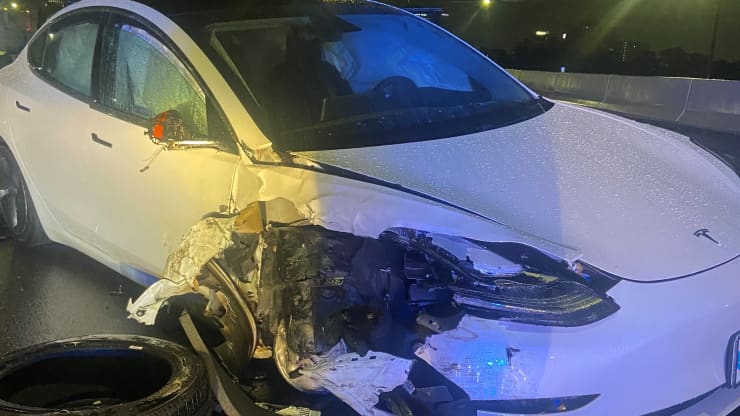
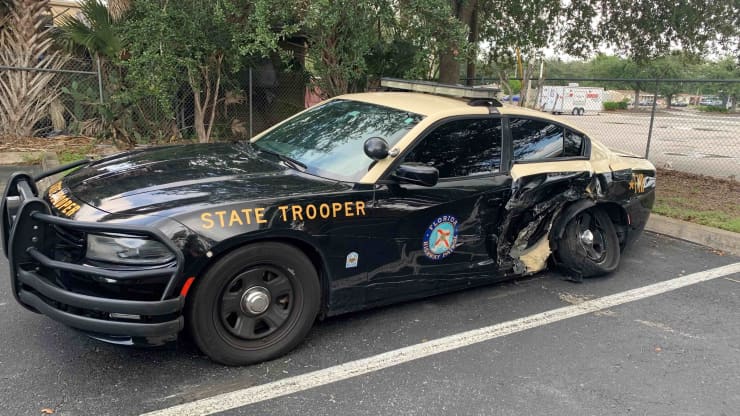
There were no reports of injuries or fatalities. An investigation into the crash is ongoing.
According to the statement, police notified Tesla and the National Highway Traffic Safety Administration about the accident.
Toyota autonomous vehicle hits Paralympian in Tokyo
Toyota’s e-Palette robo-vehicle collided with a visually impaired athlete in the Tokyo Paralympic Village. The pedestrian sustained minor injuries.
Media reports say the autonomous shuttle was under manual control. Operators saw the person on the road, but they thought he would notice the approaching bus and not cross.
Following the incident the company decided to increase the number of operators monitoring the autonomous vehicles. The bus now carries two security staff to monitor speed and pedestrians. It also increased the horn volume.
Toyota said it would continue daily safety improvements until the Paralympic Games conclude.
CEO Akio Toyoda apologised for the incident.
SenseTime files for Hong Kong listing
The Chinese AI startup SenseTime has filed for an initial public offering in Hong Kong.
Representatives did not disclose the deal size but are pushing the listing amid tightening regulatory pressure on tech companies in China.
In 2019 the US government placed SenseTime on a blacklist, restricting the company’s access to certain U.S. technologies.
ARM China CEO seizes control and announces own processor line
The Chinese arm of UK-based ARM intends to become an independent company and plans to launch its own XPU product line, most of which will target the Internet of Things.
Former ARM China CEO Allen Wu seized control of the unit, announced a rebranding and development of its own IP. He said the company would soon release its AI accelerators and processor line for various tasks.
In 2020 ARM fired Wu for using his position to attract investment for his Alphatecture firm. He did not comply with the board’s decision and sued the Chinese subsidiary over the unlawful dismissal.
Israel develops AI-powered beehive
Israeli startup Beewise developed the Beehome automated beehive to help preserve honey bee populations.
The device runs on solar power and resembles a container capable of housing up to 24 bee families. The AI system monitors climate conditions in real time, detects pests, relays this information to beekeepers, and also collects the honey produced.
According to the Bee Informed Partnership, US beekeepers lost more than 45% of honey bees from 2020 to 2021.
According to the United Nations, up to 90% of wild flowering plant species, as well as 75% of food crops and 35% of agricultural land worldwide, rely on pollination.
Japan deploys AI to patrol territorial waters
In 2022 Japan will begin testing AI to automatically detect and track suspicious ships in its territorial waters.
The system will analyse satellite data and forecast incursions based on the speed, location and heading of the vessel. Coast guard officials say AI can process data on multiple ships simultaneously.
The government has allotted $4.1 million to cover initial development costs. They plan to launch the system by April 2024.
Neural network teaches portraits to become realistic photographs
The developers created an AI-powered tool to transform old photos, artistic portraits and sketches into high-quality realistic images.
ForkLog used the tool to turn portraits of US President Abraham Lincoln, German Chancellor Otto von Bismarck, Queen Victoria of the United Kingdom, and French Emperor Napoleon Bonaparte into realistic photographs. The results are shown below.
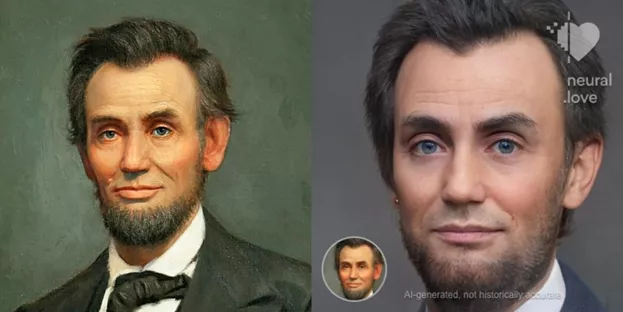
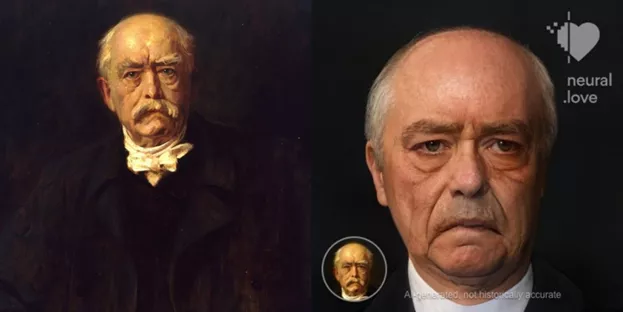
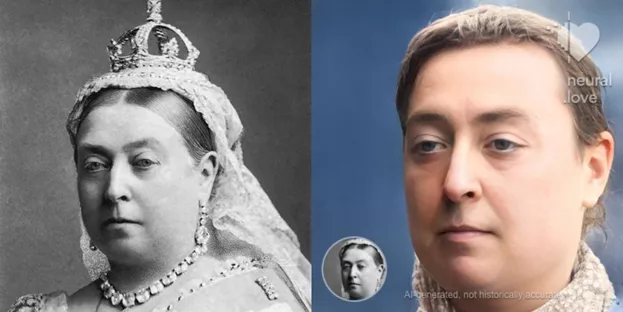
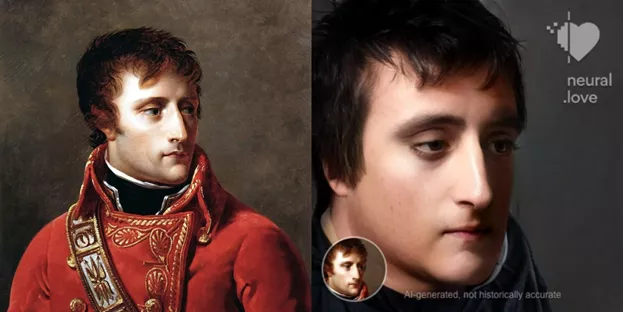
According to the developers, to improve image quality they use several neural networks and continue to develop their own ML models.
They note the system may not work with modern digital photos, noisy or damaged images, complex hairstyles or headwear.
The tool can be tested for free. To obtain high-resolution, watermark-free images, a premium package costs $3.99 per month.
AI turns popular characters into real people
Beekeepers from the YouTube channel Corridor Crew created realistic portraits of famous characters with the help of AI.
The creators trained the neural network on thousands of photos of different people. The artists say the algorithm compares a character to a real person, finds similar features and applies them to the generated portrait, repeating this action with other photos until the image is complete.
Also on ForkLog:
- China unveiled guidelines for the use of recommendation algorithms by tech companies.
- In Illinois, the lawsuit against Clearview AI will continue.
- The US Army will test facial recognition in children’s facilities.
- Researchers developed a framework for AI training standards.
- Moscow Metro will launch fare payment using facial recognition.
- US authorities demanded that Tesla open access to its Autopilot data.
Subscribe to ForkLog news on Telegram: ForkLog AI — all the news from the AI world!
Рассылки ForkLog: держите руку на пульсе биткоин-индустрии!