




Experts at CoinGecko have explored how to participate in Ethena Labs’ Shard campaign to increase the chances of receiving a potential airdrop.
Ethena Labs is a protocol for the “synthetic dollar” USDe based on Ethereum. The coin is designed for passive income within the network and is not positioned as a stablecoin. It is expected that price stability will be achieved through risk hedging by selling ETH using perpetual swaps.
The team also refers to USDe as an “internet bond,” offering a dollar-denominated savings instrument focused on DeFi.
In February, the project closed a seed funding round of $15 million led by Dragonfly and Maelstrom.
With the official launch of USDe, the team initiated the Shard campaign. The program aims to track and reward early user activity. Points, or “shards,” can be earned by performing various actions on the platform.


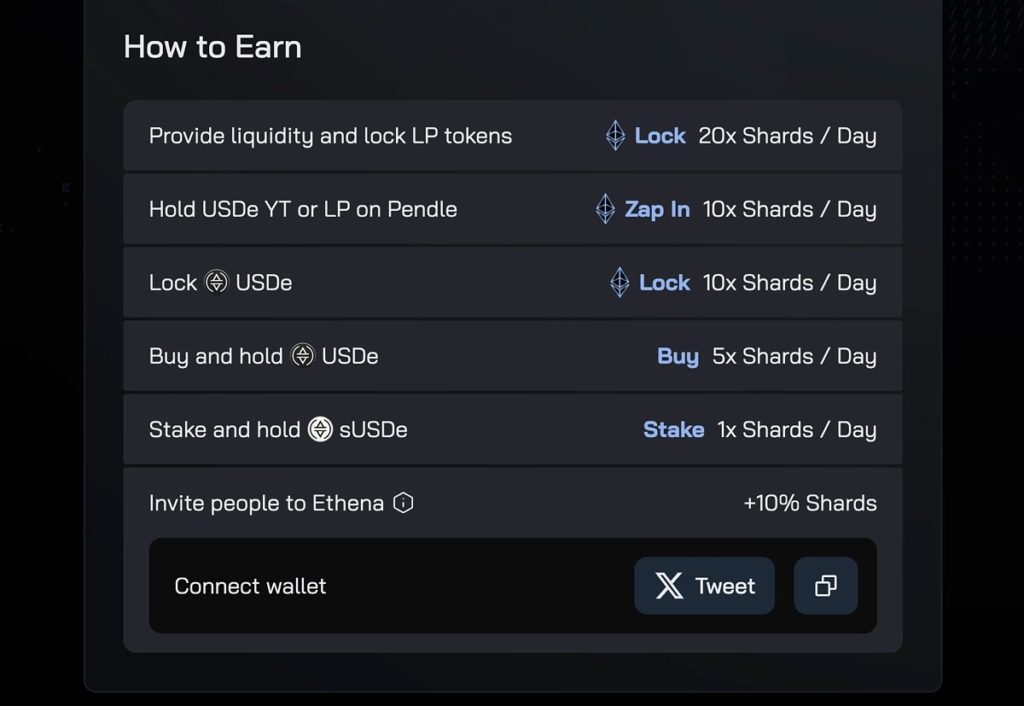
The program is divided into time periods called epochs. At the time of writing, the second epoch is underway. Shard will conclude in May or upon reaching a USDe capitalization of $1 billion, whichever comes first.
Additional rewards are provided for completing tasks from partners in each epoch. For the second epoch, this partner is Pendle Finance.
The value of “shards” will decrease as the program progresses, encouraging early onboarding.
The relevant page on Ethena’s website is titled Airdrop, but the project has not officially announced a token launch. Completing all steps in the Shard initiative does not guarantee receiving coins, CoinGecko experts emphasized.
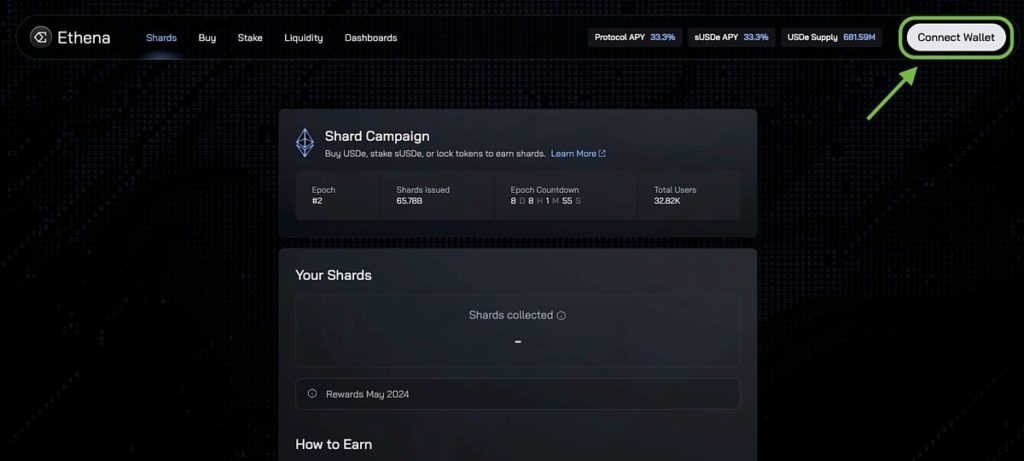
To join the program, one must enter an invitation code or directly use the Enter The Ether button.
Next, a wallet needs to be connected by choosing from the available options.


The next step is to purchase USDe (using the Buy button in the top menu). Experts noted that transaction fees on Ethereum remain quite high, and this is unlikely to change soon. During their experiment, the gas fee was $31.21. For 1000 USDC, they received 997.2 USDe.


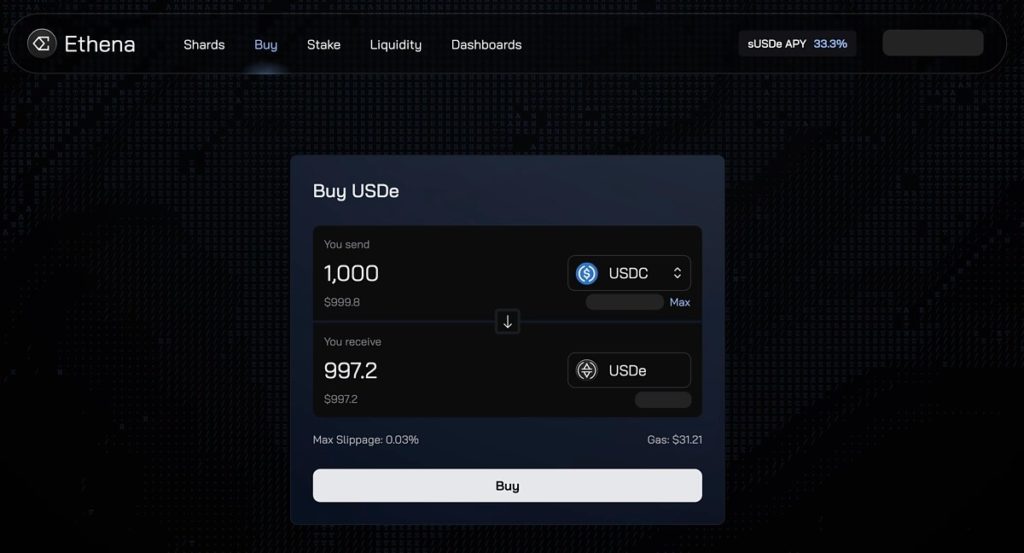
CoinGecko specialists strongly recommend independently assessing whether the costs of participating in Shard align with the program’s investment appeal.
The experts’ next action was joining the liquidity provision program (using the Liquidity button in the top menu). The Ethena pool is listed second after the partner pool.
It only required entering the amount and confirming the transaction in the wallet. Experts noted that the ability to withdraw tokens opens seven days after they are unlocked.
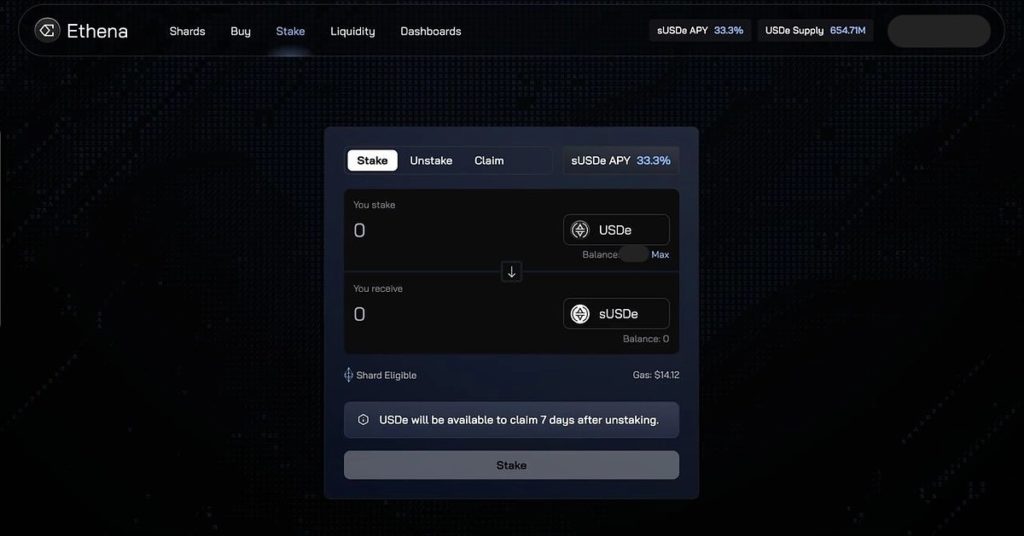
Another step could be participating in staking (using the Stake button in the menu). The actions here are similar to the previous step, as are the restrictions on retrieving assets.


To increase the number of “shards” (as stated, by 10%), one can use the referral program by sharing a link from the main page.
Experts also suggest completing tasks from partners in each epoch (in the first, it was the Curve protocol). However, due to interest in Ethena and the popularity of collaborating projects, limits are quickly reached. For instance, analysts were unable to add USDe to the Pendle pool as it was already full.
According to their observations, the team periodically expands the offering, which can be monitored.
“Airdrops are highly speculative, and completing the above steps does not guarantee distribution from Ethena Labs, as there is no token release announcement at the time of writing,” concluded CoinGecko experts.
According to the project’s website, the total value locked in the protocol is approaching $931 million, the number of users exceeds 44,000, and the estimated annual yield in USDe is 62.7%.
As reported in the community, doubts emerged about the viability of Ethena Labs’ coin immediately after launch, when the rate was stated at 27.6%.