



Bitcoin mining has become perilously centralized, with a single entity holding coins mined by nine major pools, thereby controlling approximately 47% of the network’s hashrate, according to a report by BitMEX.
The document references a post by a user named mononaut on X. According to his data, an unnamed custodian has amassed bitcoins from AntPool, F2Pool, Binance Pool, Braiins, BTC.com, SECPOOL, and Poolin.
A single custodian now controls the coinbase addresses of at least 9 pools, representing 47% of total hashrate.
As demonstrated by this consolidation of mining reward outputs from AntPool, F2Pool, Binance Pool, Braiins, btccom, SECPOOL and Poolin:https://t.co/IQpH2TgP6k https://t.co/w5Nk09Rawf pic.twitter.com/6RDHdm0ZjP
— mononaut (tx/acc) (@mononautical) April 9, 2024
The same custodian controls the input addresses of ULTIMUSPOOL and 1THash and has received mining rewards from Luxor.
“In other words, this organization holds the keys to at least 47 out of every 100 mined bitcoins,” noted mononaut.
He added that many participants of the listed pools provide hashrate for AntPool’s transaction accelerator, which the major custodian used.
Crypto analyst Alex Bergeron, in an article for Bitcoin Magazine, pointed to the high degree of mining centralization in the Bitcoin blockchain. He explained the situation as pools attempting to “adjust [their] payout scheme and completely eliminate [income] deviations from the equation.”
“In effect, the pool has to pay each payment out of its own pocket and hope it can recoup itself with mined blocks. If you have a streak of bad luck and your balance isn’t strong enough to compensate for income, you’re Sam Bankman-Fried,” he wrote.
Thanks to a combination of “timing, business acumen, and cash reserves the size of Digital Currency Group,” the largest pools have concentrated a significant portion of users, Bergeron believes.
Researchers at BitMEX calculated that the minimum fund for a mining pool controlling 50% of the hashrate should be at least 400 BTC. This would give the platform a “95% chance of survival” over a year.


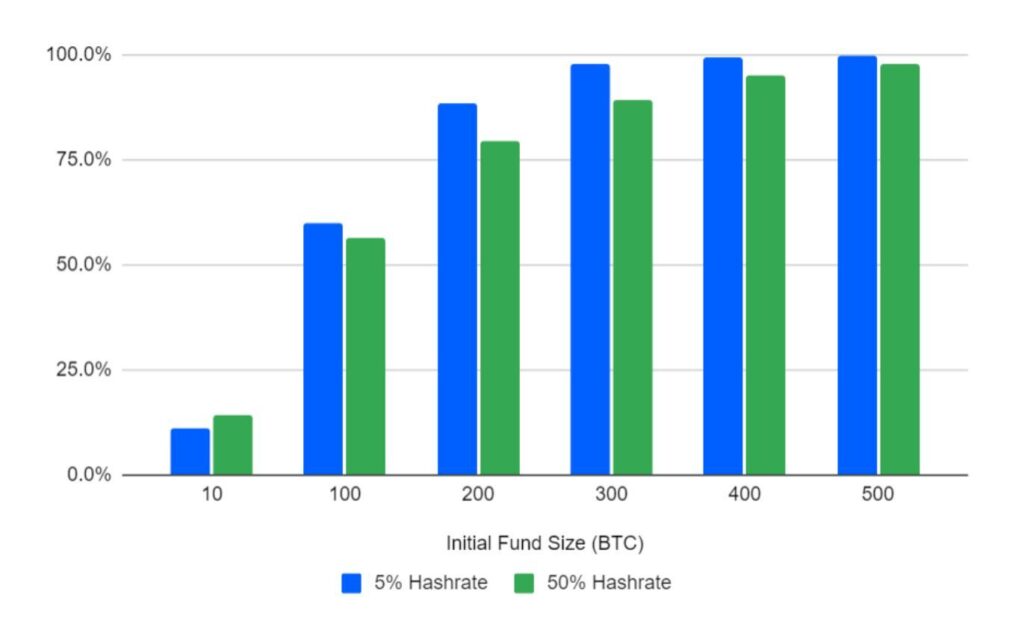
For risk-free existence, a pool controlling 5% of capacities requires a reserve of 500 BTC.
Earlier, CEO of analytics firm CryptoQuant Ki Young Ju found no signs of Bitcoin miners capitulating, despite the halving of block rewards following the recent halving event.
CoinShares concluded that mining companies could enhance diversification through AI and other sectors to offset declining revenues.