




“Stablecoins” have evolved from a tool for crypto trading into a daily financial instrument. These assets are increasingly used for payments, salaries, and savings, according to a joint study by BVNK, Coinbase, and Artemis.
We surveyed 4,658 stablecoin holders and prospective users across 15 countries to understand how people use stablecoins, with @YouGov @coinbase @artemis
What emerged: willingness to use stablecoins is ahead of real-world spendability.
The next growth unlock is acceptance and… pic.twitter.com/DAeAvdEjI9
— BVNK (@BVNKFinance) February 17, 2026
The findings are based on a YouGov survey of 4,658 adult respondents from 15 countries. More than half of the participants stated they had owned stablecoins in the past 12 months. About 56% intend to increase their holdings this year.
More than half of current stablecoin holders and those planning to acquire them are aged 18-34. Approximately 60% of current or recent holders are men. However, in low- and middle-income countries, the gender gap is narrowing: 43% women versus 57% men.
It was found that individuals earning a living through business, entrepreneurship, or active trading are more likely to own fiat-pegged tokens or show interest in them.
Savings
On average, stablecoin and other cryptocurrency holders keep about a third of their savings in these assets.


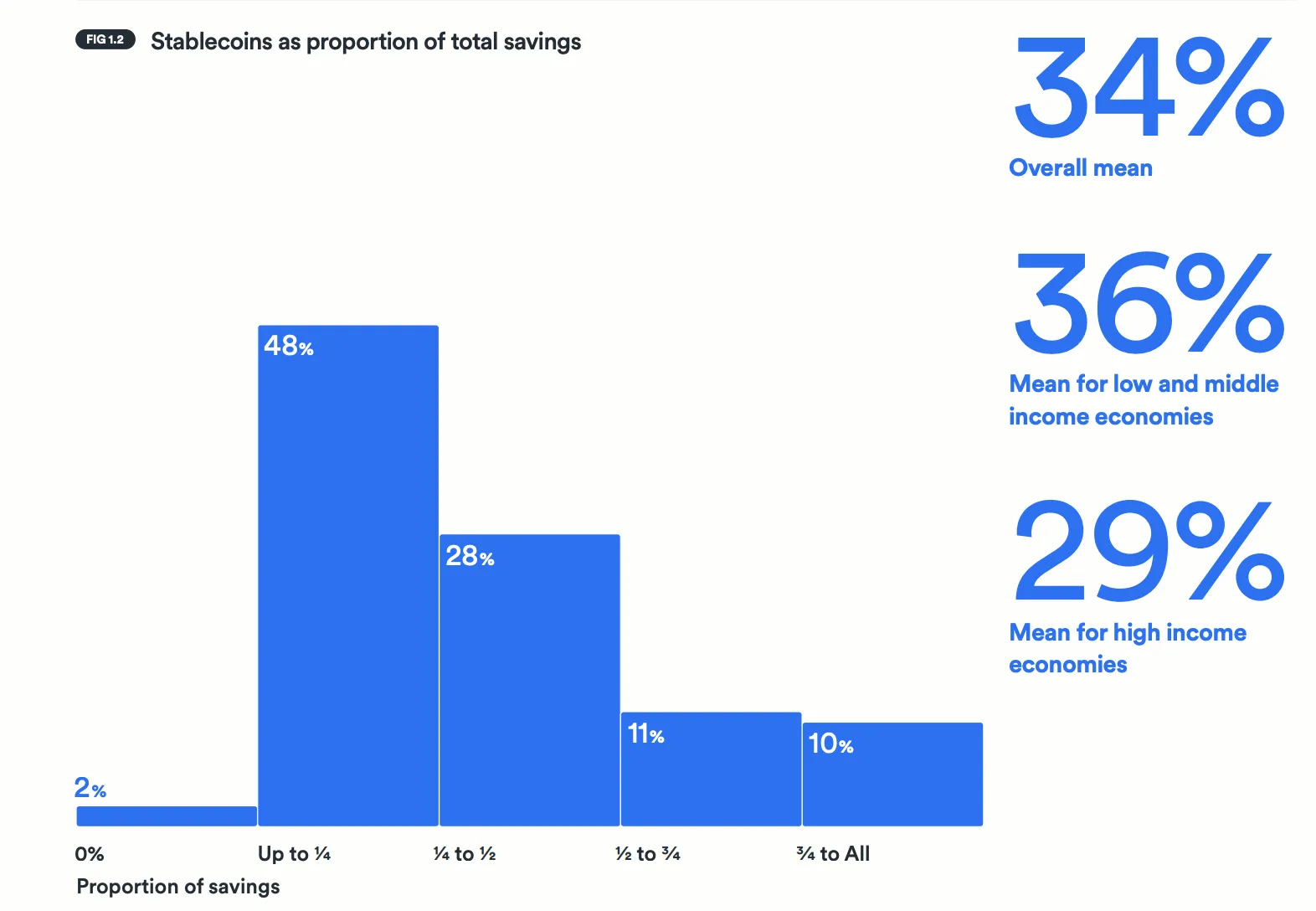
In low- and middle-income countries, this figure is higher than in developed economies. This supports the notion of stablecoins being in demand as a hedge against local currency instability and the imperfections of cross-border payments.
Africa has emerged as a leader in the level of ownership and intention to increase holdings of such assets.
Everyday Spending and Cross-Border Transfers
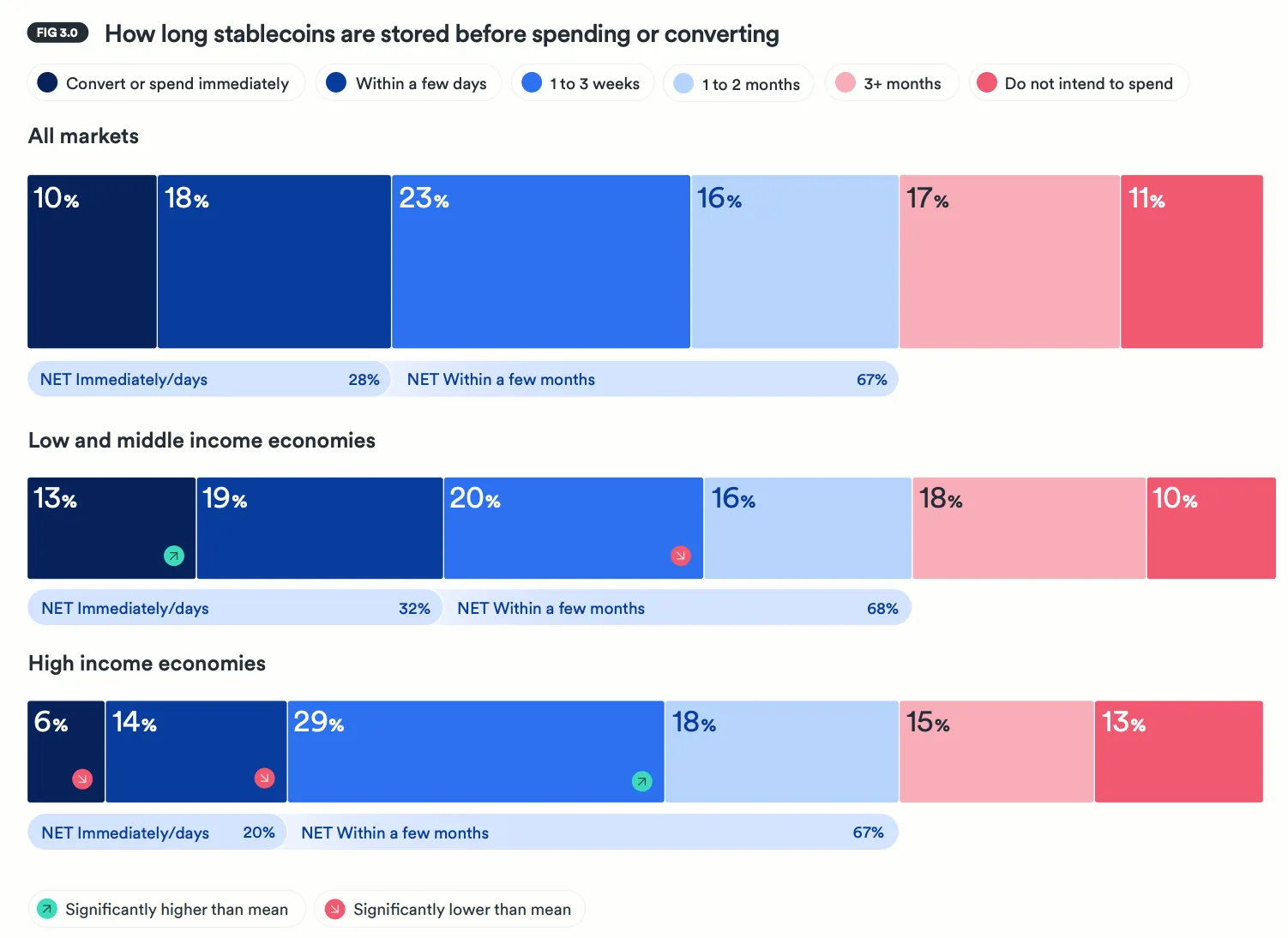
Among holders, 27% use stablecoins for direct purchases of goods and services, while 45% convert them into local currency. More than a quarter of respondents spend or convert assets within days of receiving them, and about two-thirds do so within months.

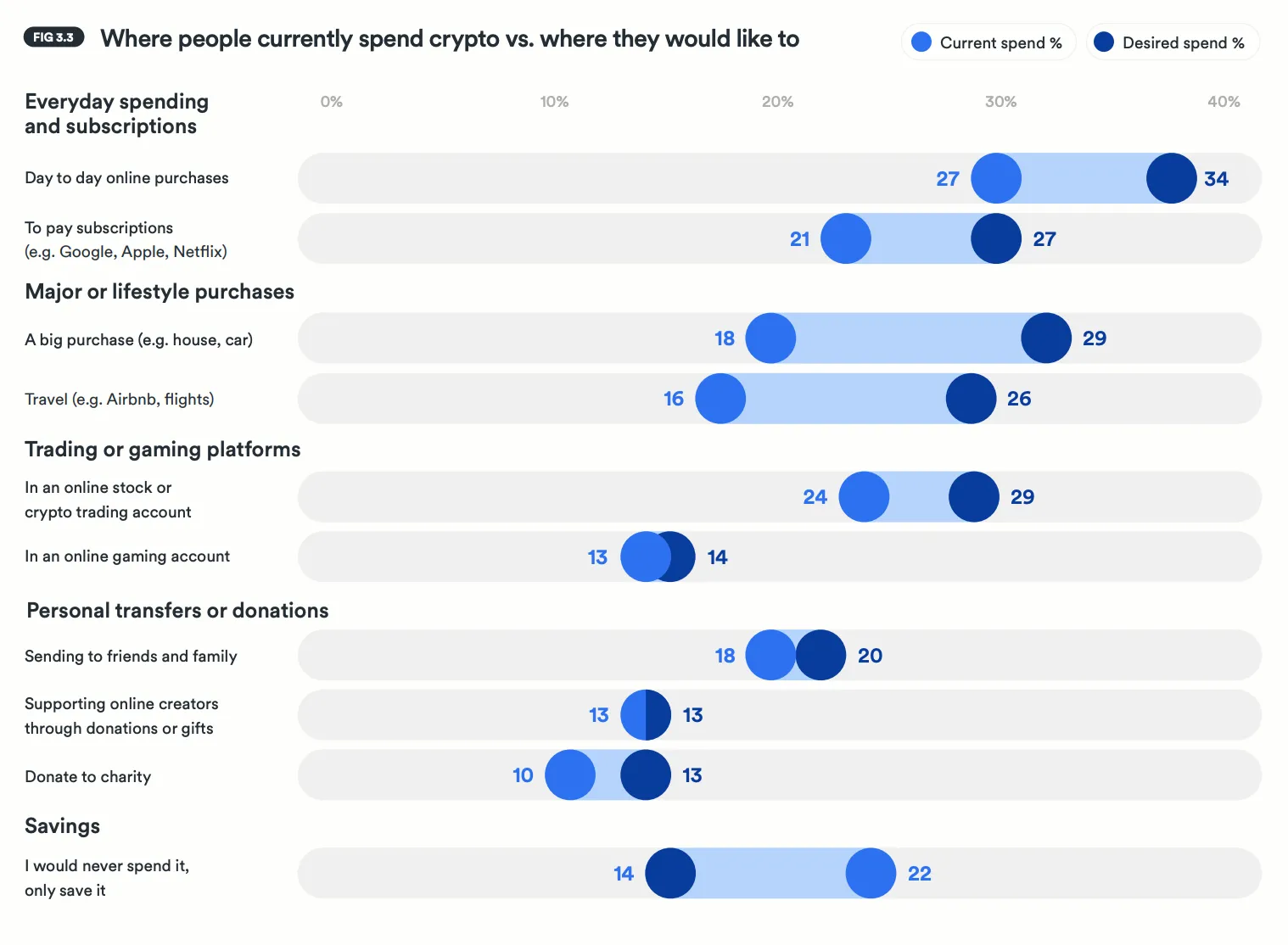
The demand for merchants to accept coins exceeds supply: 52% of holders made purchases specifically because the merchant accepted stablecoins. Meanwhile, the desired level of spending exceeds the current level in nearly all surveyed categories, including everyday purchases and major lifestyle expenses.

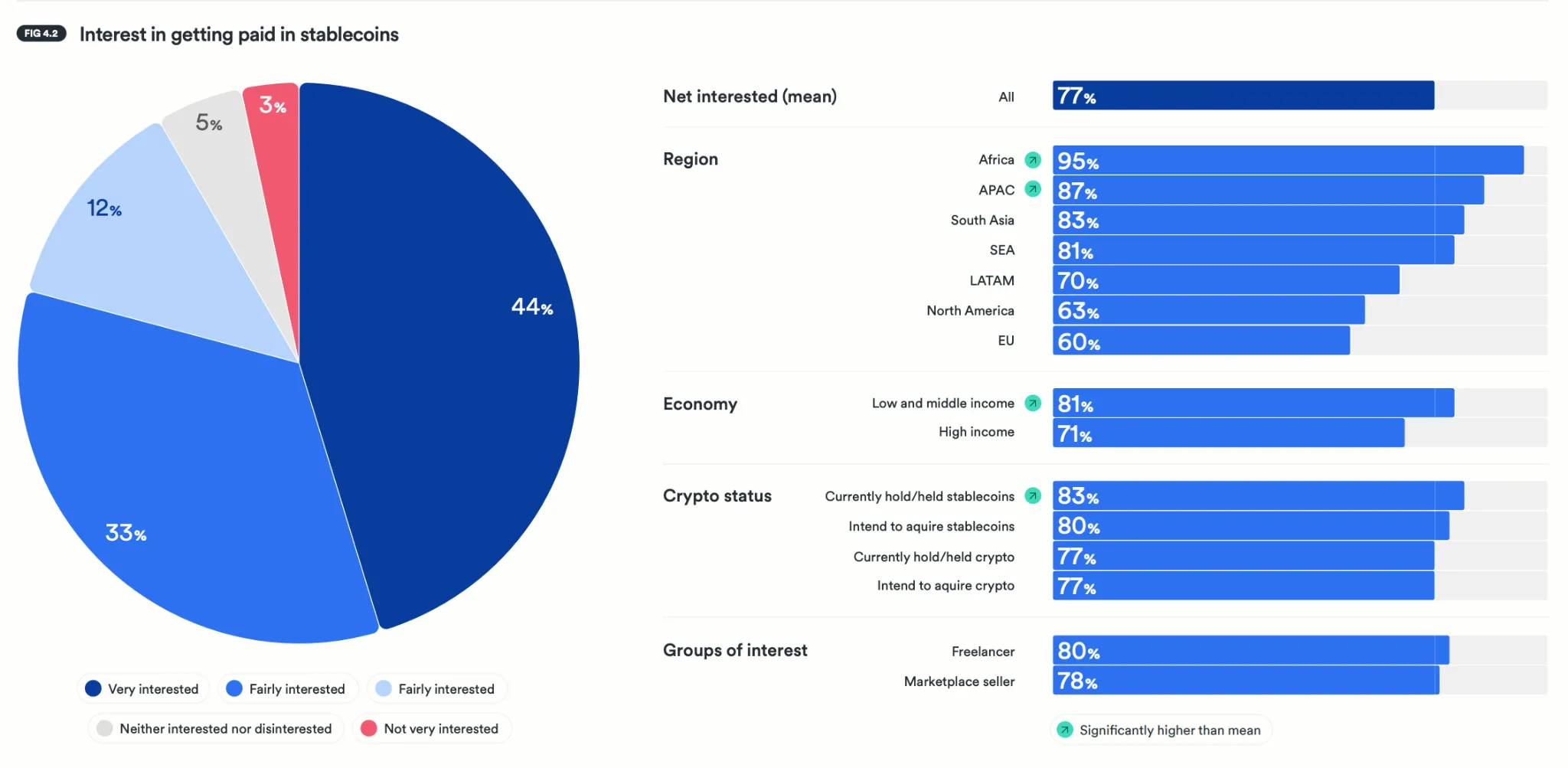
For freelancers, gig economy workers, and marketplace sellers, stablecoins account for an average of 35% of annual income.
Nearly three-quarters of respondents stated that these assets improved their ability to work with international clients, and marketplace sellers reported increased sales and expanded customer bases.
The key factor was savings on fees: respondents reported an average savings of 40% compared to traditional payment services.

Obstacles
The study’s authors also identified several obstacles faced by users:
- irreversibility of payments and risk of loss of funds;
- numerous steps required to complete transactions;
- confusion in choosing blockchains and managing wallets.
The key request from users is to make stablecoin payments as similar as possible to traditional financial services: widely accepted, with transparent fees, and reliable consumer protection.
If such a “bridging infrastructure” is created, stablecoins will cease to be seen as exotic crypto assets. They will simply become digital cash—convenient and borderless, experts concluded.
Back in January, Ripple President Monica Long predicted a close integration of stablecoins with the banking system.