



The Wallet integrated into Telegram has enabled trading in perpetual futures through its integration with the decentralized exchange Lighter.
Introducing Perpetuals in Wallet in Telegram ⚡️
Go long or short in seconds — right inside Telegram.
50+ markets: Metals, Stocks, Oil & Crypto
Up to 50x leverage
Start from $1Powered by @Lighter_xyz pic.twitter.com/AhU5VH720f
— Wallet in Telegram (@wallet_tg) April 2, 2026
This new tool allows users to open long and short positions with leverage on over 50 assets, including Bitcoin, Ethereum, oil, gold, stocks, and ETFs. All trades are executed directly within the app through the integrated custodial crypto wallet.
The maximum leverage is 50x. The infrastructure for the direct integration of Lighter’s decentralized order book into Telegram was developed by The Open Platform (TOP), the creators of Wallet.
Carving a Niche
The project does not intend to compete with specialized exchanges for experienced traders. Its main goal is to attract a mass audience unfamiliar with the derivatives market. The integrated wallet already boasts tens of millions of users, many of whom joined through the ecosystem of mini-apps and incentive programs.
“Trading perpetual contracts traditionally required complex interfaces and specialized platforms. Direct integration into Wallet simplifies access and lowers the entry barrier for users who already store and transfer cryptocurrency in Telegram,” said TOP CEO Andrey Rogozov.
The new functionality is unavailable to residents of the United States and the United Kingdom. The project team has focused on developing countries where access to traditional brokerage infrastructure is limited.
Growth of the Perpetuals Segment
Perpetual futures, or “perps”, allow speculation on price movements without an expiration date. This instrument currently dominates the crypto derivatives market, with monthly trading volumes exceeding $1 trillion by the end of 2025.
Hyperliquid leads the segment, with daily turnover nearing $7 billion.


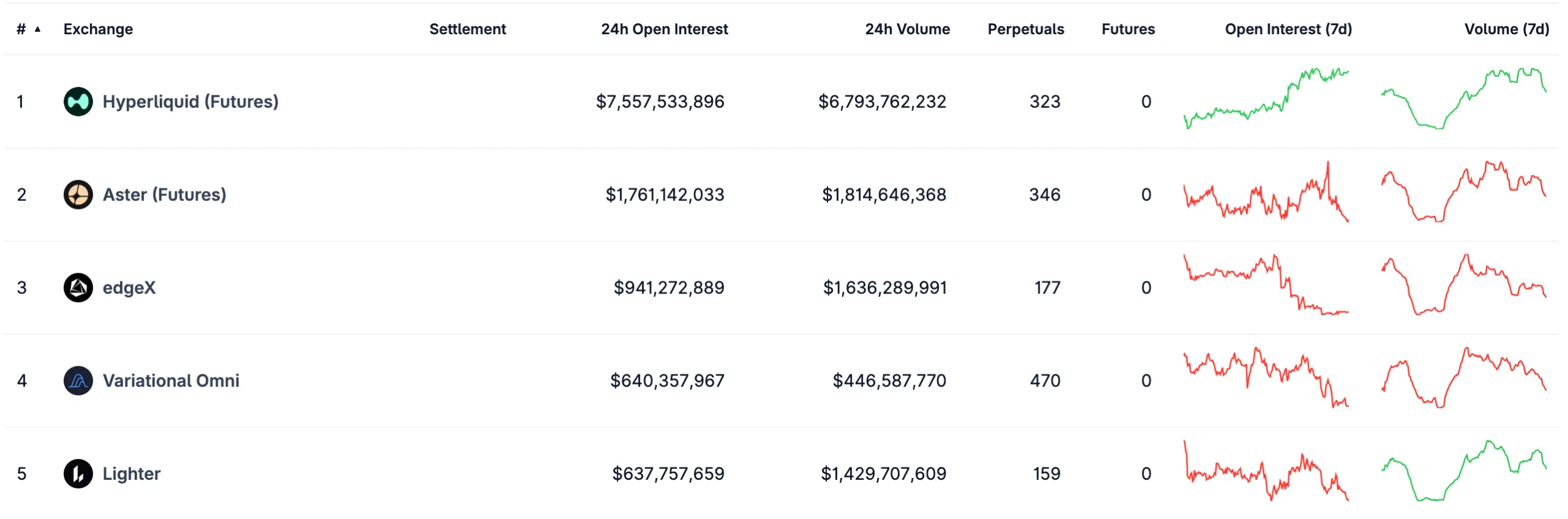
Lighter ranks fourth in this metric, competing with Aster and edgeX.
In recent months, the exchange has expanded its product line by adding spot trading and perpetual contracts on stocks, which are available 24/5. In November, the startup raised $68 million at a valuation of $1.5 billion.
Hyperliquid’s Expansion: Competing with CEX and TradFi
CEX remain a central element of the crypto industry, processing over $3 trillion in perpetual futures trades monthly.
However, the leading perp-DEX is steadily eroding this dominance. In early April, Hyperliquid’s share of total perp trading volume exceeded 7% (up from 3.5% a year earlier). The platform’s monthly turnover surpassed $200 billion.
Notably, key metrics are growing amid a general decline in exchange activity following a peak in August 2025. This indicates effective market expansion rather than a temporary spike alongside a general trend.
A significant growth factor is also the platform’s entry into the non-crypto asset market. Commodities like oil are traded on Hyperliquid around the clock without breaks.
The share of traditional assets in total turnover is steadily increasing, highlighting the structural advantage of DEX over traditional markets.
If decentralized futures trading platforms continue to increase liquidity and expand their list of instruments, their target audience is likely to extend far beyond the crypto industry.
Back in the day, former BitMEX CEO Arthur Hayes suggested that in the future, stock prices will be determined by perp-DEX, not Nasdaq.