


Tether Faces Criticism Over Lack of Reserve Audit, Drawing Comparisons to FTX
The consumer advocacy group Consumers’ Research has released a report accusing Tether of lacking transparency regarding its US dollar reserves.
The group claims that the issuer of USDT, despite numerous promises, has yet to conduct a full independent audit of the stablecoin’s backing.
The report draws parallels with the situation that led to the collapse of FTX and Alameda Research.
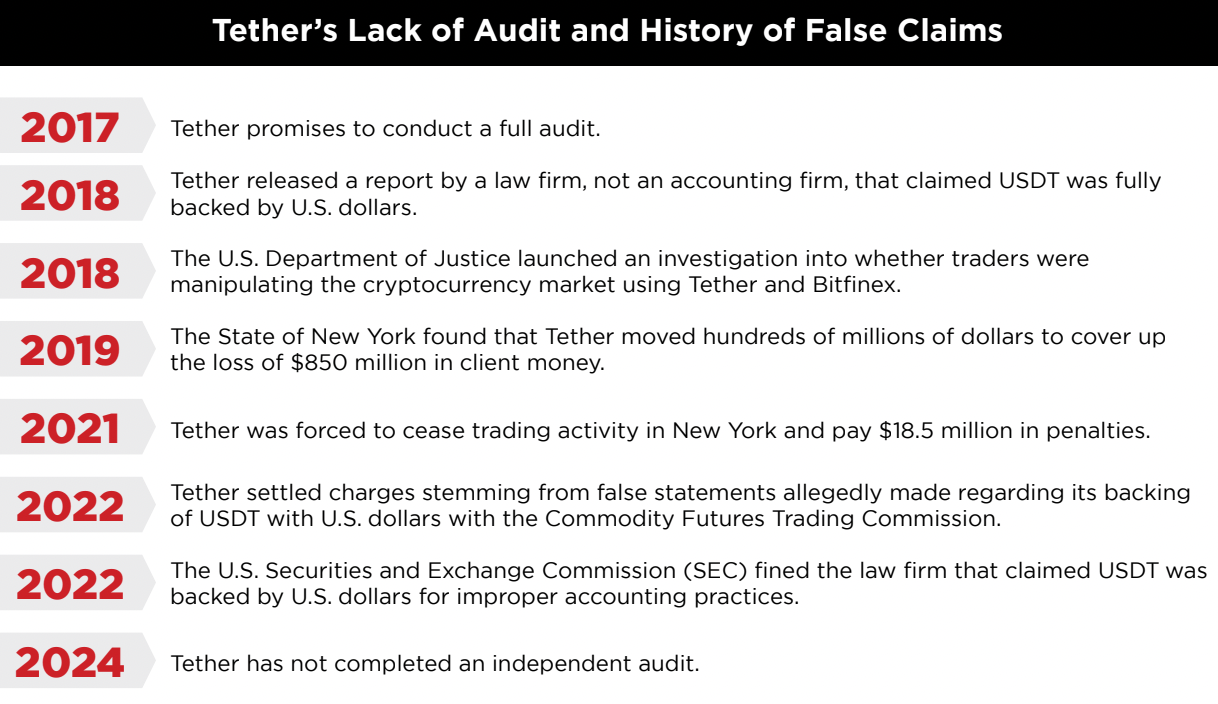
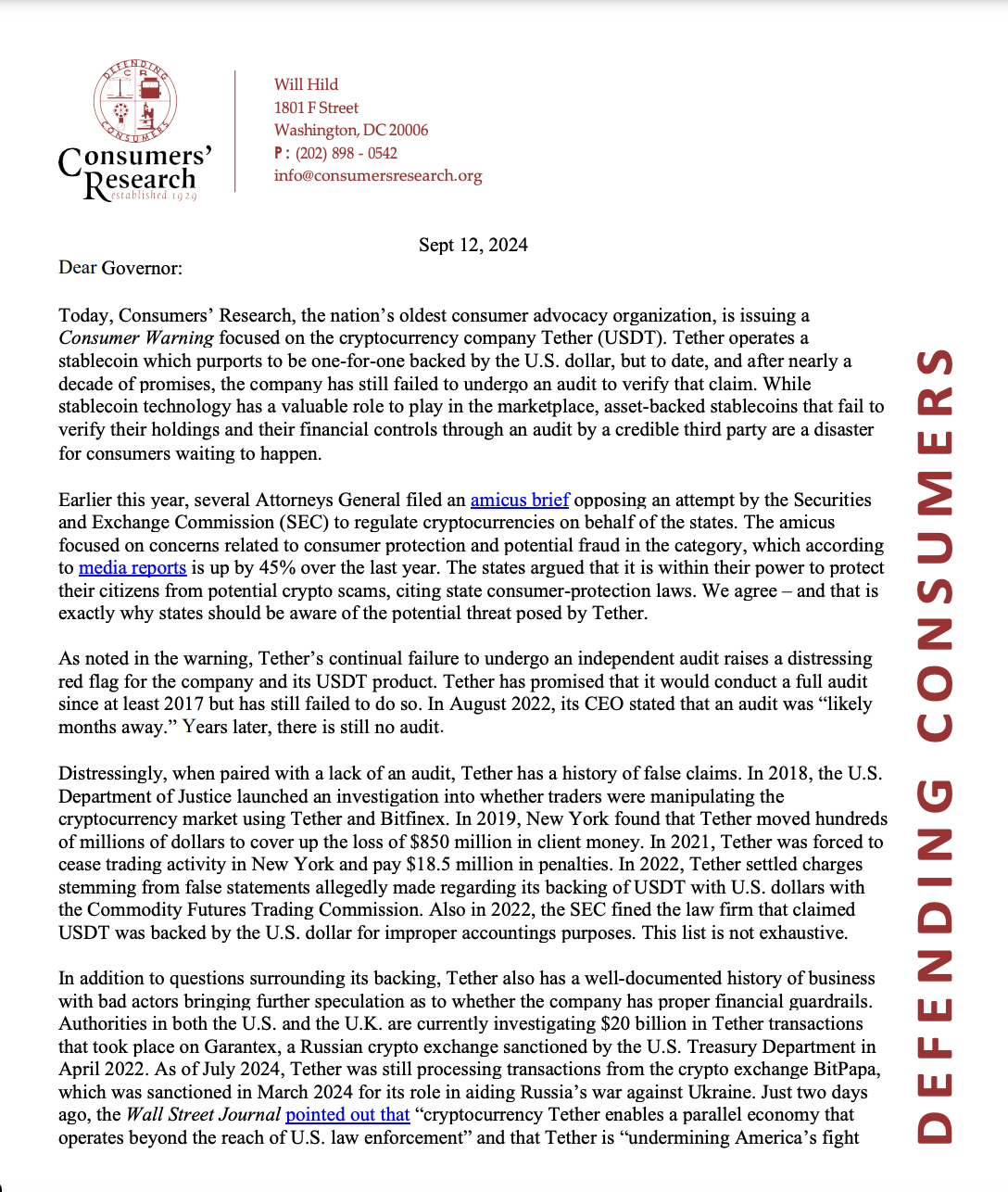
The group’s statements were accompanied by an open letter addressed to the governors of all US states. It mentioned fines imposed on Tether for false claims about the full backing of USDT, a “well-documented history” of business dealings with unscrupulous market participants, and the company’s inability to prevent the use of its stablecoin for circumventing international sanctions.
According to the rating agency S&P Global, Tether scored 4 out of 5 in a stability assessment, where 5 is the worst rating.
“Weaknesses include limited transparency of reserve management and risk appetite, lack of a regulatory framework, absence of asset segregation to protect against issuer insolvency, and restrictions on primary redemption of USDT,” the note states.
In April 2024, Tether announced the successful completion of an audit for System and Organization Controls 2 (SOC 2) Type I. The USDT issuer plans to obtain a SOC 2 Type II certificate in 2024-2025, which evaluates the effectiveness of internal controls over a 12-month period.
In early September, Tether, TRON, and TRM Labs established the T3 Financial Crime Unit alliance to combat financial crimes. It will focus on preventing the illicit use of USDT on the TRON blockchain.
According to Tether CEO Paolo Ardoino, since its launch in 2014, the company has assisted more than 145 law enforcement agencies in recovering $108.8 million in USDT linked to illegal activities.
Рассылки ForkLog: держите руку на пульсе биткоин-индустрии!