


The city sleeps as neural networks awaken: 20 free AI games
Despite the rising popularity of artificial intelligence over the past few years, some people still regard it as out of reach for ordinary users.
However developers around the world are conducting experiments and opening the technology to the wider public. Through images, music, games and other methods they demonstrate the capabilities of AI systems.
ForkLog has curated 20 entertaining AI-powered web applications you can try right now.
AI Game Experiments
In 2016, the tech giant Google unveiled the AI Experiments project. The site is designed to demonstrate AI capabilities through simple, practical examples.
The service allows anyone to work with neural networks and machine learning algorithms, and to learn how they operate. The code for any experiment is available for download and self-study.
Enthusiasts can also share their AI projects with an audience to receive feedback and refine the system.
Some time after launch, eight algorithms were available. Later their number was expanded to more than 40 different AI systems.
Giorgio Cam
The first game on the AI Experiments site. The user must place an object in front of the camera lens of a smartphone or tablet. The algorithm recognises it, composes a short poem and adds music.
The service uses the Mary TTS speech-synthesis technology, the Tone.js library for sound creation, and the Google Cloud Vision API image-recognition system.
Quick, Draw!
The online game asks users to draw an object or idea, and the neural network attempts to guess what was drawn.
“Draw the sun in 20 seconds! Maybe it’s a frying pan. It is the sun, after all,” says the robotic voice as it recognises the sketch.
The developers trained the algorithm to track the direction of finger or cursor movement for correct image recognition.
FreddieMeter
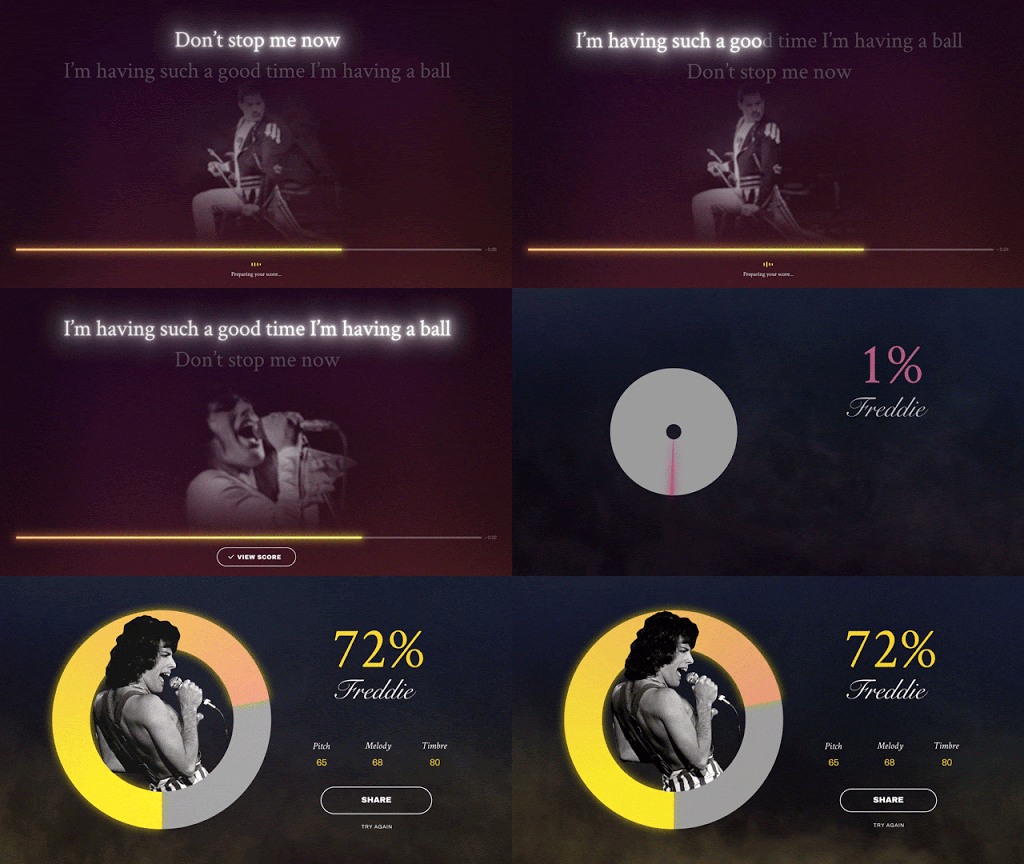
The game lets users gauge how closely their singing resembles Freddie Mercury’s performances. The service offers Don’t Stop Me Now, We Are the Champions, Bohemian Rhapsody and Somebody to Love.
The system is based on models developed by Google Research for determining vocal timbre, pitch and tone relative to the rock legend.
FreddieMeter uses the TensorFlow.js machine-learning library, a Web Audio API-based audio tool, and the WebRTC technologyWebRTC.
Teachable Machine
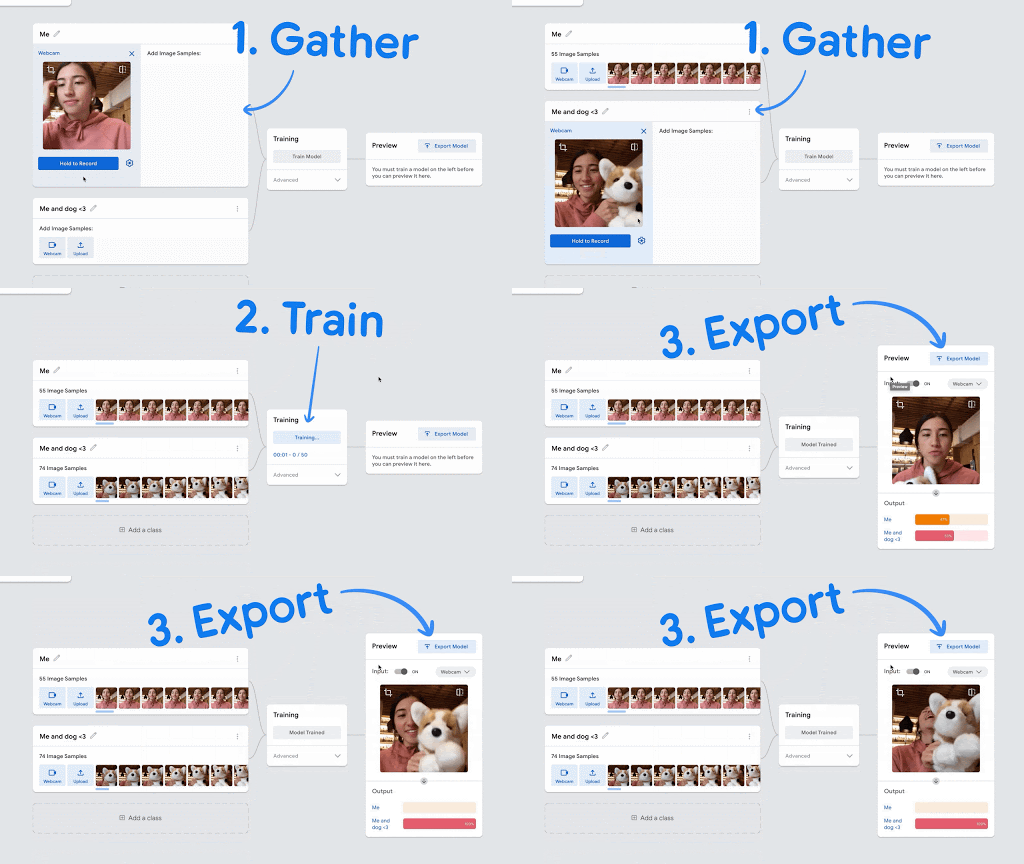
The experiment invites everyone to train a neural network themselves.
Users must perform certain actions in front of a camera. The system will remember them and respond to repetitions with relevant animation, sound or phrase.
To teach Teachable Machine to recognise movements, around 30 frames are required.
AI Duet
The experiment lets users collaboratively create music with an AI algorithm.
The user must play a few notes of a melody using computer keys or a MIDI keyboard, and the system will then continue it logically.
Developers trained the neural network on thousands of existing works. The AI learned to understand notes and recognise harmony in the melodic pattern, including moments of key changes and the rhythm required to continue.
Gradually the algorithm built a map of the most harmonious sequences and transitions.
The system is built using the TensorFlow library.
Infinite Herbarium
The experiment allows creating “morphs” of plants.
Users are asked to upload photos of two representatives of flora. After processing the images and identifying visual characteristics of the plants, the neural network will generate their hybrid using data from the Biodiversity Heritage Library.

Works created with Infinite Herbarium are shown at the Museum of Contemporary Art Australia as part of The National 2021: New Australian Art.
Scroobly
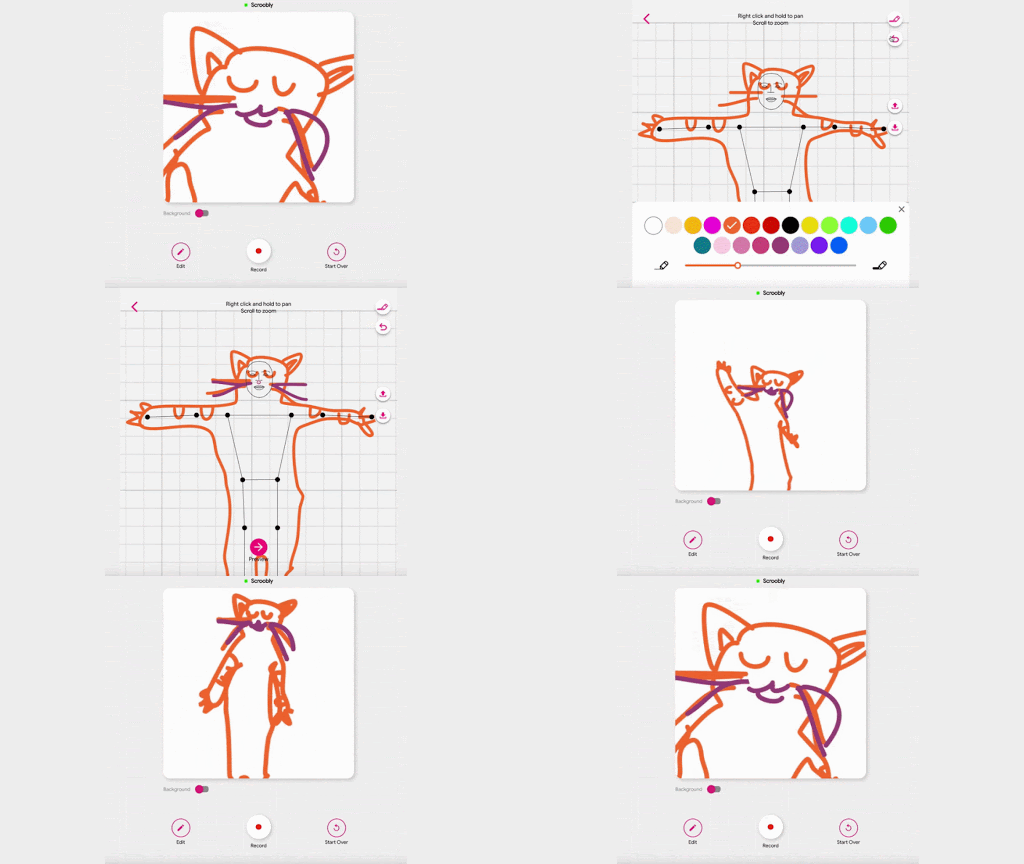
The game invites users to bring to life a character they invent.
The system uses AI models Facemesh and PoseNet to coordinate in real time the movements of a person and the drawn character.
The developers leverage open-source libraries for machine learning with TensorFlow.js, for creating and rendering animated 3D computer graphics with Three.js, and for building user interfaces with React.js.
Teachable Snake
Almost a classic game of Snake, but with a twist.
In this experiment the user does not need a keyboard. They must draw a black arrow on a white sheet of paper, through which they can control the character via a webcam.
The “snake” will move right, left, up or down depending on the orientation of the homemade controller.
The developer trained the algorithm with a set of 500 photos of four possible arrow positions. The system is based on the beta version of Teachable Machine 2 and the React.js library.
Shadow Art
The game lets users try their hand at creating characters from shadow.
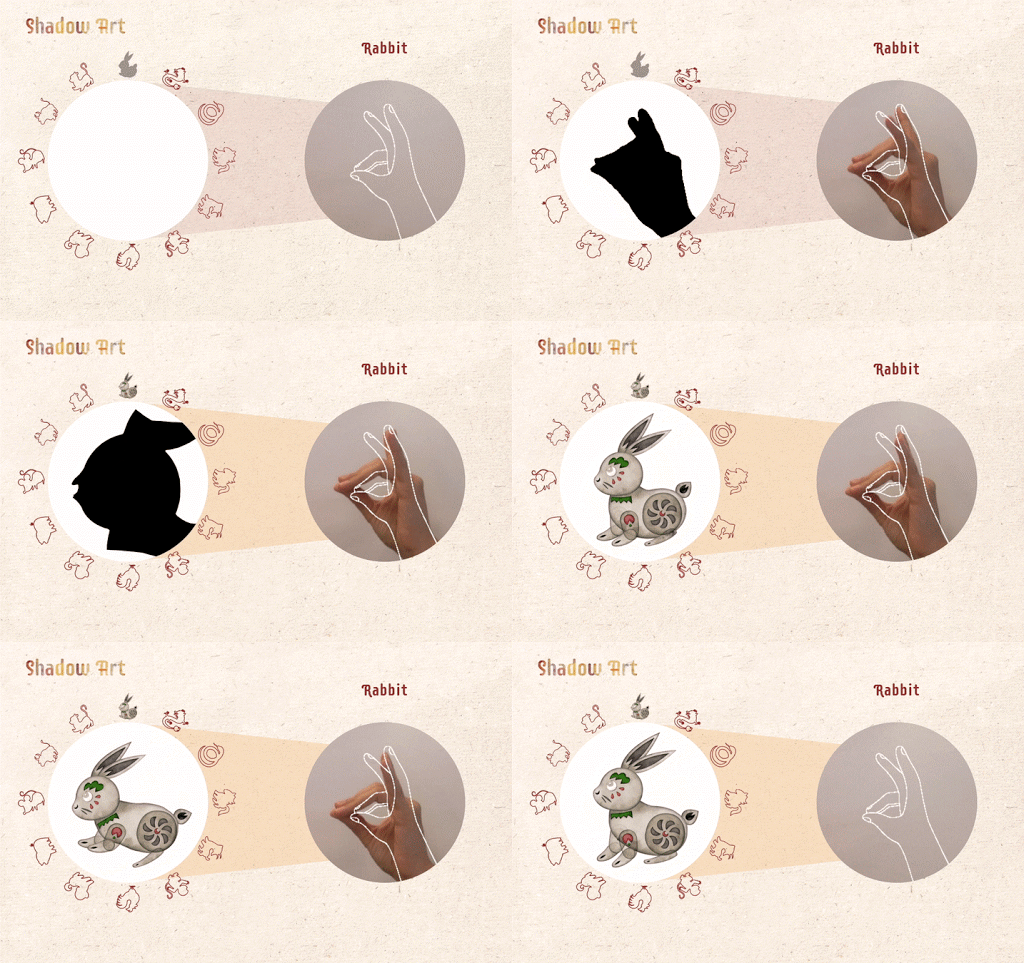
A camera on a smartphone or PC is required. The player must arrange their hand gestures according to a scheme within the allotted time. The algorithm recognises the gesture and will “animate” one of 12 figurines corresponding to the Chinese zodiac signs.
The system uses the TensorFlow.js library.
Semantris
This is a word game with two modes: Tetris and Arcade. The service is based on semantic search technology.
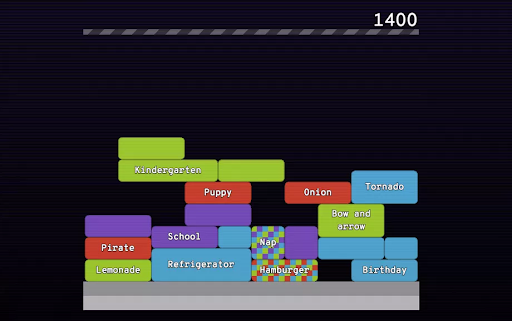
In the first mode you must think of a word associated with one of the presented items. The AI will try to guess what it relates to.
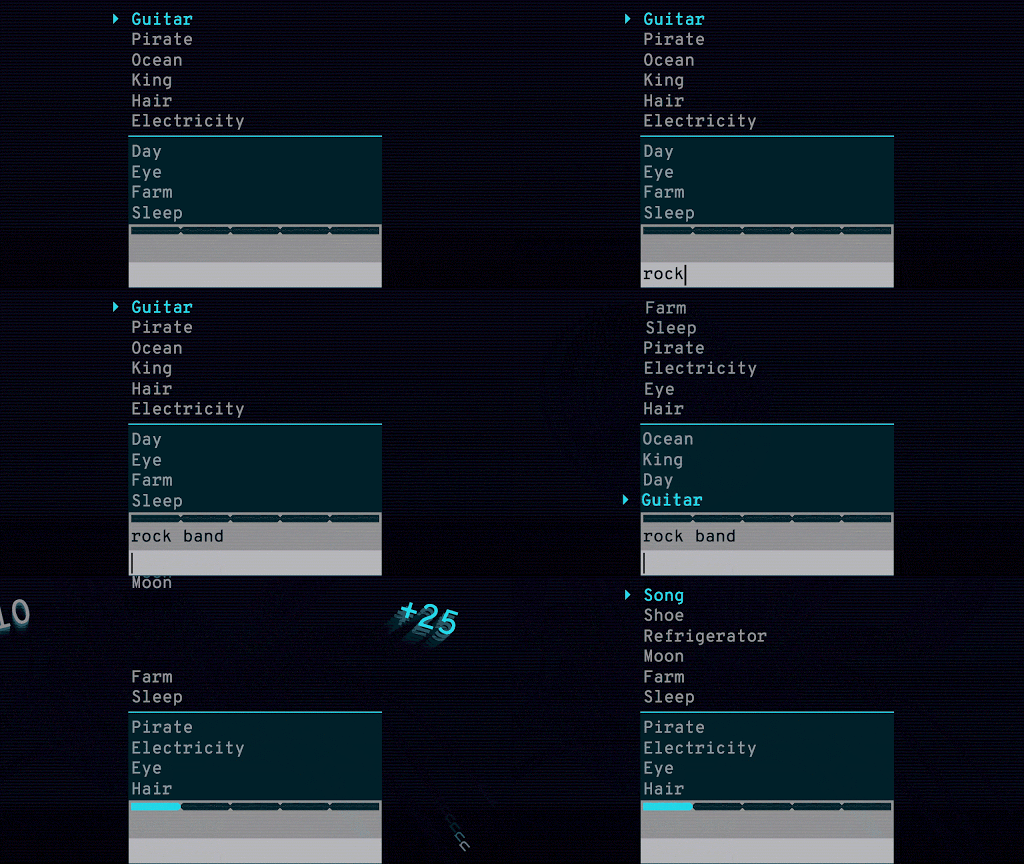
In Arcade mode the algorithm directly points to words to which you should supply semantically close clues, and then ranks the remaining answers.
Emoji Scavenger Hunt
Here players need to “hunt” for emojis in the real world.
The service tasks players with locating an object from the image around them within the allotted time. When they point the device camera at the corresponding emoji object, the system counts a win.
With each new level the tasks become harder and the time increases.

The Infinite Drum Machine
The experiment uses machine learning to create works from thousands of everyday sounds.
The service shows a map where different sounds are placed according to how similar they are. Hovering over the cloud will trigger them to play in sequence.
Users can lay down a preferred melody on a four-track drum machine and compose a musical piece.
The developers used the t-SNE technology. The algorithm computes a digital fingerprint of each sound and places it in a multi-dimensional space relative to other samples.
Scrying Pen
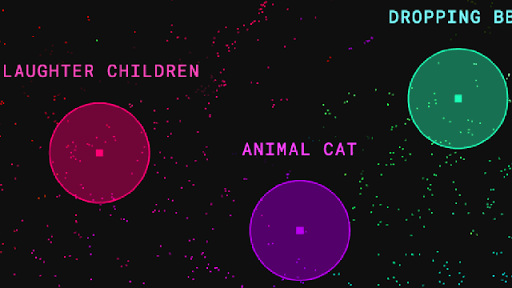
In this experiment the developers trained AI to predict drawings.

The system is based on the Sketch-RNN neural network, which uses images from the Quick, Draw! game.
The algorithm analyses the lines drawn by the user and predicts the next move. The “best” options appear on the screen.
Touch Type
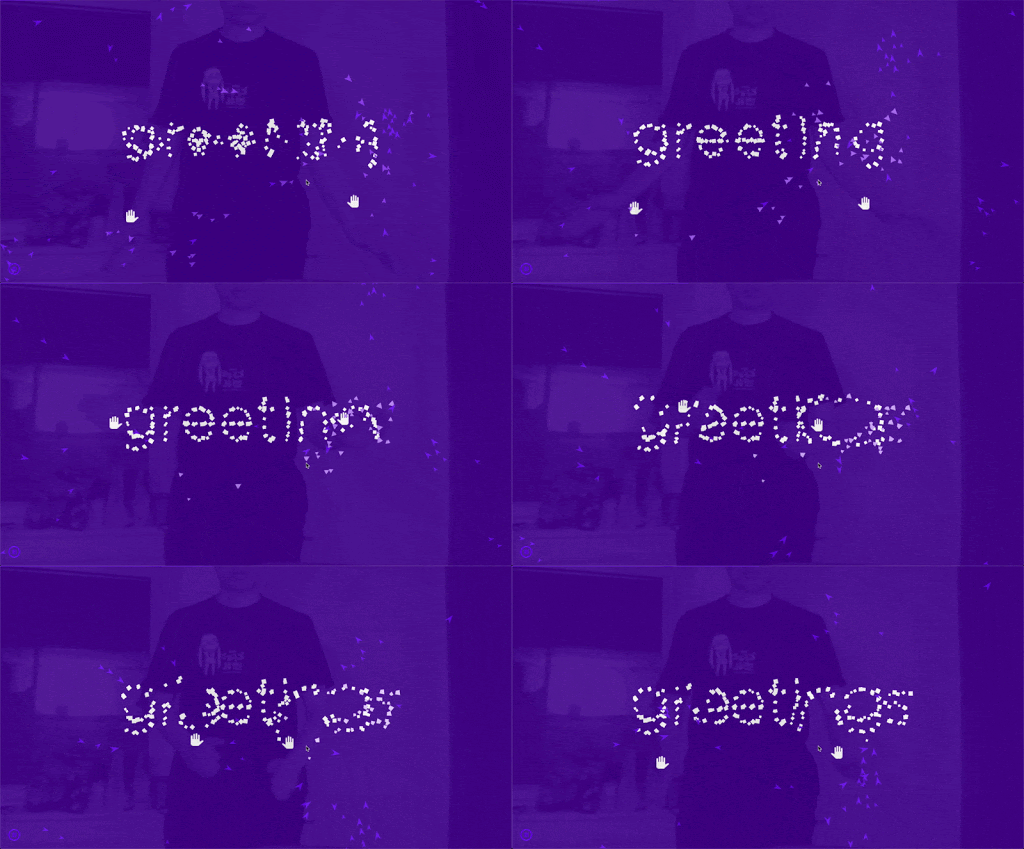
The experiment allows users to manipulate text on the screen.
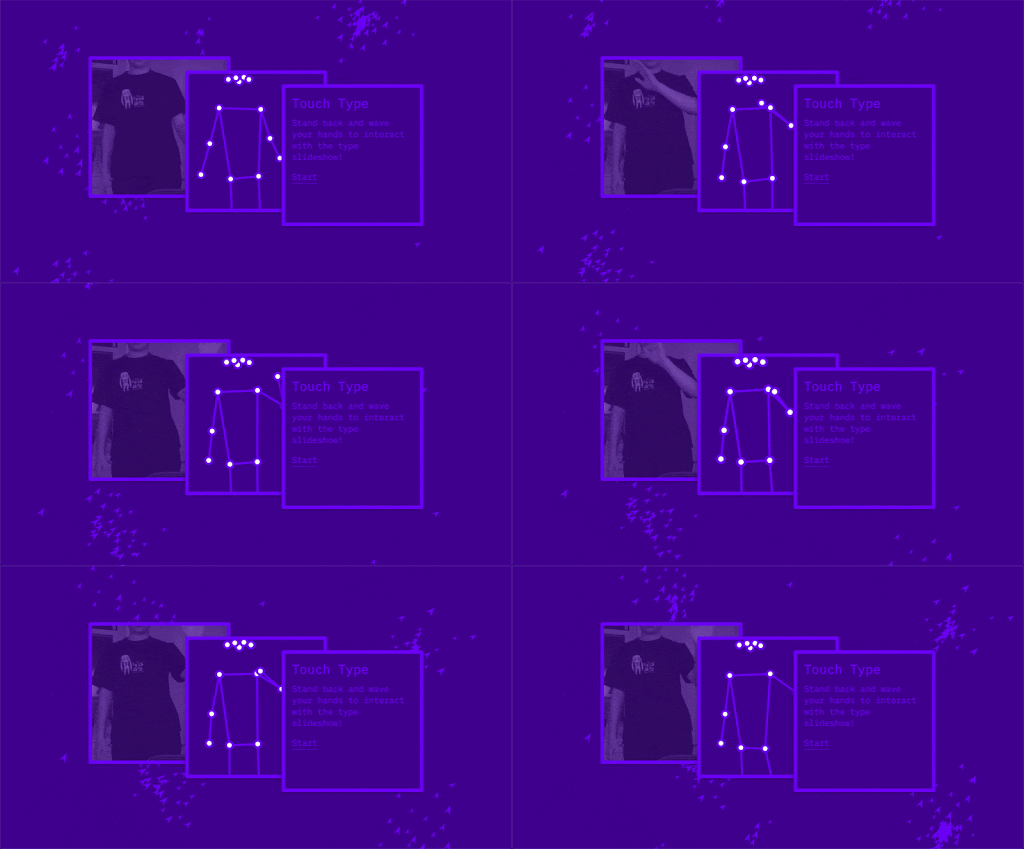
The tool uses PoseNet body-tracking technology and a Reynolds’ Flocking algorithm example from the YouTube channel The Coding Train on machine learning.
Using their hands, users can distort and warp words. If they move away from the camera, the text will begin to disappear.
Scribbling Speech
Players can create animations using their voice.
Speech input, machine learning and recurrent neural networks enable the computer to craft complex imaginary worlds.

What else?
Don’t forget about free games not tied to the AI Experiments project. There are many such services, and ForkLog has found a few.
AI Dungeon
A multiplayer text-based adventure game that uses AI to generate content. The app also includes a single-player mode.
The service lets the gamer set the setting for their adventure, such as mysticism or apocalypse, and then customise other related parameters.
Initially there are four main interaction methods: Do, Say, Story and See. They can be chosen for each fragment of text input by the player.
The system adapts and responds to most actions taken by the user. An empty field prompts the AI to generate further content.
AI Dungeon also offers players the option to undo, replay or edit recent events to improve the narrative.
In September 2022 the developers expanded the service with an AI image generator, Stable Diffusion.
Wordalle
A game created by the Hugging Face community invites users to guess the prompt that generated the image.
The developers have merged the Wordle-style puzzle with the text-to-image AI Craiyon (formerly known as DALL-E mini).
Players must place letters into the cells: if the character is correct and in the right place the cell turns green; if the position is mixed up the cell turns yellow.
Players have seven attempts to guess the prompt generated by the algorithm. Words may be skipped.
Floom
The Google AR game invites users to open a portal to the other side of the planet. The service runs only in Chrome on Android devices.
To start the game, point the camera at the ground and tap the appearing “tornadoes”. This will open a portal to the opposite side of the planet.
You can then view this location in the Google Earth app.
Floom uses the WebXR library, enabling developers to build browser-based AR and VR applications.
Emojify
An online game developed by researchers at the University of Cambridge to demonstrate emotion-recognition technology.
It features two modes. In the first, the service uses a computer webcam. The user must display a range of emotions, and the algorithm will try to guess them.
In the second mode the game demonstrates the limitations of such systems in terms of understanding context in images.
According to the developers, the aim of the experiment is to raise awareness of emotion-recognition technology and to foster broad discussion of its use.
Ghost Phone
AR game in Snapchat about a “forgotten phone”.
Players must use their smartphone camera to locate and catch AR prizes, performing various actions. They can use hints in text messages and other apps to unlock additional features.
According to the developers, Ghost Phone was created using the Lens Studio environment and the PlayCanvas game engine. The system relies on Snap World Mesh and surface-recognition technology to place AR objects around the user.
AI Image Generators
You can also experiment with AI image generators based on text prompts, which became especially popular in 2022.
The motto of such systems is “print and you shall receive.” The user needs to provide any natural-language prompt and the algorithm will generate an image accordingly.
Previously, ForkLog published a round-up of free services that can keep you busy for hours or days while trying to create a perfect image.
Subscribe to ForkLog’s Telegram updates: ForkLog AI — all the news from the AI world!
Рассылки ForkLog: держите руку на пульсе биткоин-индустрии!