



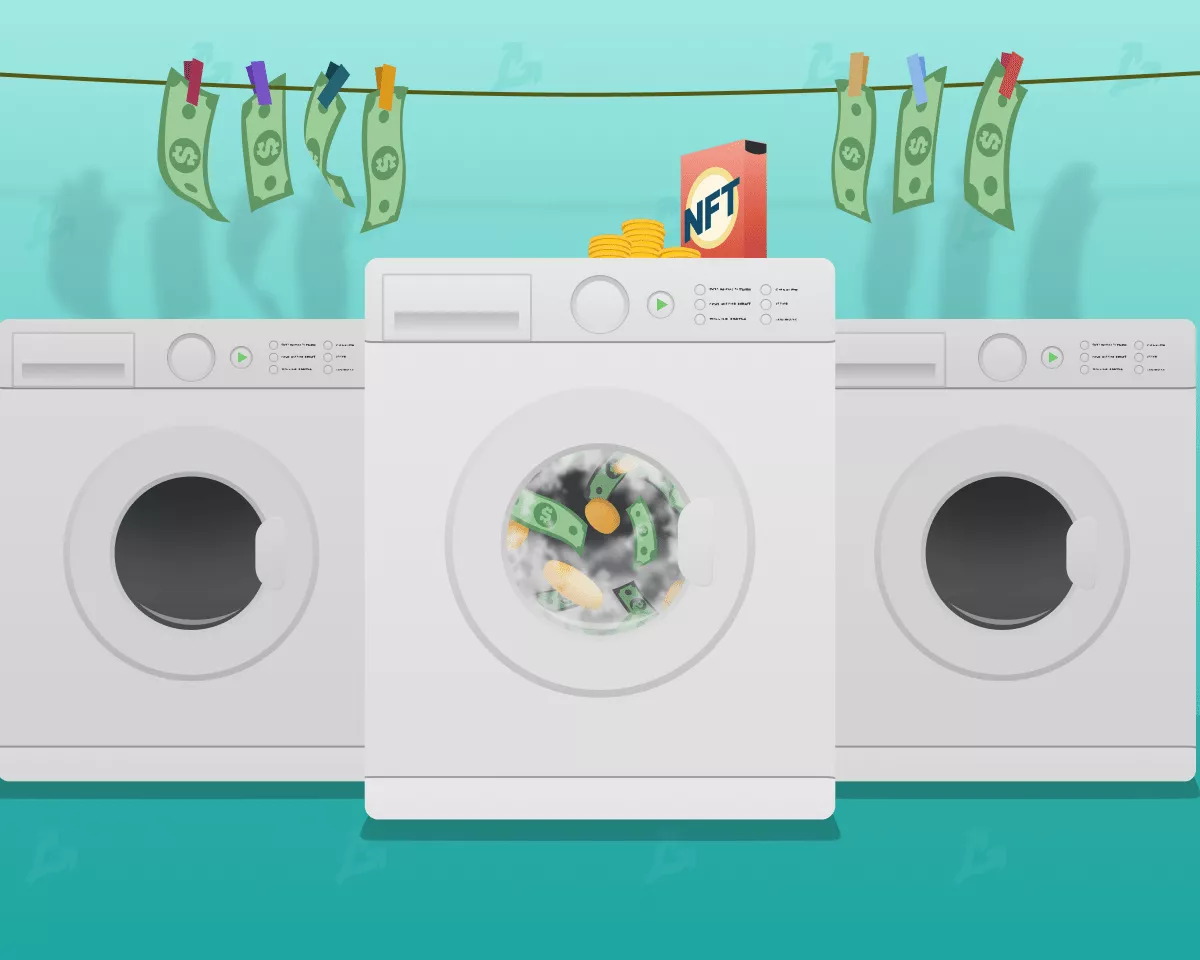
In 2021, non-fungible tokens (NFTs) became one of the hottest topics in the cryptocurrency industry. Global outlets dedicate front pages to these assets, invest by celebrities and even schoolchildren earn hundreds of thousands of dollars from selling them.
In March, Beeple’s NFT, the pseudonym of Mike Winkelmann, saw its NFT go under the hammer at Christie’s for $69.3 million. He instantly joined the ranks of the highest-paid living artists.
NFTs are turning works by Banksy, Pablo Picasso and Andy Warhol into tokenised artworks, and the State Hermitage is selling tokenised pieces from its own collection.
Traditional artists have split into two camps: some, like Damien Hirst, see NFTs as a new, promising direction, while others, such as David Hockney, call the segment “home to swindlers and fraudsters.”
Supporters of Hockney have good reason to believe the technology could aggravate the industry’s existing problems, long described as the “perfect venue for money laundering.” as noted.
- Huge turnover and the traditional way of doing business in the art market make it attractive to criminals seeking to launder illicit gains.
- Regulation in this space is tightening, so launders look for new tools to move their schemes. NFTs could be one such instrument.
- The NFT segment remains the “Wild West” — a grey area where money can be cleaned with ease. It is destined for regulation, and authorities have already taken notice.
Money-Laundering Through Art
Launderers have targeted the art industry for two main reasons. First, the legitimate art market itself is enormous: in 2019 the International Monetary Fund estimated it at $68 billion. The pandemic reduced it by about 27% to $50.1 billion.
Second, the traditional art-trading industry’s environment has long supported money-laundering practices. In recent years the market has become more transparent, yet catalogues of auction houses can still list objects as coming “from a private collection” without further detail.
According to U.S. Treasury, sometimes paintings travel to exhibitions via the owners’ representatives, and the owners themselves remain unknown even to galleries arranging the sale.
Buyers also frequently use intermediaries to preserve anonymity. For example, when Saudi Crown Prince Mohammed bin Salman purchased Leonardo da Vinci’s Salvator Mundi from Russian billionaire Dmitry Rybolovlev, the deal was conducted in the name of his friend.
Particular attention is paid to so-called “free ports,” which formally serve as warehouses for goods in transit. In practice they have become special zones where tax regimes of a country do not apply, enabling avoidance of duties on art sales.
The industry remains effectively unregulated; the value of paintings and other works lacks objective valuation, and participants in deals can remain anonymous. All this makes the market a convenient laundering ground for dirty money.
A telling example concerns Jean-Michel Basquiat’s Hannibal. Brazilian banker Edemar Cid Ferreira sent the painting to the United States declaring a value of $100.
Customs cleared the cargo without issue, but, according to the U.S. Department of Justice, the actual value was $8 million. When the painting was eventually confiscated, it sold at Sotheby’s for $13.1 million.
7 October, Sotheby’s London, J.M.Basquiat, “Hannibal”, Est.3.500.000-4.000.000 GBP, Sold 10.565.000 GBP /11.693,297 € pic.twitter.com/4GPjxMPxyr
— enricogatti (@areaconsulting) October 7, 2016
Works of art are used to conceal criminal proceeds not only by banks tied to financial schemes, but also by other scammers, including unscrupulous market participants.
At the end of 2017, Beaufort Securities — a Mauritius-based investment company later charged with defrauding clients and manipulating shares — proposed to a London gallery owner, Matthew Green, a profit from reselling Picasso’s Les Personnages.
Green agreed to take £6.7 million (~$9 million at the time) in exchange for the artist’s work, knowing the funds came from a securities-fraud scheme. It was planned that the gallery owner would issue fake paperwork recording the sale, while the painting would be hidden, with the parties then simulating a reverse deal at a lower price.
UNESCO data show that in 2018 the underground market for trading art reached $6–8 billion. Given the near-total lack of information about shadow deals, the real figures may be significantly higher.
Regulators are naturally unhappy with this state of affairs.
By January 2020, EU member states were required to implement the Fifth Anti-Money Laundering Directive into their national laws. Under the new rules galleries, auction houses and art dealers must collect, store and share information on clients, their sources of funds and their transactions with state authorities.
In January 2021, the U.S. Congress extended federal AML requirements, originally developed for banks, to antique dealers. The Treasury and other agencies are instructed to determine which markets should come under regulation and to what extent such oversight should concentrate on trading expensive artworks.
“Secrecy, anonymity and lack of regulation create a conducive environment for money laundering and sanctions evasion,” — says in a Senate committee staff report published the previous year in support of tighter oversight of authorship
Regulatory regimes are evolving in line with global trends. Post-Soviet states are no exception.
In Russia, for example, the law does not obligate art businesses to report for AML purposes. Yet several regulations and Supreme Court rulings have long defined activities related to the sale of artworks as high-risk for laundering.
Regulation of the physical-art trade is tightening now, and over time dealers are likely to be driven toward non-anonymous deals. Yet blockchain technology has introduced NFT markets that do not fit traditional oversight.
New Threat
One Hacker News user called NFT “the best way to launder money in the crypto world.” With tokens, there are no storage issues; most NFT-focused platforms operate with minimal KYC or even without it.
This view is popular among community members. After all, what could be simpler than “in five minutes to create a JPEG image of a rock, and then sell it for $135,000” (perhaps to oneself)?
NFT’s primary use case is money laundering.
Think about it. If you needed to wash some money wouldn’t creating a jpeg of a rock in 5 minutes than “selling” it for $135,000 make sense?
Hunter Biden is doing the same with his “Art”
When NFT’s Hunter?
— BITCOIN MAXIMALIST 🇸🇻 (@maxkeiser) August 9, 2021
Potential money-laundering actors could indeed turn their attention to NFT marketplaces. The largest among them — OpenSea — identifies customers by Ethereum wallet and allows private sales of digital assets. The latter are auctions accessible only to pre-specified addresses.
Tim Suen (sic) Swanson, founder of Post Oak Labs and former director of market research at the blockchain consortium R3, believes NFTs are already used not only to launder illicit funds but also to avoid taxes.
tldr mechanics of money laundering with NFT art:
Known account with large tax liability buys it from unknown account. Known account resells to 3rd account for significantly lower price realizing a loss that offsets previous tax liabilities.
rinse and repeat with oneself too. https://t.co/BYA59slyaV
— Tim Swanson (@ofnumbers) March 11, 2021
«The mechanism for laundering money with NFT: a known account with large tax liabilities buys the token from an unknown account, then resells it to a third account at a much lower price, generating a loss that offsets the aforementioned tax liabilities. This repeats again and again», — wrote him.
Crypto researcher Mr. Whale argues that the NFT segment’s rapid rise owes much to money-laundering-related activity.
«Behind the facades of bored rich people buying digital artworks at ridiculous prices lies a sinister, sophisticated money-laundering scheme by the ultra-rich crypto elite, aimed at legitimising illicit income», — he wrote in his blog.
This NFT just sold for…
$130 million dollars.
Money laundering well done! 👏 pic.twitter.com/e2IkdKQT2h
— Mr. Whale (@CryptoWhale) August 11, 2021
Bloomberg Law’s money-laundering expert Matthew Long of Quantexa notes NFT’s appeal to launderers: digital artworks have highly flexible valuations, which benefits criminals.
Wild West
GMT Legal managing partner Andrey Tugin (The Russian name is preserved) told ForkLog that NFT markets lack AML regulation — the segment remains a grey area where it is easy to “clean” funds. He expects a surge in laundering deals with NFTs, especially as regulation of the tangible art market tightens.
«Such deals are easy to execute due to the technical nature of NFT. […] There are no universal criteria to value them. The same is seen in the tangible art market, which makes it popular for laundering. Yet there are some rough criteria for fair value of a painting (age, condition, the artist’s name, etc.). In the NFT market, these criteria don’t exist», — he explained.
New York law firm Kobre & Kim’s lawyers believe the lack of regulation is one of the main problems with the new market. They note that US regulators have begun to focus on this segment and are likely to bring it into the legal framework. In particular, NFT marketplace operators could be treated as art dealers.
«US anti-money-laundering laws were recently expanded and in some cases may apply to antique-dealer and art-market actors. A key question that remains is whether these laws will extend to NFTs that represent rights to antiques and art objects», — said at Kobre & Kim.
They emphasise that if NFTs are recognised as securities, platform operators would also have to comply with AML/KYC requirements, as implemented by local Bitcoin exchanges.
There is also a third option — some NFTs, at least certain types, could be deemed securities. Earlier, this SEC chairwoman {AOPEN_8}« заявила that they could be regulated by the Commission. In that case the market would fall under direct SEC oversight.
«The NFT concept presumes tokens are non-fungible. For that reason, they are hard to classify as securities. But the situation is less clear for those creating fractional NFT indices. This also concerns those selling index baskets of non-fungible tokens», — said Pears.
According to Tugarin, virtually all post-Soviet states have NFTs outside the regulatory framework. Ukraine, however, on September 8 took a step and passed the “On Virtual Assets” law.
«The definition of virtual asset proposed in this law is broad enough to cover NFT, though the document does not directly mention the non-fungible token. Therefore market participants engaging in NFT operations must comply with the law on the Prevention of and Fight against Money Laundering, Financing of Terrorism and Financing of the Proliferation of Weapons of Mass Destruction», — explained Tugarin.
The expert noted that in the future these countries are likely to regulate the NFT market for AML purposes. In his view, they may follow Ukraine’s path or introduce their own requirements obliging dealers to perform KYC procedures.
Predestined for Regulation
Former USA Today journalist Isaiah Mockoll (sic) argues that NFTs are “destined for regulation.” If one looks at how state authorities have steadily brought order to the crypto industry, none of its segments have managed to avoid regulation — from ICOs to DeFi and stablecoins.
A similar fate awaits non-fungible tokens, which will make money-laundering with their help more difficult. Some regulators have already signalled interest in NFTs and intergovernmental bodies like the FATF.
Highly liquid assets, including art, collectibles and even precious stones, are often used for criminal ends.
Cryptocurrencies are linked to legitimising illicit funds, yet they have become a multi-billion industry. Some argue the NFT situation is somewhat exaggerated.
can we just agree that jpg NFTs being worth a bunch of money is inherently absurd just like photos on tiny pieces of cardboard, stamps, coins, action figures, and other limited collectibles being worth a bunch of money is inherently absurd
and then, y’know, get over it
— Shibetoshi Nakamoto (@BillyM2k) September 9, 2021
That NFTs, like other digital assets, are issued on a blockchain — meaning their transaction history can be traced — also argues against money-laundering. The seller and buyer can be identified in the “choke point” of converting crypto to fiat.
Read ForkLog’s Bitcoin news in our Telegram — news on cryptocurrencies, prices, and analysis.