


The Metaphysical Juice of Virtual Apples: What Contemporary Philosophers Think About VR
“Virtual reality is indeed real, and all events that occur within it are not merely an illusion.” Such is the conclusion reached today by several well-known thinkers. From their point of view, virtual objects can perform the same social functions as physical ones, evoke the same experiences in us, and therefore be no less valuable. Yet not all developers and media theorists agree with these claims. Philosopher Alexandra Tanyushina analyses why the status of digital spaces provokes so much debate among researchers and why in general one should study virtual reality.
VR in Culture
Research into virtual objects is by no means a new strand in the humanities. It is worth recalling that the Latin word virtualis appears in philosophical and religious texts from the early Middle Ages. It was understood that some phenomena can exist virtually, that is, in potential, and yet be absent in the actual world. Later, in the High Renaissance, the term was used to describe certain stylistic devices in painting (the so‑called “trompe-l’oeil”), provoking a particular illusion of perception, by which the viewer saw realistic, almost tangible objects that were, in fact, only artistic images. In the 20th century, virtuality would be regularly mentioned in the works of Henri Bergson, Charles S. Peirce, Gilles Deleuze, Jean Baudrillard and other philosophers.
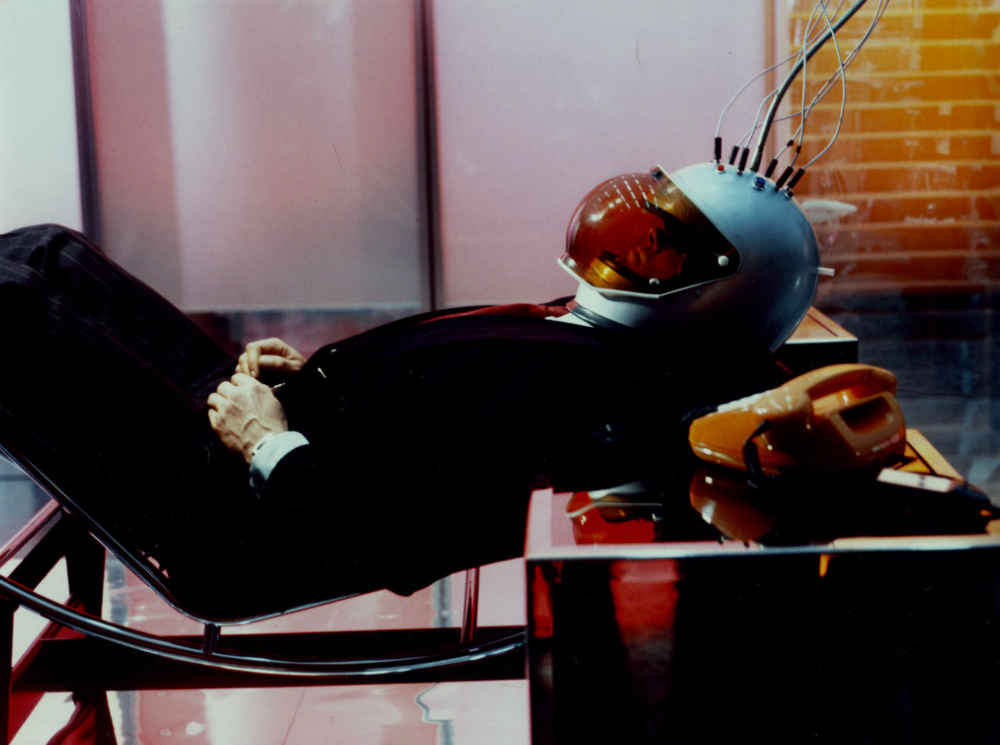
By the end of the century this notion takes on the meaning most familiar to contemporary people, linked to computer technologies that give the user a sense of immersive immersion in a digital environment. Alongside their appearance in mass culture, science-fiction plots gain popularity, describing various virtual cyber-spaces. Primarily these are literary works: “The Man Who Awoke” by Lawrence Manning, “Neuromancer” by William Gibson, and the novels of Stanisław Lem, in which the Polish writer describes VR using the term “phantomatica.” Parallelly, cinema in the cyberpunk genre emerges (for instance, the two-part film by German director Rainer Werner Fassbinder, “World on a Wire” (1973), which anticipated many ideas and images of the Matrix trilogy).
Futurists’ musings oscillated between extreme techno-utopianism and radical cyber-pessimism, often taking the form of thought experiments. A notable example is Robert Nozick’s “experience machine,” described in his 1974 book Anarchy, State, and Utopia. The experiment boils down to one simple question.
Suppose that, via a device called the “experience machine,” you could be connected to a perfectly generated virtual reality that would provide you with an endless stream of positive experiences. In that case, what would be the probability that you would actually plug into that artificial environment instead of continuing to live in the ordinary, physical reality?
Nozick is himself inclined to think you would opt out. It seems to us subconsciously that existence in such a reality would not be full: we would not be able to interact with the world and with other people, and we would have good reason to doubt the reliability of our experiences. We would also be deterred by the thought that if the “experience machine” were suddenly turned off, we might lose access to our virtual property or even die.
Such reasoning undoubtedly rests on the familiar dichotomy of digits and matter, which leads us automatically to think that any virtuality is, by definition, fictitious. Yet not all researchers share this conclusion. Thus the concept of virtual realism arose.
What is real in VR?
In 2000 American philosopher Michael Heim published a book with the concise, but far from unambiguous, title “Virtual Realism.” Citing the famous Heideggerian thesis that “technology is neither good nor evil, nor is it neutral,” Heim sought to narrow the rift between humans and our digital technologies: since it is no longer possible to remove computers from daily life, we should learn to perceive them as an indispensable condition of our existence. The upshot: VR devices are already intruding into our “reality,” and we should stop treating them as just another science-fiction trope.
From this point the problem of the reality of virtual spaces is taken seriously by researchers. Thus American philosopher Philip Brey asks: can one assert that some virtual objects, actions or events are part of the real world? We usually rarely dwell on this, because we have long been accustomed to the idea that some familiar phenomena can be reproduced in digitised form.
Virtual money, banks, contracts and other social objects whose existence and functioning are secured by conditional agreement among members of society are, in essence, as real as their material counterparts, and, consequently, may exert the same influence on the physical world.
To this one can add certain objects whose essence is defined not so much by their material properties as by their functional qualities. For example, a digital calculator installed on a computer or a smartphone seems just as real as a conventional analogue device.
Until recently, most philosophical texts on VR were devoted to such considerations of the social role of digital spaces. But today the phrase “virtual realism” is taking on quite different colours.
Escaping the “metaphysical trap”, or Why VR matters to philosophers
“Virtual reality is merely another artistic medium, or more precisely a convincing image into which we want to believe,” writes Grant Tavinor in his 2021 book The Aesthetics of Virtual Reality. From his standpoint, VR is not much different from classical screen media, which create dynamic images of fictional objects, thereby triggering the sense of their physical presence. Just as the Lumière brothers’ famous “Arrival of a Train at La Ciotica Station” purportedly frightened viewers, VR is simply the result of projecting a flat scene according to the laws of artistic perspective. The difference is that VR presents this to the viewer via stereoscopic display based on binocular vision. This immersion and interactivity are what make the illusion of the realism of digital images so convincing.
From such reasoning, Grant Tavinor makes a simple deduction: the notion of the “reality of virtual reality” is merely a mistake in our philosophical thinking that arose from insufficient study of the expressive properties of so‑called post‑screen media, to which VR systems belong. Once we understand how such interactive digital environments influence our perception and behavior, there will be no need to treat them as if they exist in reality. Of course, nothing prevents us from continuing to construct various digital онтологии, thereby squeezing the “metaphysical juice from virtual fruits.” However, at this stage of our technological development, it is much more pressing to address other problems arising in VR research.
But if pondering the fundamental basis of digital spaces is not the point, what then might interest contemporary thinkers? This is answered in detail by American philosopher Thomas Metzinger in his nearly‑titled article “What makes virtual reality interesting for philosophers?” and Maltese philosopher Stefano Gualeni, author of the book Virtual Worlds as Philosophical Tools: How to Philosophize with a Digital Hammer. The researchers show that artificial digital spaces provide a wonderful way to realise a multitude of philosophical thought experiments—from the Twin Earth thought experiment and the brain in a vat of Hilary Putnam to the the simulation hypothesis of Nick Bostrom or the Chinese room by John Searle. With virtual environments it is easy to model fictitious scenarios of future development and various branches of alternate history, as well as to program and visualise worlds based on entirely different fundamental physical constants. In addition, artificial realities provide a useful gnoseological instrument through which contemporary thinkers can better understand what we mean by such a concept as “knowledge.”

Development of virtual reality has prompted a reevaluation of some theories of consciousness. For a long time in philosophy and cognitive science the “computer metaphor” of thinking — the brain as a biological computing device — was widely used. Today the so-called “virtual metaphor” is increasingly mentioned, devoted to analysis of digital immortality, digital identity, virtual embodiment, and so on.
The creation of VR devices and their active use in everyday life invites the construction of new legal and ethical systems to regulate behaviour in virtual environments. Together with programmers and developers, contemporary philosophers describe norms for the creation of digital products. For example, American researcher Matthew Cotton in his works emphasizes that virtual objects by virtue of their realism are an effective instrument of manipulating engaged users; this, in turn, obliges us to think now about what content is permissible in digital spaces. Consecutive ethical codes for the governance of VR- and AR-environments are actively being developed by specialists.
Finally, virtual reality can be regarded as a convenient metaphilosophical instrument because the need to search for new methods of analysing digital worlds often forces us to rethink classical approaches by which we ordinarily philosophise about everyday reality.
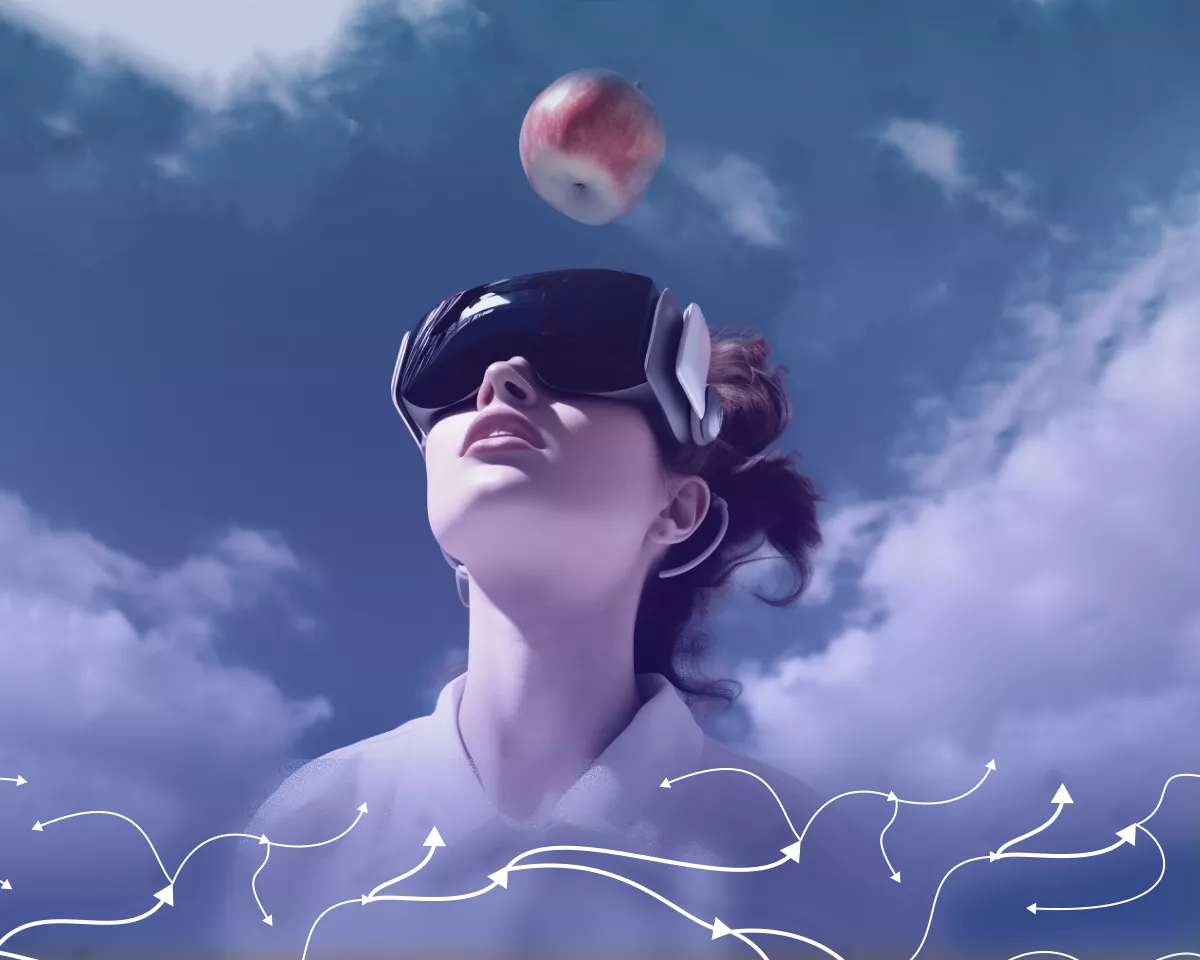
Thus VR is not merely a popular computer technology but a useful theoretical model that catalyses many contemporary philosophical discussions and various interdisciplinary studies. And even if virtual apples are not real entities, that does not mean they cannot land on a scientist’s head, provoking a loud cry of “Eureka!”
Рассылки ForkLog: держите руку на пульсе биткоин-индустрии!