




Crypto markets are regaining ground; Russia unveiled a raft of regulatory moves; projects began adding features for AI agents; the MegaETH team launched its mainnet—and other events of the week.
In search of a bottom
Bitcoin finished the week little changed, but still tested a wide price range.
It started Monday near $70,000 before slipping into a correction. By midweek the first cryptocurrency had fallen to $65,000 amid cascading declines accompanied by heavy selling.


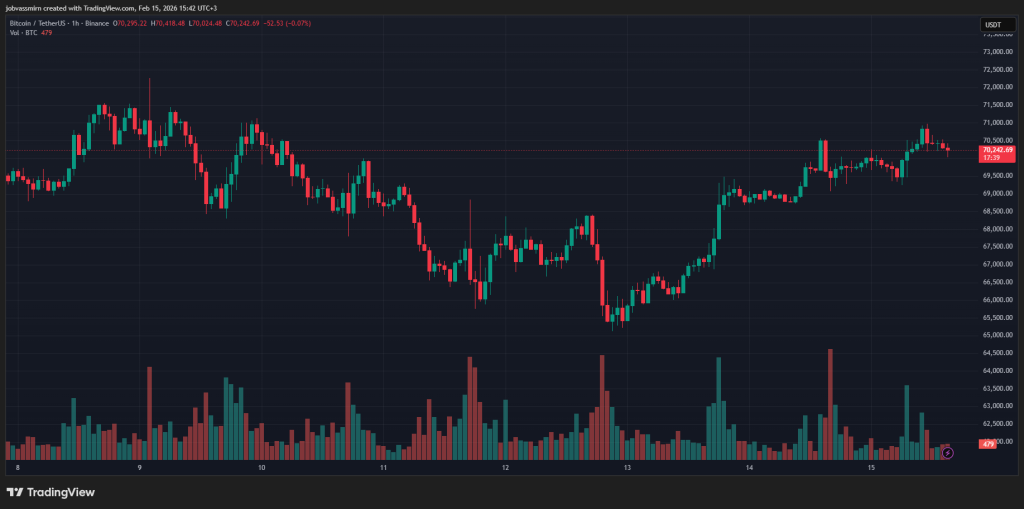
On Friday, February 13th, bitcoin returned to $68,000 after the release of US inflation data. In January the consumer-price index rose 0.2% seasonally adjusted; year on year it was 2.4% versus 2.7% in December.
Digital gold continued higher over the weekend, reaching $70,000. At press time it trades around $69,500.
Most of the top ten by market value showed similar moves. Ethereum held above $2,000 despite a 5% weekly decline.


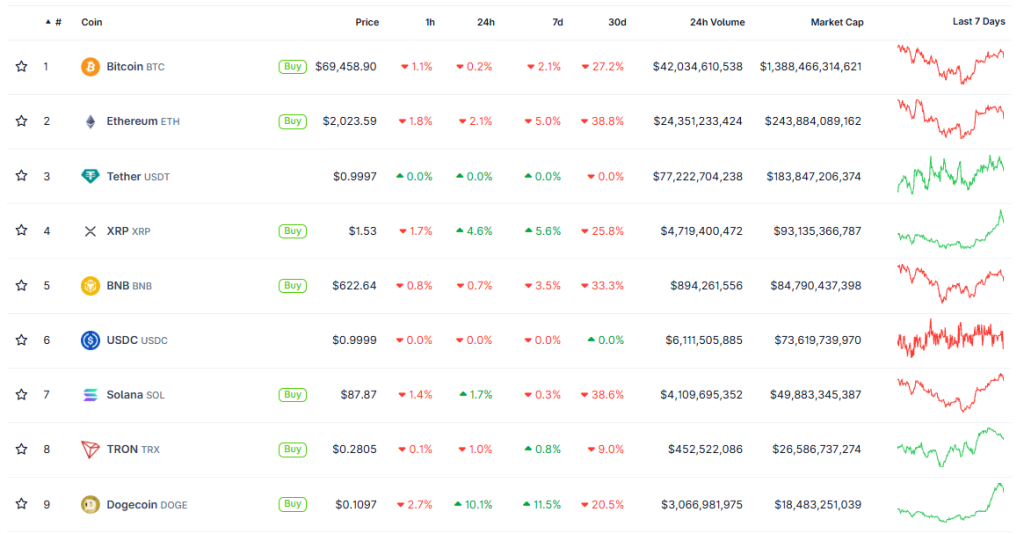
Exceptions were XRP and DOGE, which gained 5.6% and 11.5% over seven days.
Views on the market’s next leg remain split. Standard Chartered mooted a fall to $50,000 with a subsequent rebound by year-end.
K33, by contrast, reckons capitulation has already occurred and $60,000 was the local bottom of the correction.
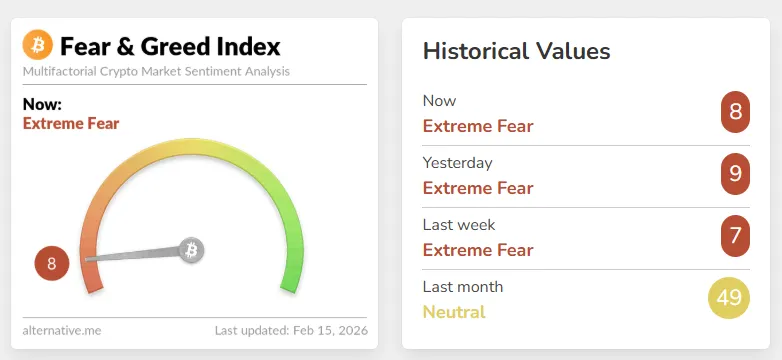
The Crypto Fear and Greed Index remains at an extreme low of 8.


Total market capitalisation of digital assets is $2.45trn.
Bitcoin dominance is 56.6%; Ethereum’s, 9.9%.
Russia’s new crypto rules
In Russia it was a busy week for new crypto initiatives.
On February 10th the State Duma passed in third reading a law setting procedures for the arrest and seizure of digital assets in criminal proceedings, recognising cryptocurrency as property.
Under the provisions, digital currency and devices providing access to it may be seized during investigative actions with the participation of a specialist. The protocol must specify the asset type, quantity and address identifiers. Carriers and information required to access cryptocurrency are stored under seal.
“If there is a technical possibility” the assets may be transferred to a separate address. After arrest, operations with them cease in whole or in part depending on the court’s decision.
Drafted by the justice ministry, the document sets only broad enforcement parameters; the details will be defined in by-laws. Authorities must also fine-tune a mechanism to sell confiscated digital assets for the benefit of the state.
ForkLog’s legal contributors examined the document in a separate article.
The finance ministry, together with the central bank and federal executive bodies, also drafted a concept to tokenise real-world assets. The aim is “the introduction and development of digital innovations, including active use of distributed ledgers”.
The first phase of tokenisation will cover:
- property rights over various types of assets;
- exclusive rights to results of intellectual activity where transactions are not subject to state registration;
- documentary securities;
- shares in the charter capital of limited-liability companies.
“[…] blockchain will replace financial intermediaries and reduce transaction costs. Applying the technology will automate the execution of orders and investment decisions, reduce the need for human involvement and the likelihood of operational errors,” the finance ministry stressed.
What to discuss with friends?
- OpenAI added advertising to ChatGPT.
- CoinShares estimated the true scale of the quantum threat at just 10,200 BTC.
- A Fed governor noted the “fading” hype around cryptocurrencies.
- BlackRock’s BUILD fund will be listed on Uniswap.
Dawn of AI agents
Projects have begun actively rolling out tools for AI agents. First this week was payments giant Stripe.
The company announced a preview of “machine payments”, a tool that lets developers charge automated bots using the USDC stablecoin on Base and the x402 protocol.

The system is built on the PaymentIntents API. With it, businesses can programmatically charge agents for HTTP requests, API usage or Model Context Protocol calls. The technology will be expanded to other blockchains in future.
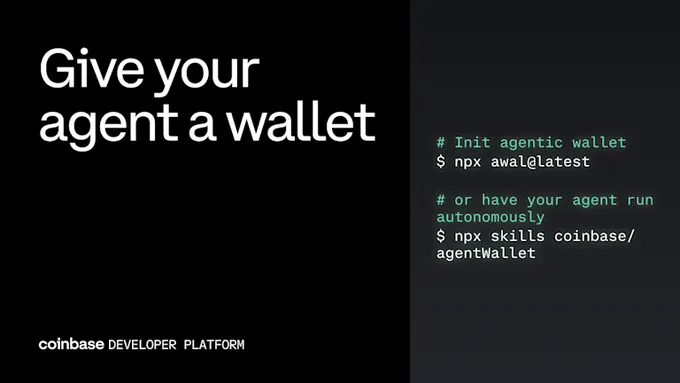
Following Stripe, US exchange Coinbase unveiled Agentic Wallets—wallet infrastructure designed for autonomous AI. It allows digital assistants to self-custody funds, make payments, trade tokens, earn yield, rebalance DeFi positions and perform on-chain transactions.
“AI agents are everywhere—they answer questions, summarise documents and help with tasks. But today, neural networks hit a wall when they need to do something with money,” said Coinbase Developer Platform’s Eric Reppel and Josh Nickerson.
Last with AI novelties were the Lightning Network developers. The team behind bitcoin’s micropayments network released open-source tooling to give agents direct access to the protocol.

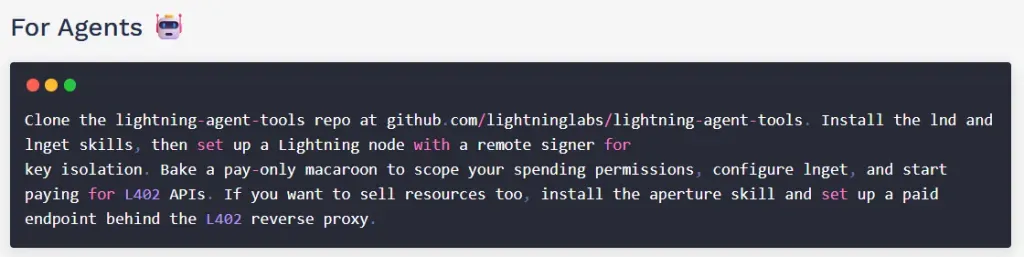
The tools let agents work directly with the first cryptocurrency’s payment rails without mandatory identification, API keys or registration. Available AI “skills” include node operations, remote key isolation, credentials, restricted-access payments, hosting paid endpoints and querying node status.
MegaETH mainnet
On February 9th the Ethereum-based L2 project—MegaETH—launched its mainnet. The solution positions itself as a “real-time blockchain”, targeting throughput of 100,000 TPS and near-instant transaction finality.
The ecosystem’s native token, MEGA, is not fully unlocked. Distribution and rollout will proceed gradually, tied to the blockchain’s development milestones.
Another key element of network activity is the stablecoin USDm, supported by all major applications. The MegaETH Foundation plans to channel all income from its use into buying back and accumulating MEGA.
Just over 50 applications and protocols are currently live on the chain.
The mainnet launch followed an ICO held in October 2025. The project raised $1.39bn—27x oversubscribed.
Also on ForkLog:
- Crypto․com’s chief bought the AI․com domain for $70m to launch an AI-agent platform.
- Polymarket and Kaito AI announced “attention markets”.
- Glassnode called bitcoin’s current pullback “moderate”.
- Vitalik Buterin criticised token giveaways aimed at user acquisition.
A Korean-style theft
South Korean media reported that local police discovered the disappearance of 22 BTC (~$1.5bn) seized in 2021.
The coins were stored in a cold wallet at the Gangnam police station in Seoul. Their absence came to light during a nationwide audit of seized digital-asset storage by law-enforcement agencies.
Checks began after the Gwangju District Prosecutors’ Office lost 320 BTC worth roughly $48m. The loss was discovered in January.
Preliminary findings point to a leaked password. One staffer fell victim to a phishing attack by visiting a spoofed website.
In the 22 BTC case, the assets were moved to an external address. The physical USB device used for storage was not stolen.
What else to read?
On how bitcoin’s institutionalisation has called the idea of decentralisation into question.
How Brazil became Latin America’s leading crypto hub.