



The week in crypto: SpaceX holds 18,712 BTC and Iran offers bitcoin insurance
SpaceX holds 18,712 BTC; Musk loses to OpenAI; Iran offers bitcoin ship insurance.
SpaceX disclosed reserves of 18,712 BTC; Elon Musk lost his case against Sam Altman and OpenAI; Iran rolled out bitcoin-based ship insurance; and other developments of the past week.
A $77,000 ceiling for bitcoin
The leading cryptocurrency began the week above $78,000, but on May 21 slipped below that level. Continued outflows from bitcoin-ETFs and weak spot demand weighed on the market.
On May 23 the price fell below $75,000. The pullback began the previous day amid fears of new U.S. strikes on Iran.
On Sunday the price moved to recover after U.S. President Donald Trump said talks between the countries would continue and shipping in the Strait of Hormuz would reopen. However, at the time of writing the cryptocurrency had not managed to hold above $77,000.
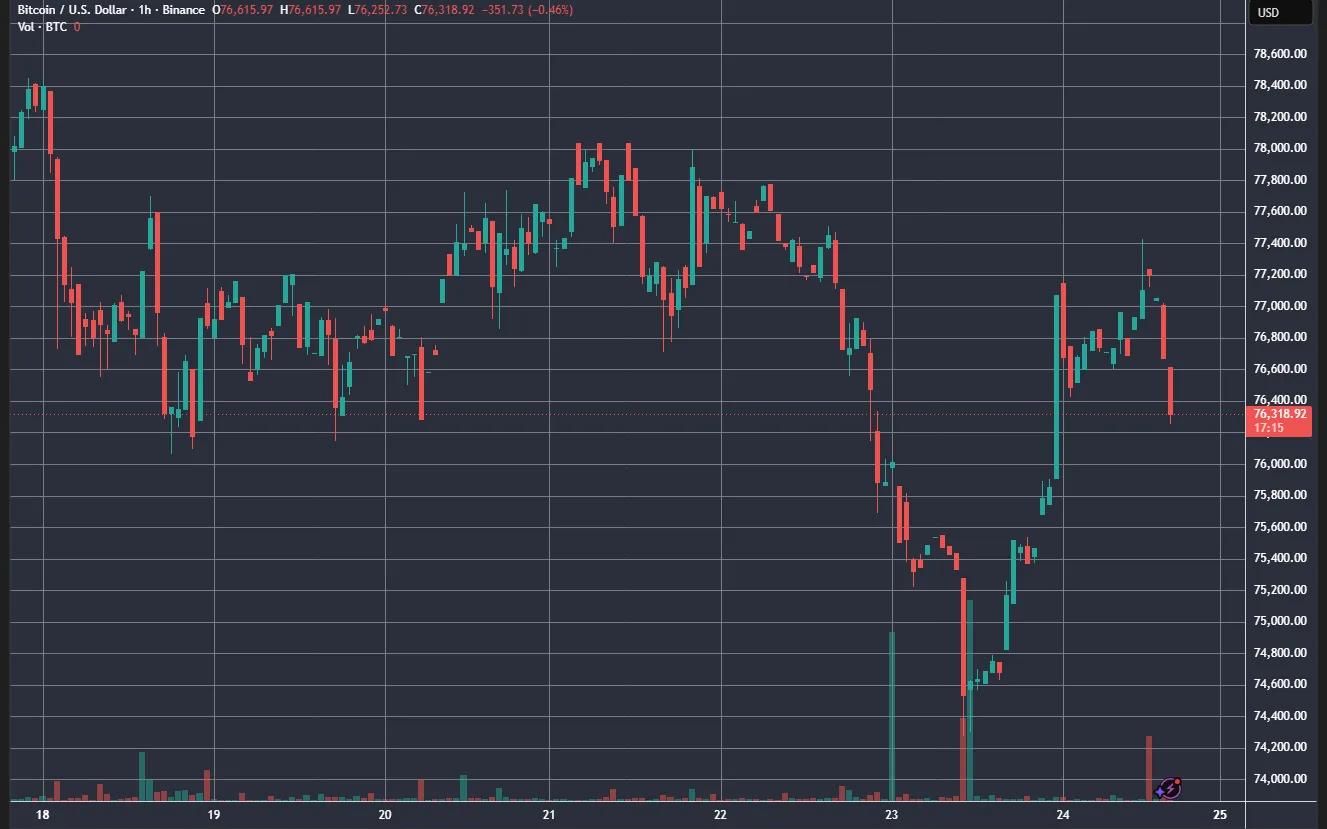
Over the week, bitcoin fell by roughly 2.1%.
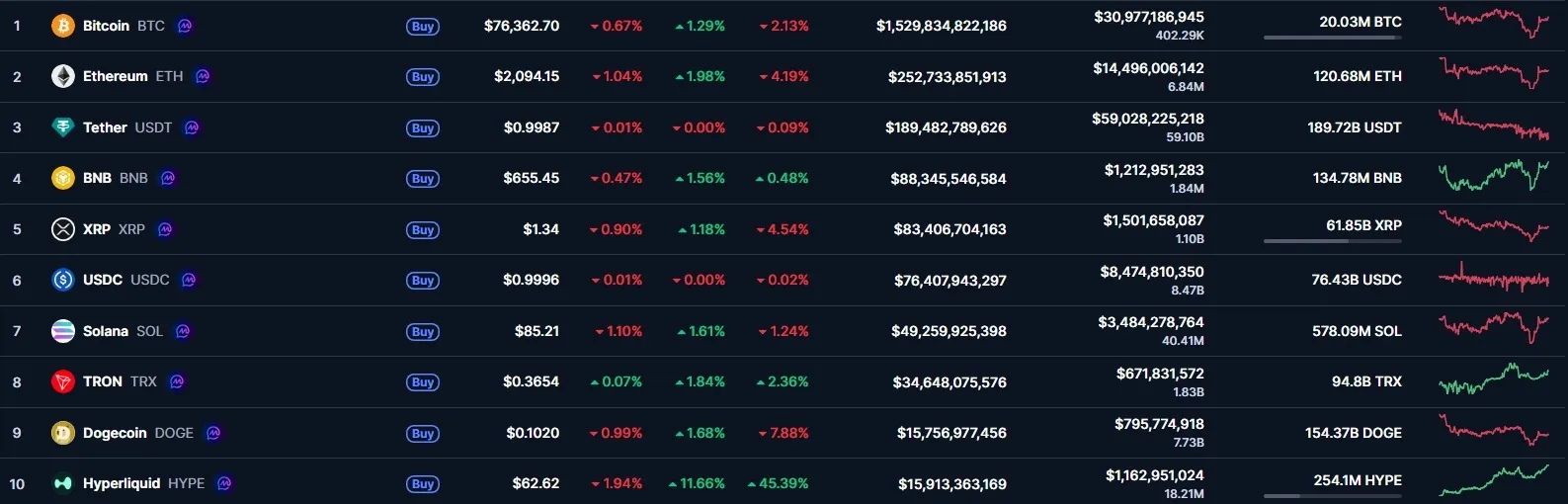
Major altcoins by market value moved in different directions. Dogecoin, XRP and Ethereum underperformed the bellwether, dropping 7.9%, 4.5% and 4.2% respectively. Solana slipped 1.2%. HYPE jumped 45.4%. BNB and TRON also finished in the black, up 2.4% and 0.5%.
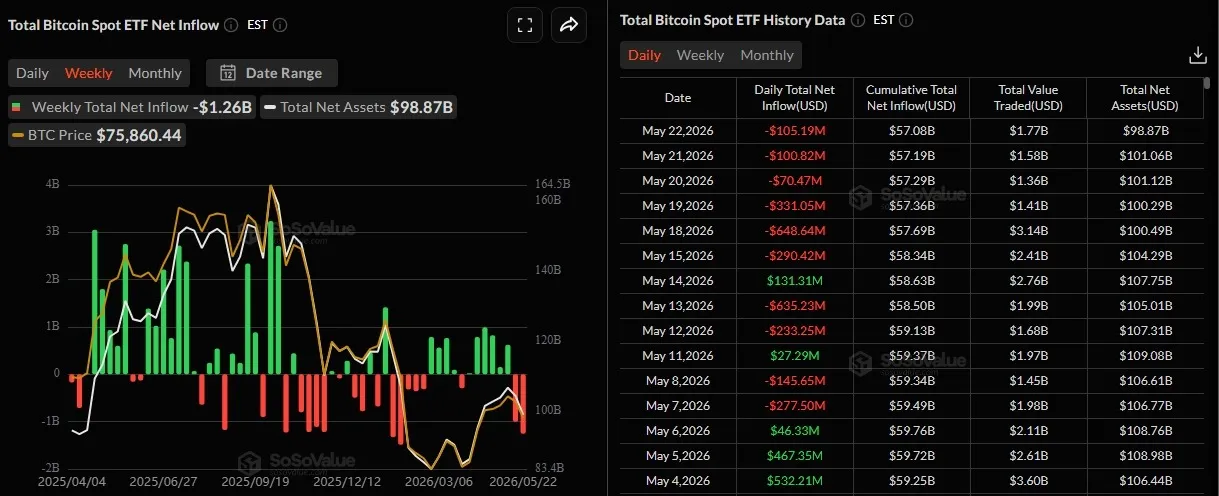
Spot bitcoin-ETFs ended a six-week streak of net inflows and shed $1.26bn. On Monday, investors withdrew $648.6m from the products — the largest daily outflow since January.
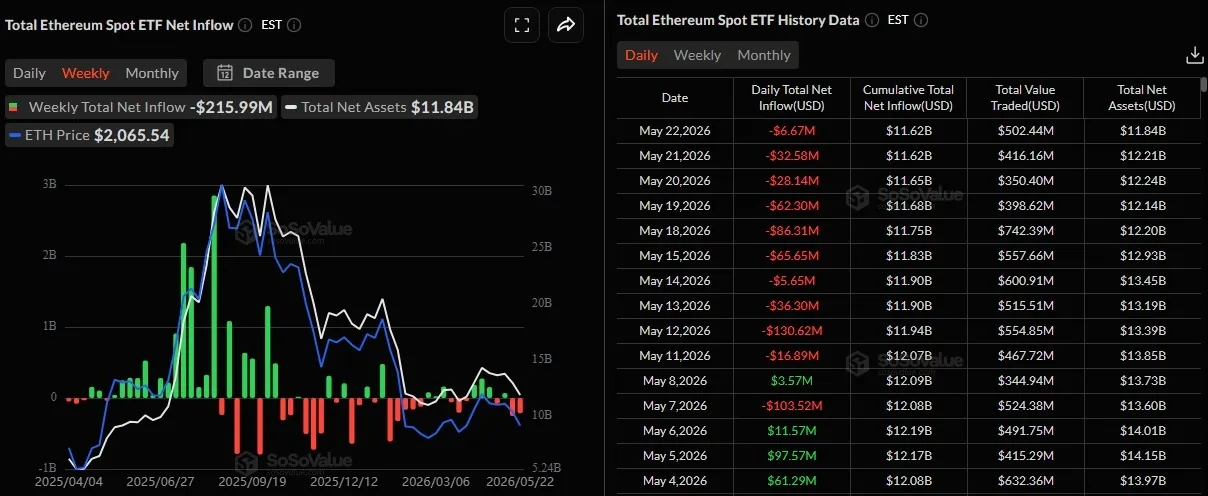
Ethereum funds lost $216m over the week, extending their negative run.
The crypto Fear and Greed Index fell alongside bitcoin’s price from 27 to 25, entering territory that signals extreme investor fear.
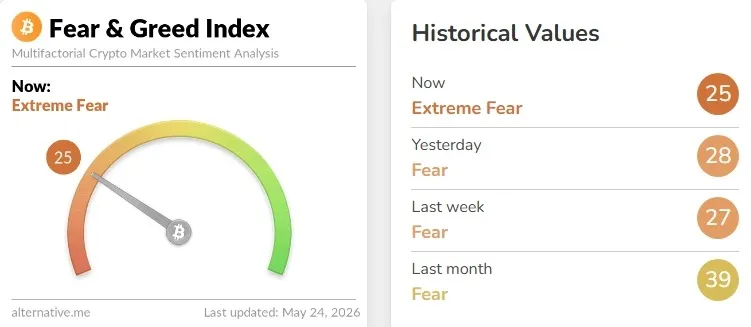
Total market capitalisation rose 3% over the period to $2.57trn. Bitcoin’s dominance slipped to 59.9%, while Ethereum’s share fell below 10%.
SpaceX disclosed bitcoin reserves in its IPO filing
Elon Musk’s SpaceX filed a public registration statement with the SEC for an IPO. According to its S-1, as of March 31 the firm held 18,712 BTC acquired for $661m.
The average purchase price was $35,300 per coin, and the reserve’s market value at quarter-end was $1.29bn.
SpaceX plans to list on Nasdaq under the ticker SPCX. Media estimate the company’s valuation could be about $1.75trn.
If the Commission approves the offering, SpaceX will be among the largest public companies with corporate reserves in the leading cryptocurrency. By bitcoin holdings, it already surpasses Coinbase, which holds 16,492 BTC.
What to discuss with friends?
- Bitcoin Depot will shut down a network of 9,000 crypto ATMs
- Google released the “most powerful” Gemini AI model
- Researchers uncovered the “biggest military insider” on Polymarket
- Media: the Pentagon set up a unit to deploy hacker AI models
Iran launches ship insurance platform with bitcoin payments to bypass SWIFT
Iranian authorities launched the Hormuz Safe digital platform to insure vessels in the Persian Gulf and the Strait of Hormuz. The service accepts payment in bitcoin and other cryptocurrencies.
The project is overseen by the country’s Ministry of Economy. Its main goal is to bypass the SWIFT system and Western intermediaries under sanctions. The insurance covers the risks of inspection, detention and confiscation of ships.
According to Fars, Iranian authorities expect to earn more than $10bn if the platform succeeds. Earlier, industry representatives discussed collecting transit fees from tankers in bitcoin or yuan. Such payments could reach $2m per vessel depending on cargo volume.
Musk lost his lawsuit against Sam Altman and OpenAI
A federal court in Oakland dismissed Elon Musk’s suit against Sam Altman, Greg Brockman, OpenAI and Microsoft because it was filed too late.
According to the nine jurors, the claims were time-barred. Deliberations took less than two hours.
In the case, Musk claimed that OpenAI had abandoned its original non-profit mission and effectively become a profit-driven enterprise.
Timing proved decisive for the jury’s decision in favour of the AI company. Judge Yvonne Gonzalez Rogers also criticised the plaintiff’s claimed damages of $78.8bn to $135bn.
Also on ForkLog:
- Imec unveiled the first device based on quantum dot qubits
- AmericanFortress proposed another way to protect bitcoin from the quantum threat
- Saudi Arabia launched its first quantum computer
- The United States will invest $2bn in quantum technologies amid competition with China
Trump signs order on crypto firms’ access to payment infrastructure
On May 19 U.S. President Donald Trump signed an order on integrating digital assets into the traditional financial system and reviewing crypto companies’ access to payment infrastructure.
Within 90 days, heads of federal financial regulators must review existing rules and determine which of them impede companies from obtaining banking licences and deposit insurance. They have 180 days to implement measures to support innovation following the review.
A separate block of the order concerns the Federal Reserve System. The White House instructed it to assess within 120 days the possibility of providing direct access to master accounts and services at reserve banks for “non-insured depository institutions and non-bank financial companies.”
The Fed has already proposed a “light” version of access to the central bank’s infrastructure for crypto firms and the fintech sector. The initiative would introduce a new type of account — payment accounts — aimed exclusively at clearing and settlement.
What else to read?
We explained how a hedge fund run by former OpenAI staffer Leopold Aschenbrenner drew Wall Street’s attention with one of the most profitable AI portfolios of the past two years.
We examined what remains in the Web3 industry of the original cypherpunk ideology embedded in bitcoin by Satoshi.
We compiled our traditional weekly digest of the most notable security events.
Рассылки ForkLog: держите руку на пульсе биткоин-индустрии!