




The leading cryptocurrency has entered its third deepest oversold zone in history, according to K33’s head of research, Vetle Lunde.
After five months of decline—one of the longest losing streaks for the asset—Bitcoin’s weekly RSI plummeted to 26.84. Such levels have been observed only a few times historically.
According to the analytics firm, recent pressure on prices has been exerted by long-term holders and institutional investors. The fourth quarter saw the following deviations:
- The supply of coins aged over six months sharply decreased;
- ETFs lost nearly 100,000 BTC;
- Open interest in futures on the CME fell to two-year lows.
However, the outflow has now begun to slow, Lunde noted.
Bearish Sentiment
K33 analysts identified derivatives markets as one of the most telling indicators of current sentiment. The average 30-day funding rate in perpetual Bitcoin futures recently turned negative—the tenth such occurrence since 2018.
Negative rates indicate that market participants are actively reducing long positions or opening shorts. As a result, perpetual futures begin trading at a discount to the spot price.
A similar situation has developed in the options sector. Traders are actively purchasing downside protection and are willing to pay a significant premium for bearish bets, Lunde noted.
However, previous episodes of such negative funding often resulted in Bitcoin’s growth, especially over longer periods.
Historical data shows that following such phases, the average 30-day return was about 13% (56% success rate), 90-day returns were 62% with a 78% success rate, and six-month returns averaged 101% with the same success rate.
“The Worst is Over”
Despite the defensive stance in the derivatives market, Bitcoin has shown relative resilience amid the escalation of conflict in the Middle East. Following strikes by the US and Israel on Iran and retaliatory actions, oil and gas prices soared, and stock markets fell. Digital gold exhibited “modest” growth.
Lunde explained the dynamics as a result of significant risk reduction in previous months. Institutions on the CME reduced exposure by about a third, and ETF investors withdrew around 90,000 BTC over the past five months.
At the same time, pressure from long-term holders is easing. The volume of coins older than six months is beginning to rise, the analyst emphasized.
Bitcoin is also consolidating around the 200-week moving average—a level historically coinciding with market lows. At the time of writing, the asset is trading around $71,600. Over the past day, its price has jumped by 6.7%.


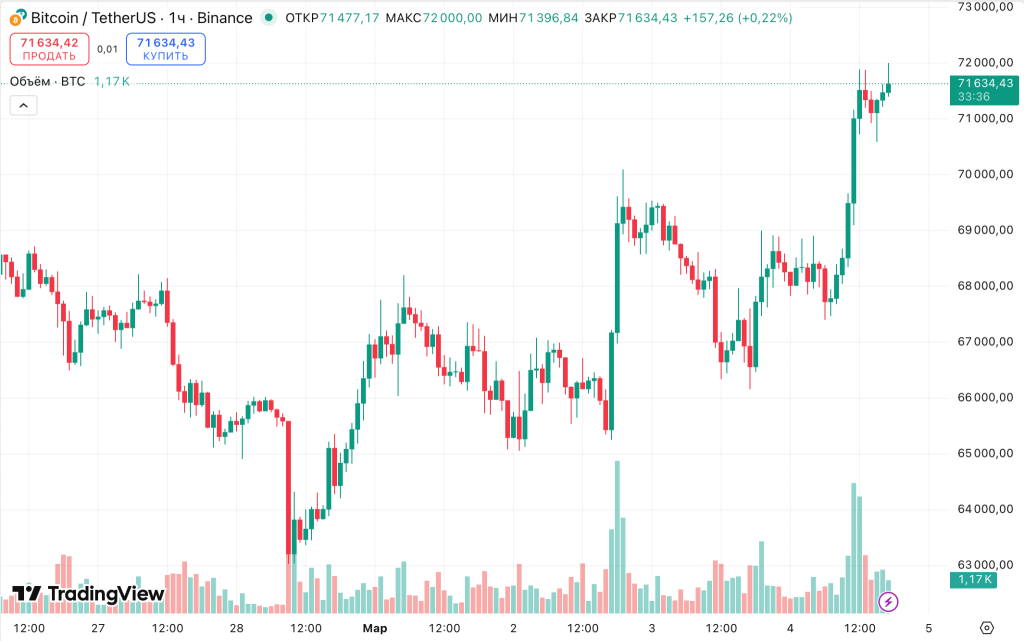
“The worst is over. Now we wait. We see no reason to sell Bitcoin at current levels,” Lunde concluded.
Back in early March, VanEck’s head Jan van Eck stated that the price of digital gold had approached a local bottom. According to him, prices continue to be driven by the four-year halving cycle.