


Tokenomics with Vladimir Menaskop: no code required
Which tools should you reach for if you want to design a project’s tokenomics without writing code? Web3 entrepreneur Vladimir Menaskop shares his proven stack in the latest instalment of this primer.
From the author
Good tokenomics will not necessarily feed you for two or three years—or even 30—but bad tokenomics will wreck your project almost instantly. There are no universal recipes for good tokenomics, whereas bad tokenomics is obvious at a glance. Good tokenomics has been written by both professionals and amateurs; bad tokenomics is usually either copied wholesale or authored by professionals with ulterior motives.
Let’s break this down to first principles. The series also includes two instalments:
- first: «From idea to IDO»;
- second: «To TGE and beyond».
There are advanced addenda:
And newcomers can study the free course.
Introduction
Tokenomics has many facets. Four basics stand out:
- economic;
- technical;
- legal;
- organizational.
Details below.
This piece also aims to show how to:
- Use only no-code and/or low-code solutions.
- Cover as many networks as possible (EVM is a must; non-EVM is desirable).
- Do it for free or, at least, inexpensively.
Stage 00: Token-level competitor analysis
Economics at Stage 00
There are no universal recipes, but this toolkit helps:
These will give you comprehensive information on competitors’ tokens, helping you to analyse a niche, vector, industry, market or entire domain.
Technology at Stage 00
You can also assemble a rough technical view of your chosen segment using, for example:
You might try sector-specific dashboards such as CryptoSlam, NFT 2.0 Aggregator and others. Or take the reverse route: pull charts from explorers—from the general to the particular.
Pretty charts alone won’t solve problems, but they are useful in a SWOT analysis.
Legal aspects at Stage 00
Recommended documentation:
- SAFT.
- Token warrant.
- Multisig agreement.
- DAO agreement.
Implement token functions correctly and you will avoid nine out of ten problems.
Stage 01: Drafting the initial tokenomics
Economics at Stage 01
This is harder: you need not only to look at numbers but to understand their static and dynamic relationships. Still, these tools help:
- TokenTable — tokenomics visualisation;
- Garuda.AI — an attempt to combine the above with AI;
- Tokenomics Calculator — self-explanatory.
These services will be of little use if you do not understand the functions of the token, how they intersect with the technical stack, or the DAO design. Otherwise, they can help.
Technology at Stage 01
On Tokenomist you can examine various issuance “prospectuses”, compare projects and get a decent formalisation both by stage and for the project overall.
Legal aspects at Stage 01
To keep documents moving in the right direction, you must not only draft them but also sign them. Use EthSign—a service I was among the first to test. It has recently risen from the ashes, hence its inclusion here.
Stage 02: Auditing the tokenomics model
Economics at Stage 02
The list can be very long; here are a few:
- Fundoria — an app uniting several teams with tokenomics experience;
- Tokenomics Hub — a DAO of specialist consultants;
- Cenit Tokenomics Simulator — a semi-automated tokenomics simulator;
- Artemis — a service broader than today’s topic, but useful for formalising data;
- Token Engineering Commons — another team of token engineers.
In short, the choice is vast.
Technology at Stage 02
If you prefer fewer words and more visualisation and technical simulation, try:
Each service has its pros and cons. What they share is a level of generality that can be challenging for first-time tokenomics builders.
Legal aspects at Stage 02
At this point, focus on documentation and its production via GitBook, since you should already have baseline agreements—with funds and other key contributors, as well as with users.
Stage 03: Creating the token
If you write code, you know OpenZeppelin templates are enough to produce a solid ERC-20 smart contract in five minutes. Today we will take another route.
I used to rely on CoinTool, but its silent rebrand and lack of a redirect from the base domain are worrying. So let’s turn to a close competitor—Pink Sale.
First, alternatives:
- Dpos.space — recommended: maintained by Denis Skripnik and kept tidy;
- Boost — a marketplace of on-chain data, applicable to tokenomics too;
- CoinFactory — a full tokenomics factory;
- Token Tools — similar to the above;
- MoonDeploy — token creation and maintenance;
- Orion Tools — token creation on Solana.
Note: however much I test services, each lives its own life. Please remember DYOR when using them.
If you simply need to create a token—for a testnet, say—try Owlto: it’s literally a one-click deploy across networks such as Unichain, Lisk and others. If you need more, read on.
How to create a token
We’ll use Pink Sale. There are two ways to create a token here:
I will use the first, but pick either. Steps:
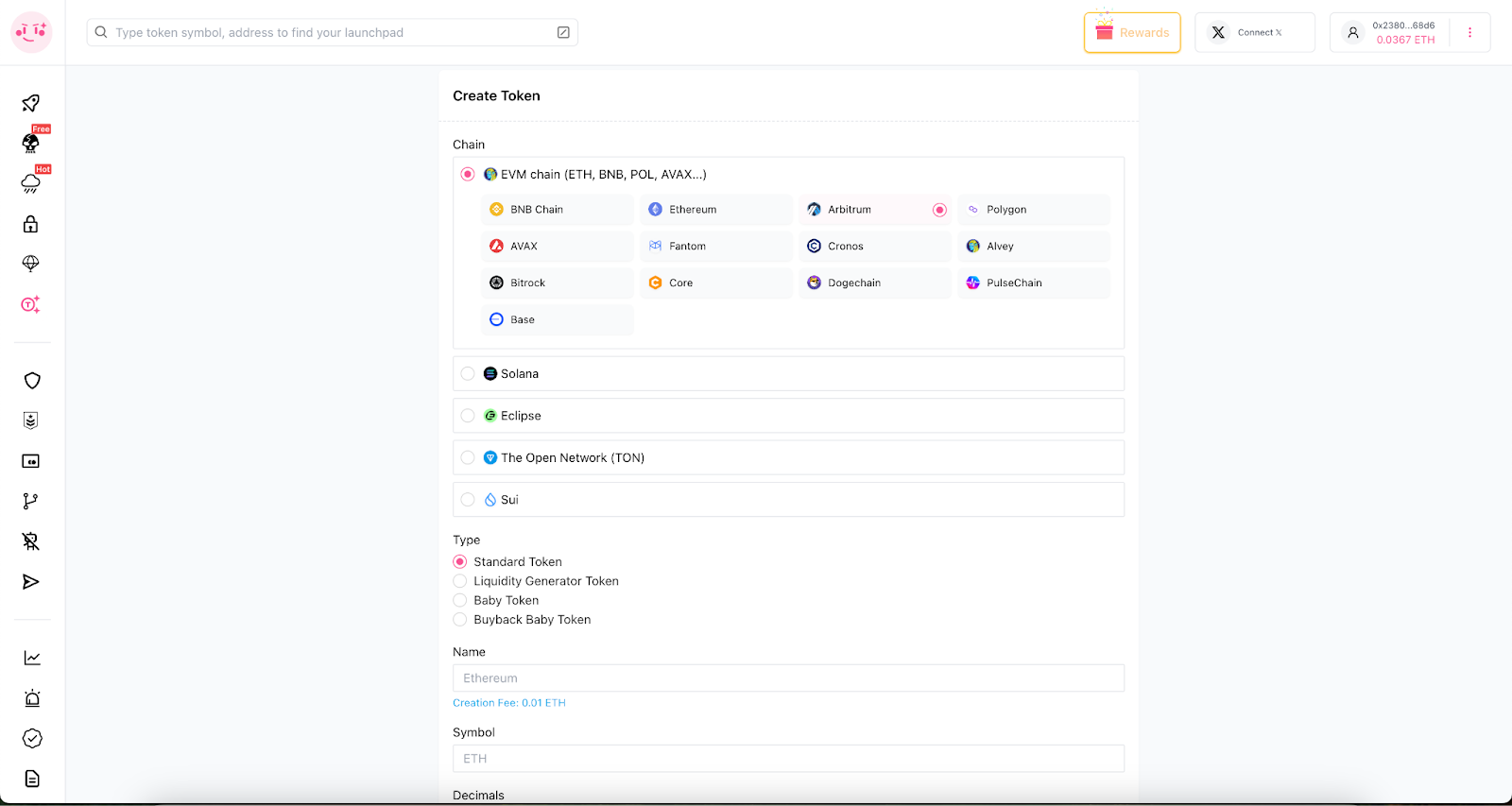
Enter the name, ticker, number of decimals (18 by default) and total supply—how many tokens to mint in total. Select the network in advance (Arbitrum here) and click “Create token”.
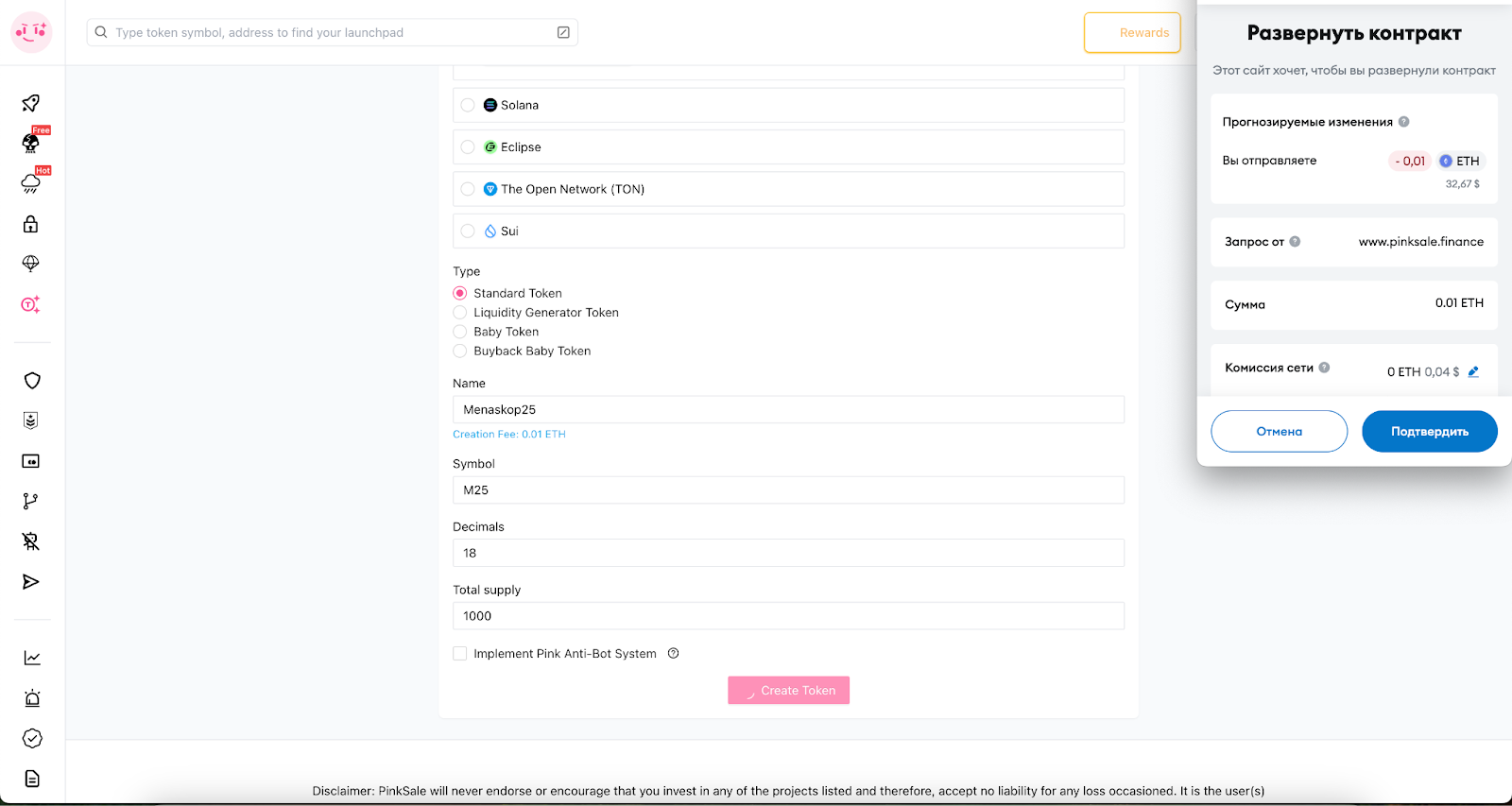
Pay the service fee—and the token is ready.
You can verify creation in the scanner.
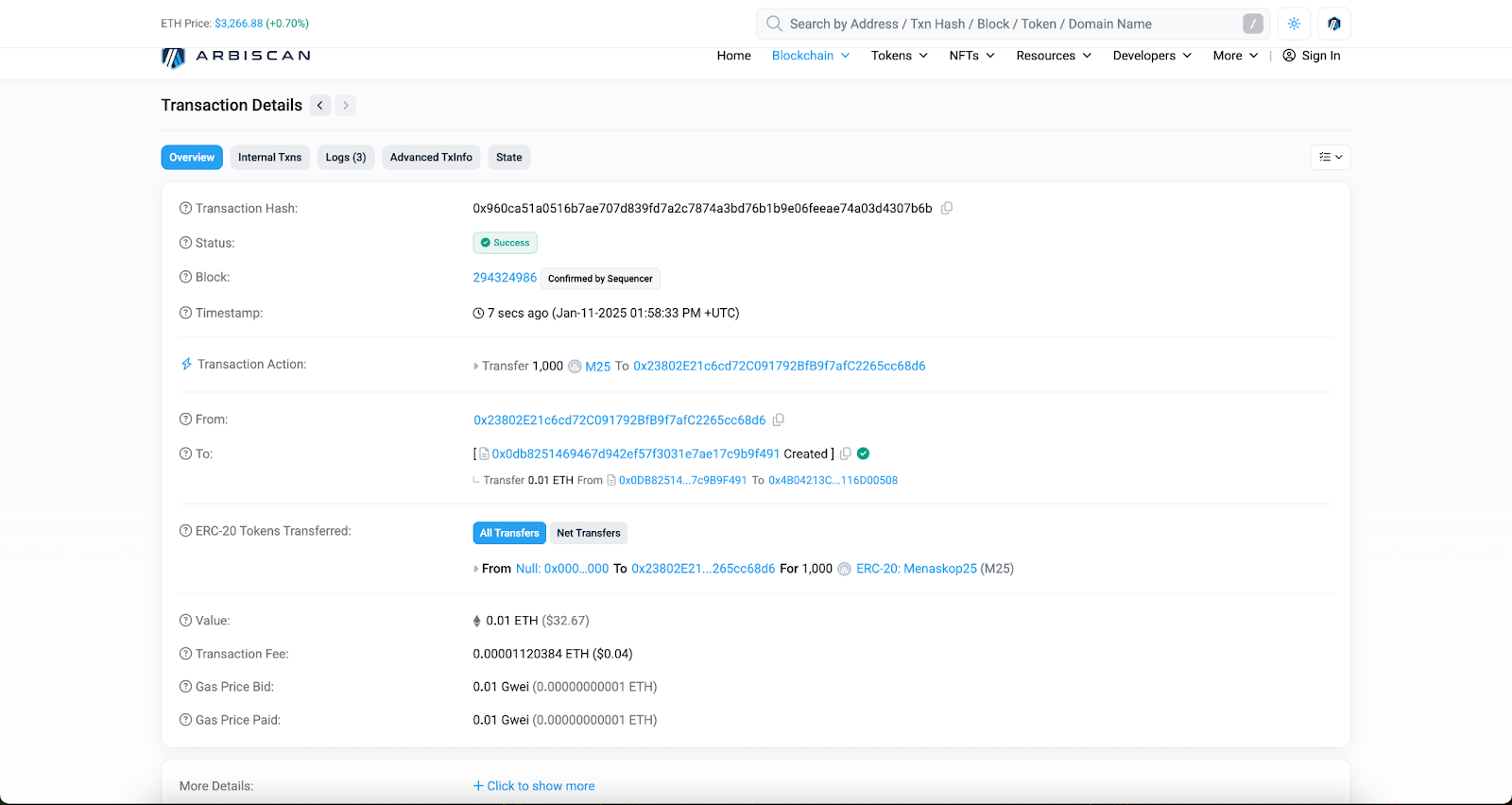
Then go to the token smart-contract page:
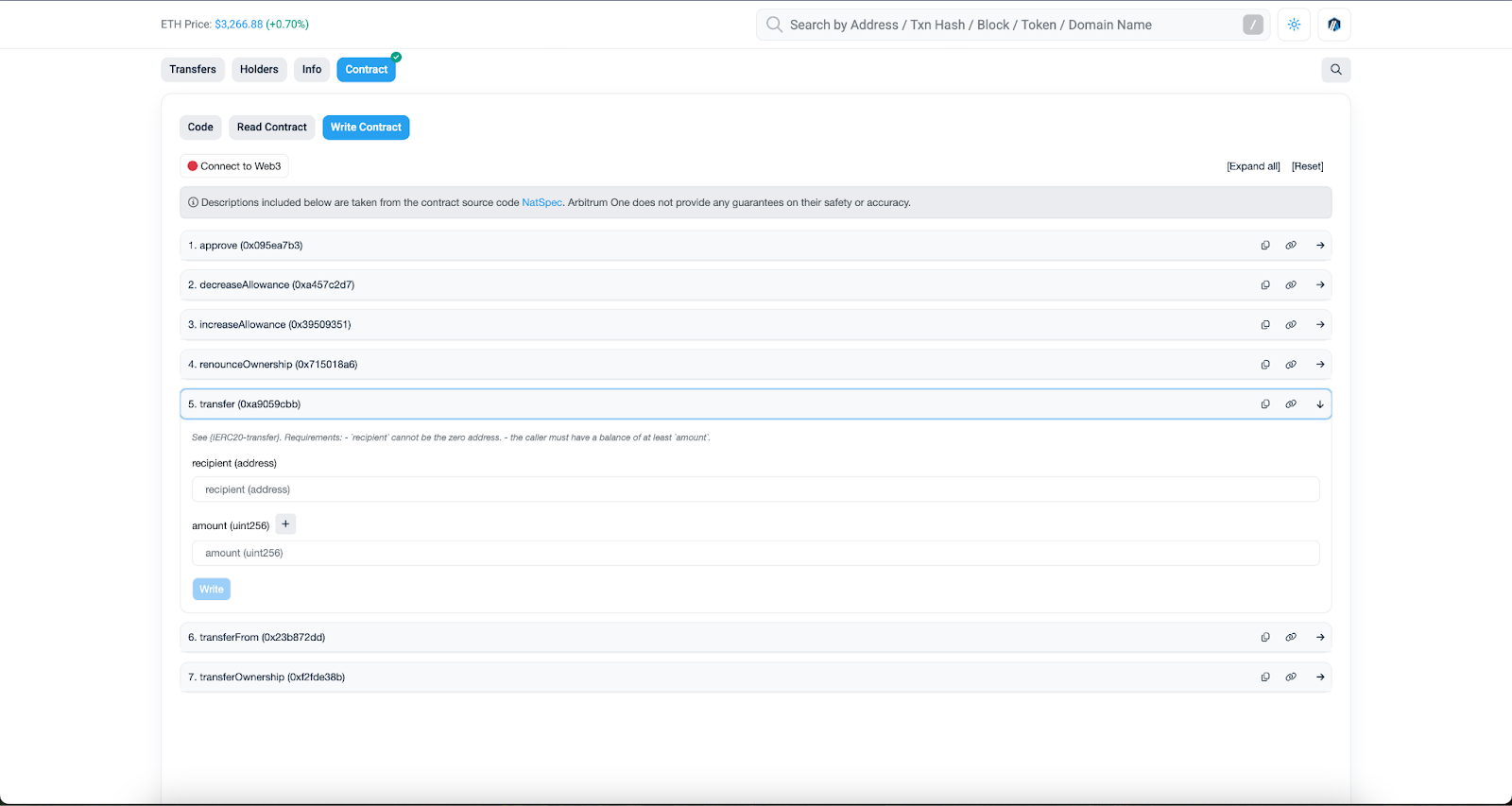
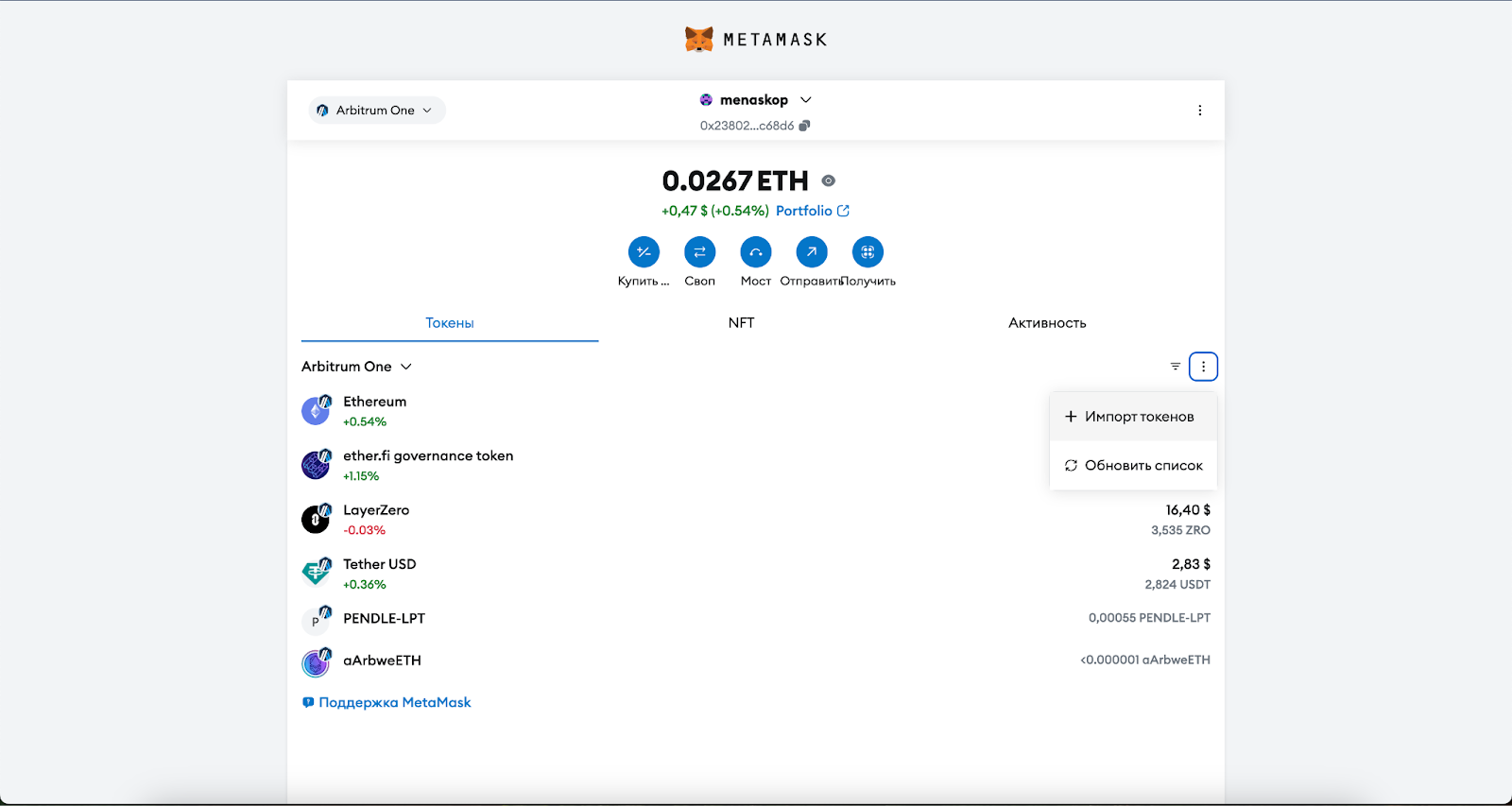
Next, add the token to MetaMask. Switch to the relevant network and choose “Import tokens”.
Enter the contract address: 0x0DB8251469467d942eF57F3031e7ae17c9B9F491.
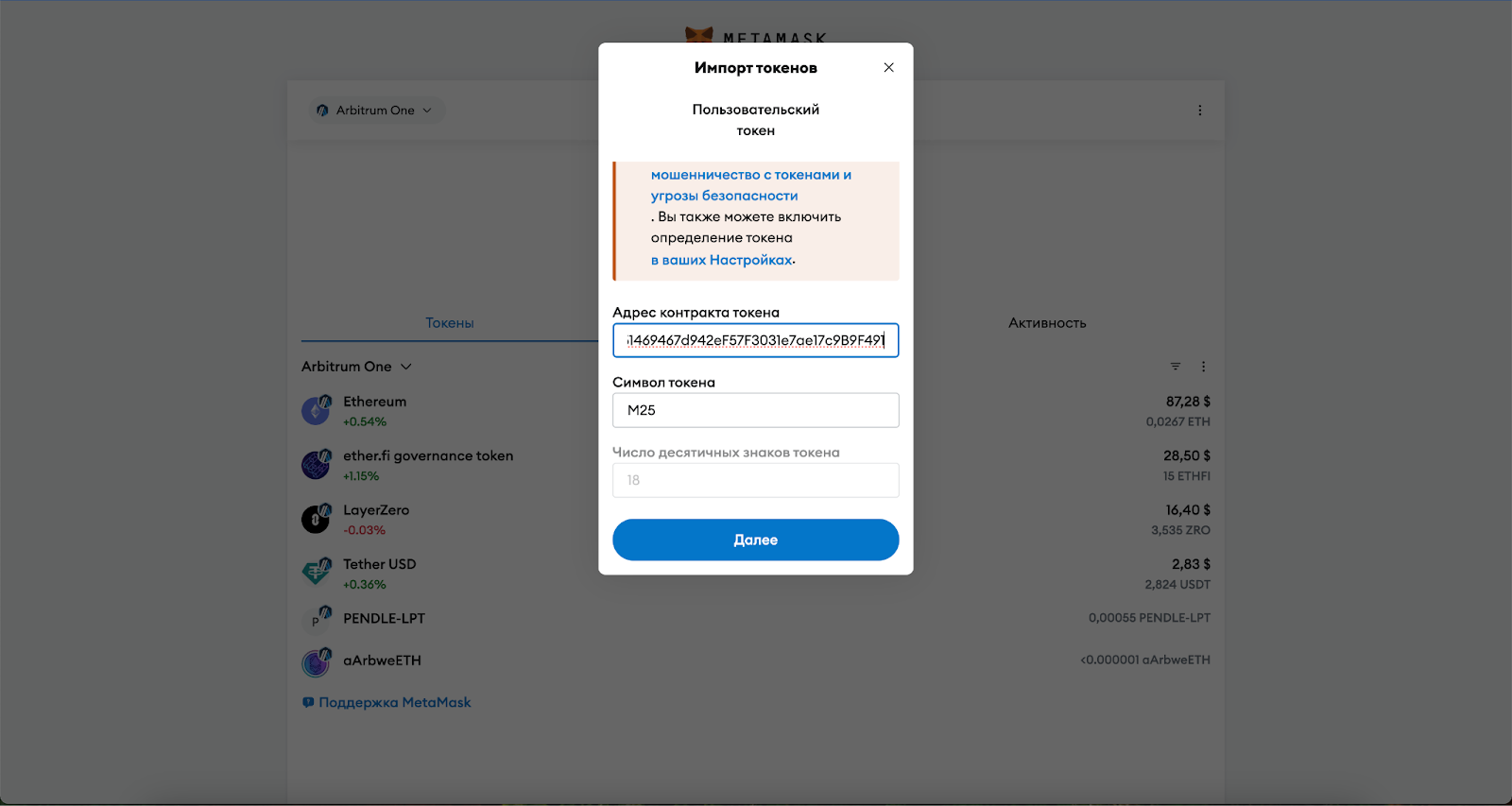
The token is added—you can distribute it. If you have, say, a DAO, it is better to handle issuance from a multisig wallet.
But creating a token is not everything. Creation is the TGE. What if you need to distribute tokens with vesting/cliff periods?
There are several options.
- Build a locker contract from which each recipient can claim according to the designed tokenomics.
- Wrap tokens in NFTs or another instrument and lock them in batches.
- Credit manually—from the same multisig.
The last method is reliable but extremely tedious, especially if you have tens, hundreds of thousands or millions of users. So the first two are usually used.
Conclusion
The more ambitious your project, the more customisation it will demand. Even so, the tools above show how existing automation can cover roughly 90% of the operations needed to launch, analyse (audit) and run your token.
There are always nuances—more next time.
Рассылки ForkLog: держите руку на пульсе биткоин-индустрии!